







 Prefer us on Google

May 14 2026 - 1:00pm
In 1977, the Danish film director Jens Jørgen Thorsen was turned away at Heathrow on the orders of Home Secretary Merlyn Rees, after a campaign by the Christian campaigner Mary Whitehouse. Thorsen was carrying the script for a long-planned film about the sex life of Jesus — a project that had already drawn condemnations from the Pope, the British Parliament and the Queen.
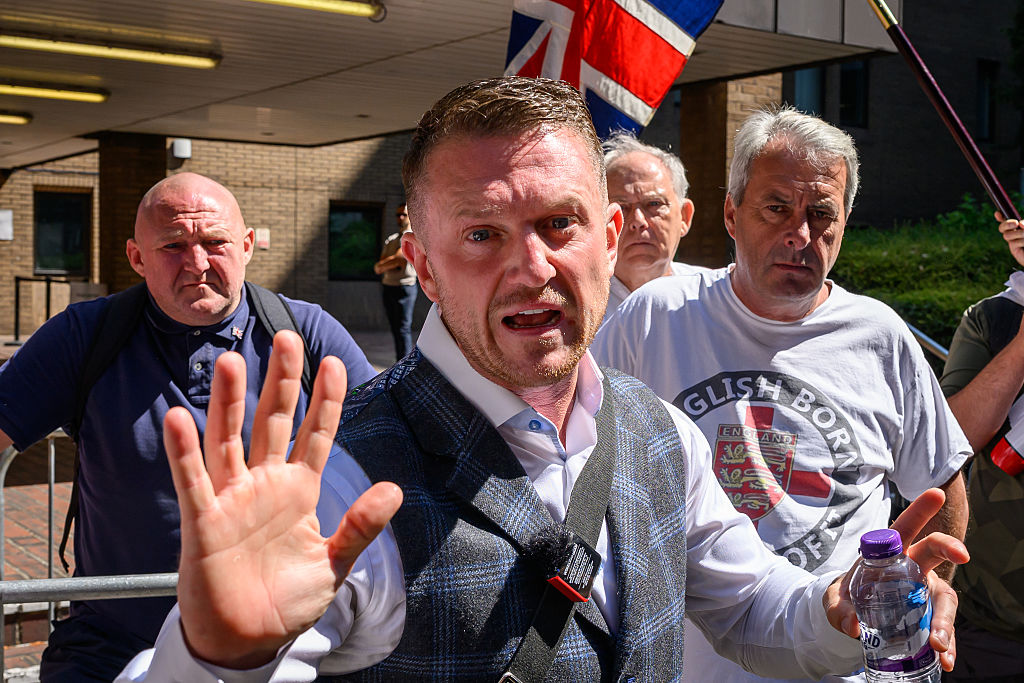
That episode is worth recalling now that Home Secretary Shabana Mahmood has barred seven “far-Right agitators” from attending Tommy Robinson’s Unite the Kingdom rally this weekend, on the grounds that their presence is “not conducive to the public good”. Keir Starmer cast the ban as necessary to stop people coming to Britain to “spread hate on our streets”, framing it as part of a “battle for the soul of our nation”.
The phrase “not conducive to the public good” is doing a great deal of work here. It is the same elastic standard that successive British governments have used to “protect” the public against an almost ecumenical range of controversial speakers — from the pioneering American comedian Lenny Bruce, to the American “shock jock” Michael Savage, to the rapper Kanye West.
This standard expands and contracts with whoever holds the Home Office. Today, it is wielded by a Labour government against figures on the Right. Tomorrow, a Reform UK-led government could deploy it against climate activists or Palestinian solidarity campaigners. Should the British electorate turn to the Greens, “Zionists” and “Terfs” may find themselves next on the index of prohibited visitors. In each case, the test shrinks to a single criterion: any voice a minister finds inconvenient. A power available to every government is, by definition, a power available to the worst one.
It is worth being clear about what the seven banned individuals actually say. Commentator Joey Mannarino, after a verdict he disliked, declared that all rape allegations are now “fake” to him. Activist Valentina Gomez warns of “rapist Muslims” taking over Britain. Eva Vlaardingerbroek, who was banned in January, has described mass migration as “rape, replacement and murder”.
These are not refined orators furthering Socratic principles, but the case against banning them does not turn on the quality of their ideas. British citizens should have the right to hear what they choose and judge for themselves. After all, a population that cannot be trusted to listen to Joey Mannarino without succumbing to his charms is not mature enough for democracy. Karl Marx wrote Das Kapital in London after being chased out of half of continental Europe, and Britain has yet to fall to the dictatorship of the proletariat.
There is a more practical objection, too: the ban is performative. Every one of these figures broadcasts daily on platforms accessible from any British phone. Hours of Vlaardingerbroek, Mannarino and Gomez sit on YouTube, X and Rumble, free to be streamed in Whitehall or Wigan. Refusing these commentators entry does not “protect” anyone from their views — it merely allows the Home Secretary to issue a press release appeasing whichever contemporary Mary Whitehouse currently has her ear. If the Government genuinely believed these people threatened public order, the consistent remedy would be the one preferred in Tehran, Moscow and Beijing, where the rulers decide which information is fit for the ruled.
There is also a longer-term cost. Each invocation of “not conducive to the public good” normalizes the principle that ministers may preemptively decide which foreign voices British subjects may encounter in person. Robinson’s rally will go ahead regardless. The seven may speak by video link, gaining the romantic frisson of having been censored by His Majesty’s Government — a gift no clickbait grifter would refuse.
A robust culture of free speech was never premised on the idea that the public should be exposed only to ideas cleared by a minister beforehand. It was premised on something braver: that adults can be trusted to listen, argue back, and walk away unconvinced. If there is a battle for the soul of the nation, this is the side of it worth fighting on. The seven influencers are not the test of that principle. They are, as Thorsen was in 1977, merely the latest convenient occasion to abandon it.