








December 15 2025 - 3:10pm
There was an air of inevitability as news spread of the massacre at the Hanukkah event on Bondi Beach yesterday. A friend in Sydney told me that almost everyone had been expecting something like this. Counter-terrorism analysts I spoke to yesterday and local media coverage said the same thing.
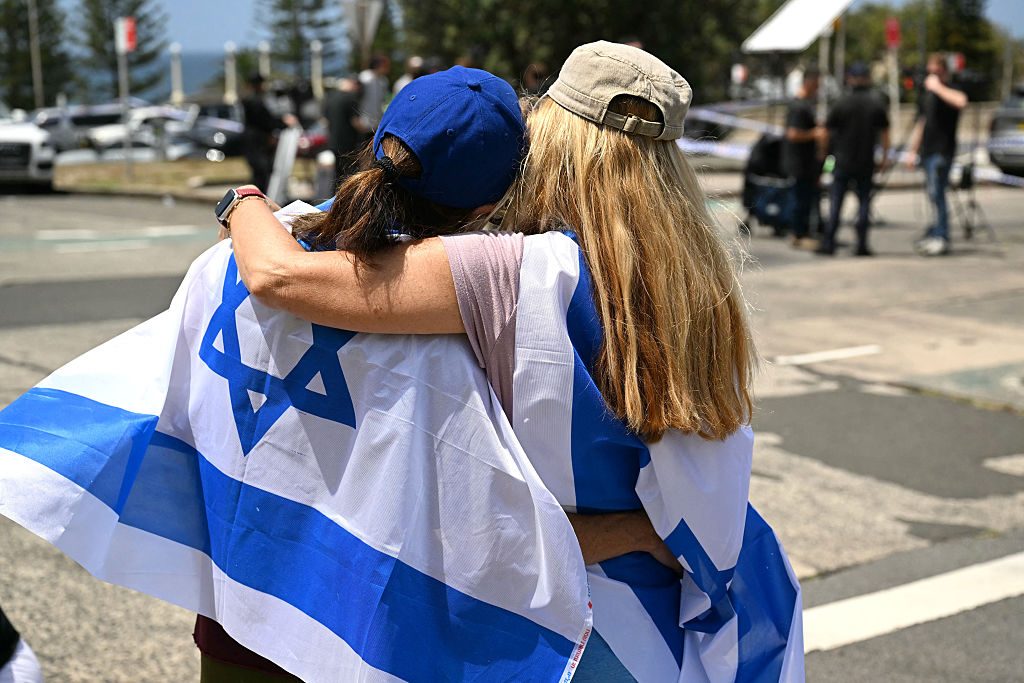
There is little mystery about the motive here. Sajid and Naveed Akram, the father and son who killed 15 people — including a Holocaust survivor, two rabbis, and a ten-year-old girl — had pledged allegiance to the Islamic State (Isis). Naveed, in particular, had been investigated six years ago due to his ties to an Isis cell, according to Australian security sources.
The Muslim population in both Sydney and Melbourne is around 5%, and Islamism has gained a foothold in each city. In Sydney in particular, where many Muslims are of Lebanese origins, religious extremism has long been intertwined with organized crime. A significant component of this link is Shi’a networks connected to Hezbollah — the Lebanon-based arm of Iran’s Islamic Revolutionary Guards Corps (IRGC) — which maintains an infrastructure of mosques and charities to recruit Australian Muslims. Isis, meanwhile, also found fertile ground in this environment.
Some of the most prominent foreigners in Isis during the caliphate era were drawn from the hundreds of Australians who journeyed to Syria and Iraq. In the years since the caliphate was swept away, Australia has struggled to deal with Isis returnees acting as propagandist-recruiters, and this has become much worse since Hamas’s October 7 2023 pogrom in Israel.
Of the numerous celebrations of October 7 in cities across the West, the large crowd chanting “gas the Jews” in front of the Sydney Opera House was perhaps the most disturbing. Iran’s IRGC, one of the authors of Hamas’s attack, capitalized on this surge of antisemitism to direct numerous acts of domestic terrorism in Australia. As so often, Isis has symbiotically benefited from Iran’s gains, recovering at the center and restarting its foreign-attack campaigns in January 2024, able to recruit from the same pool of energized Islamists.
Jihad of all flavors also had the advantage of Western governments shying away from fully confronting extremism in fear of appearing “Islamophobic”. This fear has hamstrung the British counter-extremism program Prevent, for example, and in Australia, it led to the dismantling of the police unit focused on Middle Eastern organized crime in 2017.
After October 7, a new problem emerged: Islamists aligning with Leftist elements in the “pro-Palestinian” movement to wage political warfare against Israel and so-called “Zionists,” using language that resonated with many Western political and intellectual elites. The consequence has been an official ambivalence towards combating antisemitism, leaving public life increasingly perilous for Jews across the West. Yesterday’s attack was the grim culmination.
All the warning signs were there. The persistent harassment and intimidation of Jews in the West over the last two years has already escalated to terrorist attacks. Several property-targeted attacks hit Australia last year. Police vigilance and quick thinking by those targeted minimized the casualties when a jihadist stabbed tourists at the Berlin Holocaust Memorial in February and another militant tried to storm a synagogue in Manchester in October.
Without a concerted effort to shut down the ideological and operational support systems behind this wave of antisemitism, it was always building towards something as awful as Bondi. Worse should be expected if there is no drastic change in policy going forward.
Join the discussion
Join like minded readers that support our journalism by becoming a paid subscriber
To join the discussion in the comments, become a paid subscriber.
Join like minded readers that support our journalism, read unlimited articles and enjoy other subscriber-only benefits.
Subscribe