









May 19 2026 - 12:30pm
With each passing day, it appears increasingly likely that Congresswoman Alexandria Ocasio-Cortez will run for president in 2028. In the last few days, she has appeared at a rally in Alabama to protest Republican efforts to redraw congressional maps and campaigned with a progressive congressional candidate in Pennsylvania. She has also teased her future plans in recent national media profiles, saying her “ambition is to change the country”.
Moreover, unlike in 2020, when Bernie Sanders and Elizabeth Warren duked it out for the support of the Democratic Party’s progressive wing, there are few other candidates who pose a viable challenge to AOC in that lane. As things stand, she is in third place in the polling averages, behind only Gavin Newsom and Kamala Harris. One recent survey from a high-quality pollster even showed her surging into first place, 3.6 points ahead of the second-place candidate, Pete Buttigieg.
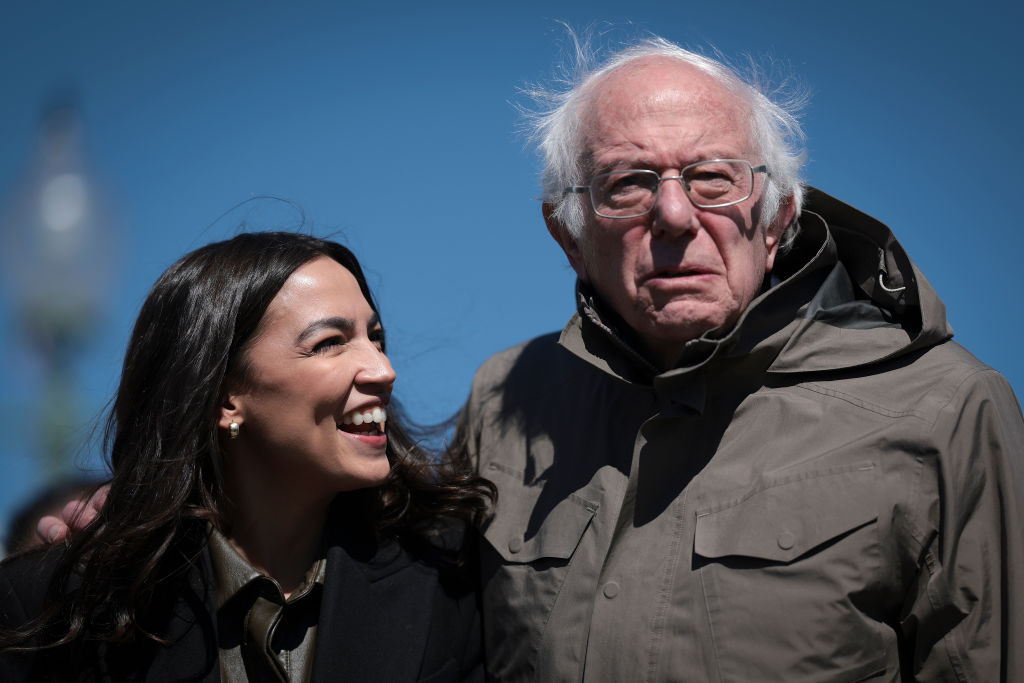
Many believe that Sanders has been grooming AOC as his heir apparent to lead the progressive movement. Shortly after she staged a massive primary upset in 2018, she joined him on the campaign trail to help boost other aligned candidates. In 2020, she endorsed his presidential primary campaign at a pivotal moment and later gave a nomination speech on his behalf at the Democratic National Convention. After the 2024 election, the pair embarked on a “fight the oligarchy” tour together.
However, AOC is a different breed of progressive from Sanders, and there is real reason to doubt that she will enjoy the same broad appeal across cultural, racial, and class lines he did if she runs for president.
Though Sanders actively embraced the terms “progressive” and “democratic socialist”, he worked tirelessly to cultivate an image as a truly populist figure. For decades he paired disciplined messaging railing against the political establishment and economic elites with populist economic positions, including raising the minimum wage, curtailing free-trade agreements, expanding healthcare access, and more moderate positions on some hot-button cultural attitudes, such as support for gun rights and some curbs on immigration — attitudes widely shared by working-class Americans.
Sanders’s “everyman” appeal was evident in the coalition he amassed. In the 2016 primary, he shocked political observers everywhere by winning Michigan over Hillary Clinton on the backs of working-class voters, many of whom went on to support Donald Trump in the general election. However, four years later, when Sanders had a second go at the presidency, the center of gravity in the party had shifted remarkably Left on culture, and Sanders moved with it, aligning himself with activists on everything from guns and immigration to climate. Ultimately, his second primary campaign ended far earlier than his first.
And yet, as she ponders her future, AOC has made the decision to surround herself with operatives and advisers from that second campaign, even as many in the Democratic Party have grown wary of recreating the 2020-era political environment. It’s here that we catch a glimpse of the kind of campaign she might run in two years, and how it could deviate starkly from Sanders’s brand of politics.
For starters, AOC has not only not shied away from many of the controversial social and cultural views she expressed in the past, but has even leaned into some of them, including on ICE, transgender issues, and billionaires. Rather than trying to pivot away from — or even reassessing — some of these past positions, she has focused her efforts on placating the Left. This stands in contrast with Sanders, who had a penchant for meeting voters where they were on culture for most of his career.
AOC has also spent her nascent political career representing a deep-blue district, where she won not on the backs of older, working-class white voters living in rural and exurban communities — the median voter in America — but instead with substantial support from younger, downwardly mobile, college-educated voters in gentrifying urban neighborhoods. Recent presidential polling has buttressed this picture, showing that her support is stronger among higher-educated — and even higher-income — Democrats than from working-class voters, which could be a problem if she hopes to compete in swing states.
No doubt some of the chords she is striking will resonate with such voters, including her “anti-system” messaging, which helped Sanders tap into real anger among the electorate toward the establishment and social elites. But culture matters, too, and while aligning herself with Left-wing advocacy organizations may help propel her to the Democratic nomination via the progressive lane, it could also ensure another four years of Republican rule in Washington.
