







 Prefer us on Google

June 23 2026 - 7:00am
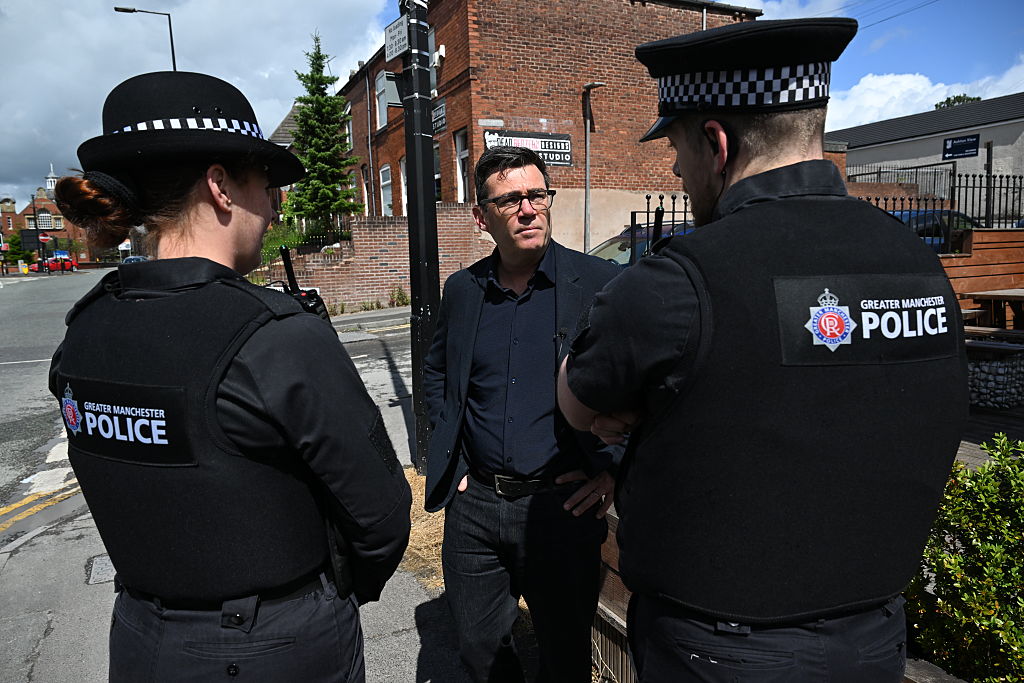
According to new comments from Stephen Watson, the Chief Constable of Greater Manchester Police, forces have “adopted the language of activism” to ward off accusations of racism. Watson has shown political nous by acknowledging concerns around officers’ partiality, while denying that two-tier policing exists.
The timing and the tone of this intervention are significant. Watson was appointed to his current role by Andy Burnham, and has been tipped as a future head of the Metropolitan Police. In his words can be found clues about Burnhamite, “soft Left” views on law-and-order policy. Indeed, there’s a distinctly New Labourish spin to Watson’s comments, which represent a classic example of triangulation. The contents of Police Race Action Plans, for example, he sells as “guidance” rather than policy, law or procedure. Much like the problems encountered over trans guidance for public bathrooms, the Labour Party has an unfortunate tendency to obfuscate, offering a nudge and a wink to special interest groups despite decisions made by the courts.
Of course, Watson knows this full well, but can’t admit it. Far from policing being “two-tier”, in reality forces operate more tiers than an Aztec ziggurat. This is due to the ghosts inside the machine — the second-order effects around race emanating from management decisions and attitudes. Officers are entirely aware of the progressive dog whistles blown from headquarters. Ambitious police managers, knowing advancement relies on kowtowing to fashionable politics, have reputations for throwing officers under buses over matters of race.
It’s unsurprising that even Watson has chosen not to acknowledge this reality. Joining the police in 1988, he has survived and prospered among the cohort of progressive technocrat chiefs who now run British policing. Did he box clever to survive, like a Resistance fighter under occupation? In any case, he is now a media darling — a bluff, avuncular Northern chief constable in the John Stevens mold.
Which brings us to Burnham, who cut his teeth at the Home Office between 2005 and 2006. He served under David Blunkett, a Northern politician with a common touch who had little truck with hand-wringing Left-wingers. Burnham, who knew what kind of copper Watson was when he appointed him, perhaps demonstrates his understanding of another Labour weakness: the party’s almost romantic animus against the police, one casting them as Thatcherite stormtroopers of the Miners’ Strike and Hillsborough. This provides yet another ghost in the haunted house of British policing, along with the Home Office’s pathological desire for control. It will be instructive to see how a Burnham government reacts to the police reform White Paper currently being navigated through Parliament by Home Secretary Shabana Mahmood.
Meanwhile, a no-nonsense copper such as Watson carries appeal for Red Wall voters. Who better to address growing concerns over two-tier policing, especially among those tempted by Reform UK? His media statements are occasionally dismissive of modern policing’s knee-taking, rainbow-lanyard-wearing tendency. This, to his credit, isn’t completely cosmetic: officers inside the force confirm that GMP’s internal culture appears less doctrinaire than other English forces.
Policing’s problems are too complex for any single chief constable to solve, or indeed any prime minister. Yet Watson’s intervention is smart politics. Perhaps we’ve just been offered a clue as to the direction Burnham might take on the two-tier policing controversy. Whether such a classically Blairite piece of triangulation will steady the law-and-order ship for Labour remains to be seen. The party’s backbenchers can be unruly, as they were with welfare reform last year. Burnham will need more than slick PR and a solid taste in chief constables to rein in Labour’s seemingly insatiable appetite for identity-fixated politics.