









July 19 2026 - 7:10pm
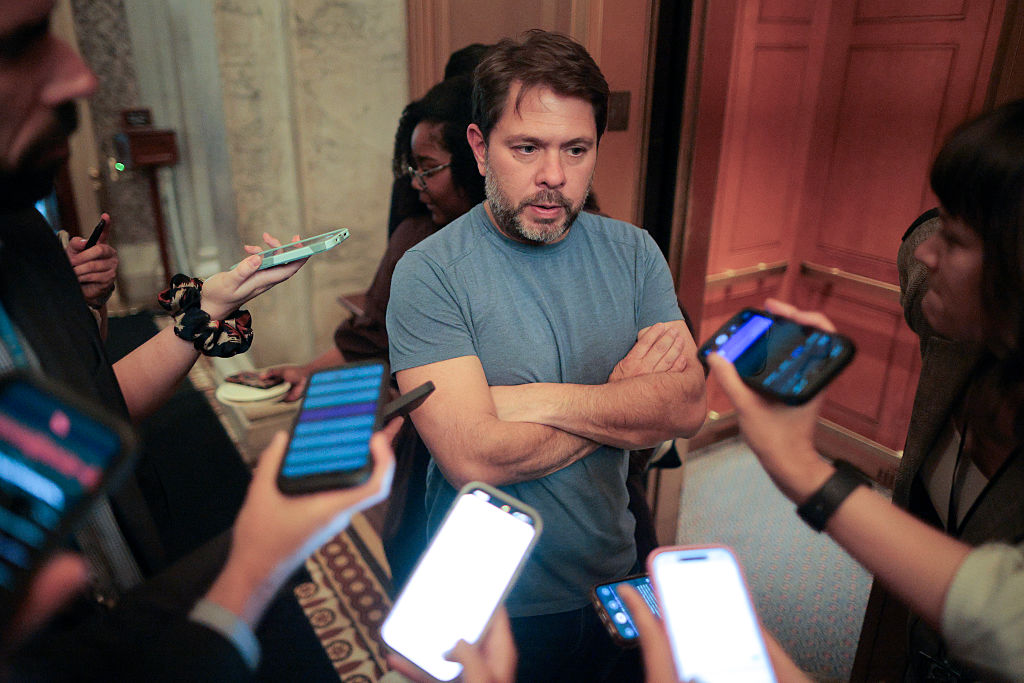
Earlier this week, the New York Post reported that Ruben Gallego, the Democratic senator from Arizona and a fixture on early lists of 2028 presidential hopefuls, had sexual relationships with two Capitol Hill staffers. It is worth noting that these were consensual relationships while he was single, while the staffers did not work for him. The Post headline teased that Gallego was a “Swalwell pal,” a nod to Eric Swalwell, the California congressman who resigned in April amid sexual misconduct allegations he denies. It was as if the newspaper was saying: “fellow pervert Ruben Gallego has consensual sex with co-workers.”
Despite the Post’s best efforts, voters don’t seem to care about Gallego’s private life, if they even know who he is. It’s a sign that public outrage over political scandals has become increasingly short-lived.
Consider the case of Graham Platner, the veteran who ran in Maine’s Democratic Senate primary and who seemed to hit every branch falling out of the “please create an outrage cycle!” tree scandal. Scandals during his campaign included the revelation of a Nazi tattoo; an archive of lurid Reddit posts; and an account on Kik, which is known as “the pedophile app”. Platner won the primary anyway and was only pushed out after he was accused of rape, which he denied.
In past decades, political scandal was rampant. In 2011, Anthony Weiner’s sexting habits reached people who couldn’t name a single congressman. I knew everything there was to know about Monica Lewinsky at a developmentally inappropriate age, because it was all anyone was talking about in 1998 (and 1999 and 2000…). Now, keeping up with the outrage cycle has become something like a hobby.
There are a few reasons for this. The first one is fragmentation. When Elon Musk bought Twitter in 2022 and set about destroying it, he demolished the closest thing the internet had to a public square — and with that went the vestiges of the monoculture. With even journalists scattering like dust in the wind, the ability for stories to generate enough momentum for everyone to care about them diminished significantly.
The second reason is recovery from Covid-era internet overexposure. After spending several years forcibly online and then navigating what post-pandemic social life looks like, we’re in an extended recovery period. Many people have re-entered the physical world. Active social media use is on the decline.
Most simple is the third reason: that these outrage cycles are boring. After a decade in which every week produced something “unprecedented”, people just don’t care anymore. One can only be shocked so many times before nothing is novel anymore. In the context of the reporting on Gallego, we should thank God for that.
Katherine Dee is a writer. To read more of her work, visit defaultfriend.substack.com.
 default_friend