









September 23 2026 - 4:00pm
If you’re worried your AI is spinning out of control, do something about it.
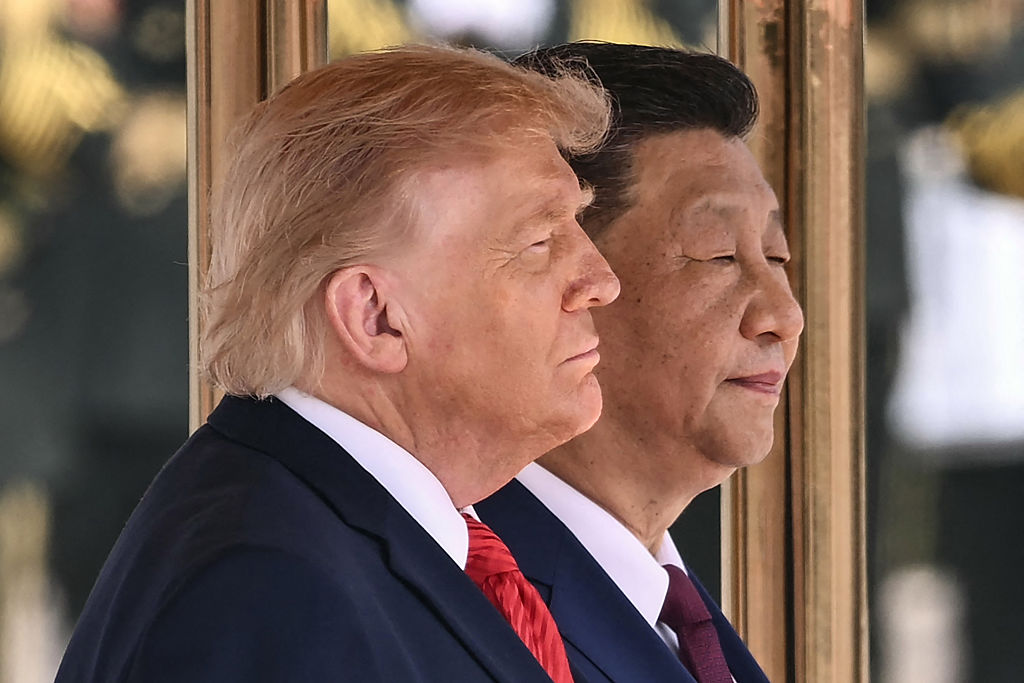
That might be the sort of response Xi Jinping gives to any request from Donald Trump to slow the progress of the technology. As the two men meet at the White House tomorrow to discuss AI security, it will take more than bonhomie to bridge their divide.
It’s not that Beijing isn’t worried about the threats posed by AI. In many respects, it’s taking them more seriously than Washington is. The Chinese government has pressured employers to slow job losses, is encouraging schools to train students in the use of AI, and is increasingly concerned about its malicious uses, risks to cybersecurity and threats to political and social stability. What’s more, unlike the Trump administration’s largely reactive approach, the CCP regime has created a formal regulatory framework to govern domestic AI use, which it then offers as a model to trading partners adopting Chinese AI.
Nevertheless, while Chinese AI models are catching up with their American counterparts in capability, the country still lags the US. The breakthrough to recursive self-improvement that Anthropic co-founder Dario Amodei describes, whereby AI could liberate itself from human direction and accelerate its own development, doesn’t appear imminent yet in China.
Quite understandably, therefore, the Chinese authorities say that if the US is worried that one of its Frankensteins will create a monster which breaks free, it’s more than welcome to put the brakes on them. Beijing, however, doesn’t intend to slow its progress to prevent that.
However, to attribute this to a desire to win the AI “race” is perhaps to use the wrong metaphor. Rather than running to the same finish line, the two countries are better seen as competing in different contests — the US in sprints, China in the marathon. The Trump administration, egged on by American hyperscalers, believes that whichever country first develops artificial superintelligence (ASI) will possess a technology that could enable it to dominate the world.
It’s not yet entirely clear whether ASI will deliver on its promise, nor whether developing it first will give a country an insuperable lead. It could instead quickly spread, conferring no long-term advantage on its originator, as has been the case with other breakthrough technologies such as nuclear weaponry. More to the point, securing ASI before its American rival has not been the priority for the Chinese regime.
Beijing hasn’t written off ASI. Its developers are experimenting with frontier models, but the resources committed to the task of developing a superintelligence are considerably less than the hundreds of billions fueling the US bubble. Rather, China is focused on developing practical applications using existing AI models, and then taking advantage of its global dominance in manufacturing to create marketable products such as robots or biometric readers. So, while the US is gunning for what it expects will be one big prize that will totally transform the economy and society, China is busy storing nuts for the winter.
Since the two countries are thus on different courses, with different destinations, it may prove difficult to agree on a roadmap to AI safety. What could cause them to draw closer together, however, would be if the AI bubble bursts in the US. In that case, American companies would likely slow the advance to the frontier to concentrate on monetizing their existing models, thereby meeting their shareholders’ demands. In that eventuality, facing the same risks, the US and China might more easily find common cause around regulation. Bad news in markets might then mean good news for the economy.
John Rapley is an author and academic who divides his time between London, Johannesburg and Ottawa. His books include Why Empires Fall: Rome, America and the Future of the West (with Peter Heather, Penguin, 2023) and Twilight of the Money Gods: Economics as a Religion (Simon & Schuster, 2017).
 jarapley