









Nov 17 2026 - 4:00pm
Emperor Hirohito’s observation that the Second World War had developed “not necessarily to Japan’s advantage” has long been remembered as the gold standard of understatements. This week, however, the Kremlin gave him a run for his money when it described damage inflicted on the Kerch Bridge, which links Russia with Crimea, as “minor”.
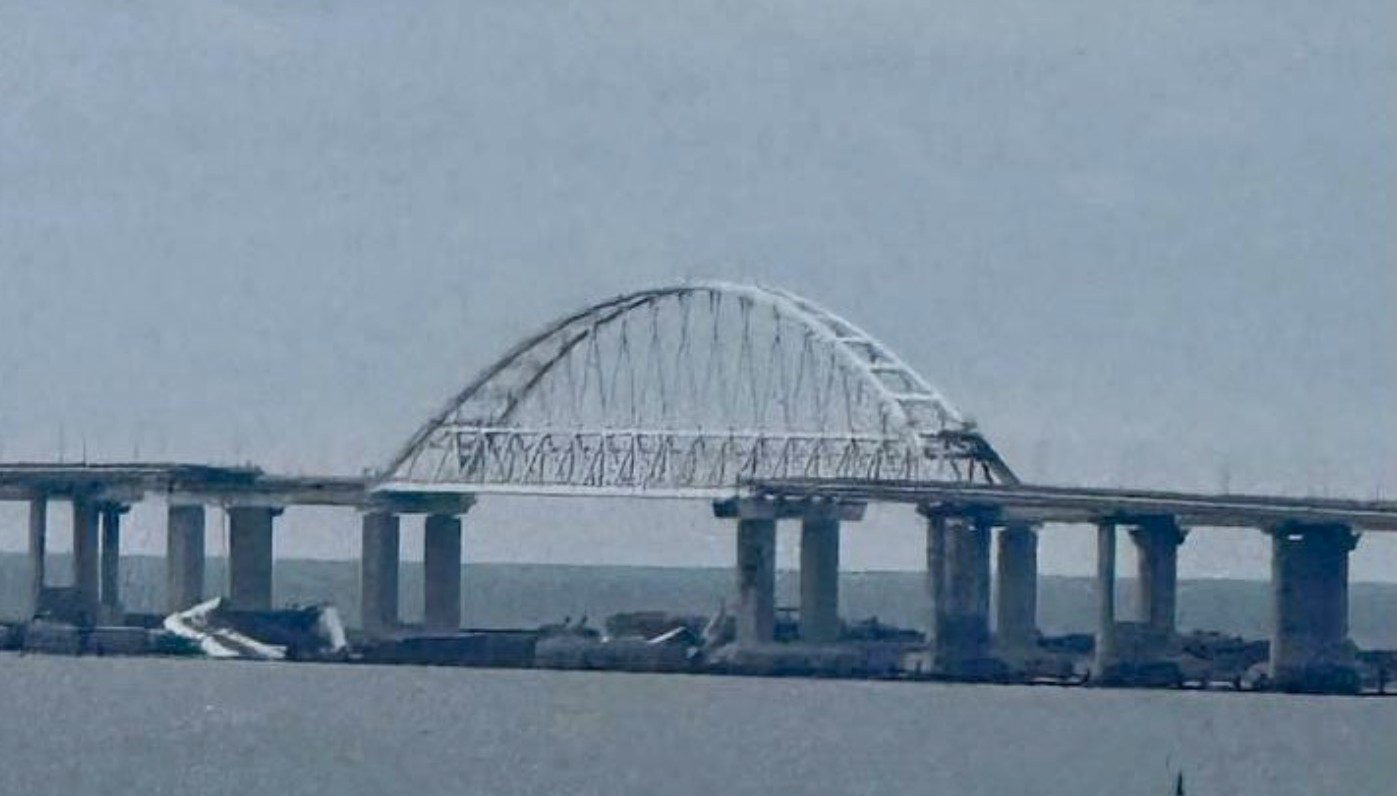
Images online suggest the damage to the bridge is anything but minor. Footage appears to show an aerial weapon resembling Ukraine’s FP-5 Flamingo cruise missile, capable of carrying a warhead weighing nearly a ton, closing in on the bridge. The footage also indicates that the weapon was guided directly by an operator. The damage appears substantial, with a 227-meter road arch span having fallen into the Kerch Strait and the railway arch also hit.
The strike is the culmination of a long campaign targeting the bridge, which has been a hated symbol of Russia’s annexation of Crimea. As Ukrainian President Volodymyr Zelensky himself explained, his country’s “warriors gradually destroyed air defense systems, radars, electronic warfare equipment and other designated targets on the way to the final objective”.
What will all of this mean for Russia? The most immediate consequence is psychological and reputational. Vladimir Putin personally opened the bridge in 2018 as a means of deepening Russia’s hold on Crimea. As he now prepares to visit Shenzhen for talks with Donald Trump and Xi Jinping, the strike is a public embarrassment for the Russian president. It threatens to undermine his standing at a meeting where Moscow — for all its great power pretensions — is already the weakest player alongside two actual superpowers.
But embarrassment can be managed, particularly when the Ukraine war has supplied Putin with plenty of awkward moments on the international stage. There are other, more tangible results. The Kerch-Yenikale Canal, located between the Sea of Azov and the Black Sea, currently cannot be used by merchant ships, which in turn interrupts deliveries of fuel, fertilizer and grain from Russia. Road and rail traffic across the bridge have also been halted, severing one of the two routes linking Russia to occupied Crimea.
Although Moscow’s military relies more on the land corridor through southern Ukraine to supply its forces, this strike disrupts residents’ and tourists’ ability to reach the Crimean peninsula. That serves the broader Ukrainian objective of isolating Crimea, undermining its viability as an enemy stronghold. It will also render it an increasingly unattractive destination for would-be Russian inhabitants, and make the occupation increasingly difficult to sustain.
Adding to Moscow’s woes, it will be even harder than usual to get the bridge back up. Ukraine now has the ability to target floating cranes and repair crews, and is likely to delay repairs via sustained attacks. Following Kyiv’s assault on the bridge in October 2022, Russia took four-and-a-half months to restore the road section and seven months to repair the railway. With the damage this time apparently more extensive, and Ukraine better equipped to launch further strikes, repairs could take considerably longer.
In another fit of optimism, Kremlin spokesman Dmitry Peskov promised that the bridge would be rebuilt “even better than before”. He appears not to have grasped that the Kerch Bridge is becoming Russia’s answer to Britain’s Forth Bridge. The latter was famously said to require endless repainting, with work beginning again at one end as soon as the other had been finished. The Kerch Bridge faces a rather more destructive cycle: no sooner repaired than struck again, condemned to an endless succession of reconstruction and ruin. The war has developed, and decidedly not to Russia’s advantage.
