









Nov 13 2026 - 4:00pm
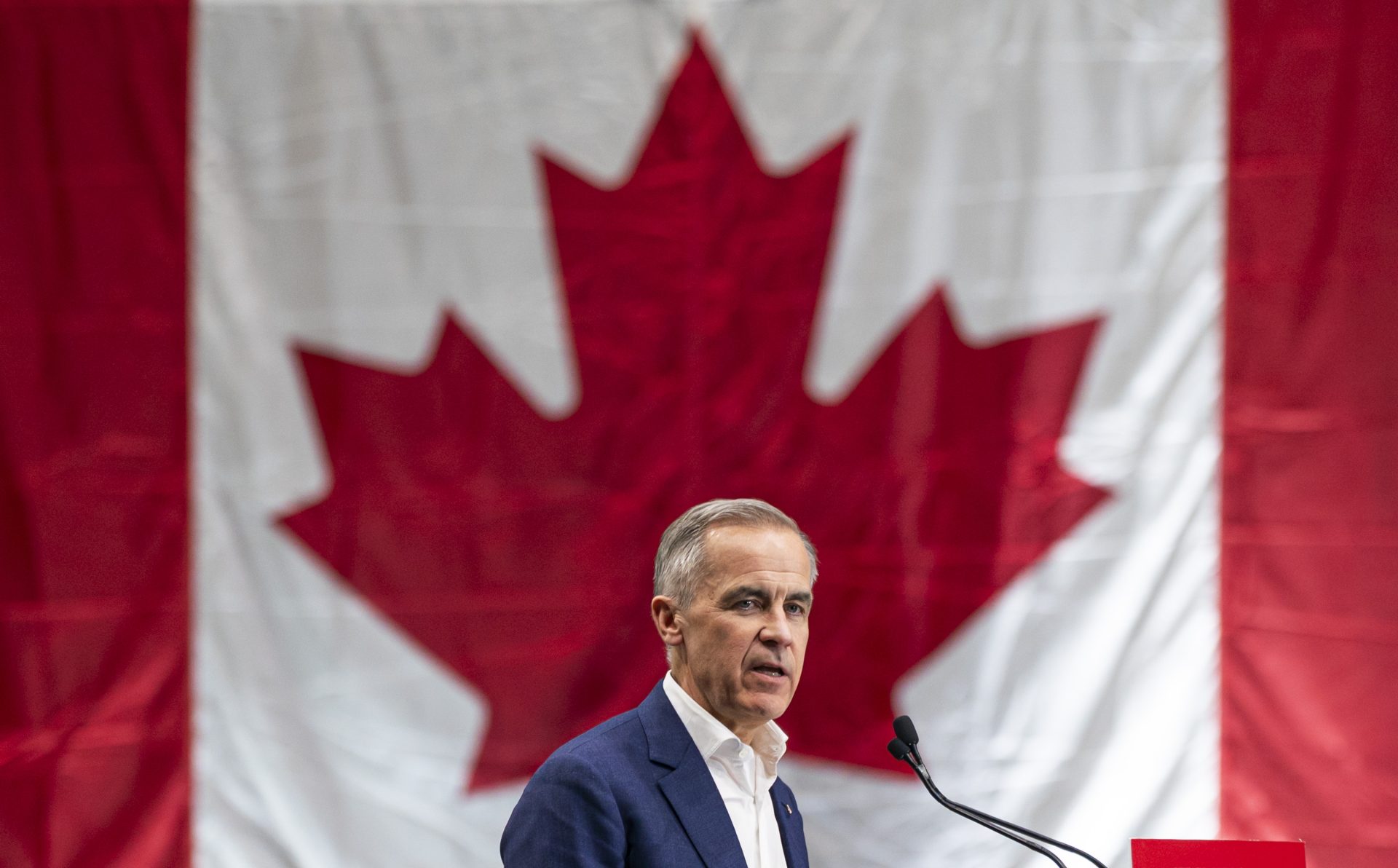
Canadian Prime Minister Mark Carney continues to enjoy an extended political honeymoon. His approval ratings hover around 65%, his Liberal Party commands a consistent polling lead, and the Democratic blue wave in the US will likely strengthen Canada’s position in Donald Trump’s trade war. Yet the first inklings of an anti-Carney backlash are now evident in public reaction to his second government budget, specifically on immigration targets that seem eerily similar to the excessive policies that scarred the Justin Trudeau years.
On the surface, Ottawa appears to be signaling no dramatic increase: 380,000 annual permanent residencies are to be granted for the next three years, on top of 370,000 temporary residencies. This actually represents a substantial lowering of admissions from the extraordinarily high levels of previous years, including the permanent residency target of 500,000 in 2025. But beyond the official headline figure, buried in the fine print, there is an additional pathway for permanent residency for roughly 200,000 people currently on temporary stays. The government is also doubling the maximum amount of time for which low-wage, foreign workers can be hired.
Canada needs breathing room to absorb the magnitude of the last few years’ massive demographic expansion. In 2022-23 alone, the country’s population grew by over 5%, driven almost exclusively by immigration. But rather than acting to restore discipline to the immigration system, as he once pledged, Carney has predictably given in to the demands of a business lobby that’s become addicted to an elastic supply of cheap migrant labor.
This approach is hurting decades of solid consensus on immigration in Canada. The classic system the country pioneered did not rest on limitless openness. On the contrary, it employed a highly selective system of points-based admissions, displayed a reasonable bias for strong human capital, and made no bones about the fact that newcomers were supposed to integrate into an existing developed economy. Such an arrangement enabled Canada to develop a diverse, multicultural society while at the same time avoiding the toxic polarization around immigration that’s become the norm elsewhere in the West.
But once employers got a taste of cheap labor, they couldn’t stop. Importing workers, after all, was so much easier than raising wages or training native employees. Carney’s decision to give in to the crassest demands of the business lobby betrays the foundations of that successful system.
Now the resulting discontent is real. A survey by the Environics Institute has found that even 46% of first-generation immigrants and 52% of second-generation citizens in Canada view current immigration levels as excessive, compared to 47% of those whose families have been in the country longer. Canadians are not so much turning against the principle of immigration itself as rejecting its dysfunctional administration and the highly uneven distribution of gains.
The stakes go beyond Carney’s immediate political future. Canada remains a bulwark of liberal technocracy on the world stage, but its continued success depends on its ability to acknowledge the grievances that have fueled populism, chief among them immigration. By making the same mistakes as the last Liberal government, Carney risks doing the opposite. Combined with persistent cost-of-living challenges and a housing crisis, the consequence could be the emergence of the very insurgent forces that Canada has so far kept at bay. Then, the erstwhile liberal bastion could end up closer to the populist wave now rolling across Europe and which, despite MAGA’s latest electoral setbacks, is still very much alive in the US.
 1TrueCuencoism