









Nov 10 2026 - 6:00pm
When Donald Trump first nominated Pete Hegseth to lead the Pentagon, the choice was met with a mix of bafflement and amusement. Could a Fox News anchor with a penchant for women and drink really lead one of the largest, most complex bureaucracies in the world? But Trump got his way. Now, after a year of increasingly ambitious foreign interventions culminating in the Iran quagmire, Hegseth faces a credible impeachment attempt in Congress.
The impeachment push was launched on Monday by outgoing GOP Congressman Thomas Massie, who introduced eight articles accusing Hegseth of abuses of power. Four concern the Iran war, including allegations that he continued military operations without congressional authorization and presided over the dismantling of safeguards intended to protect civilians. The remaining charges relate to US operations in Yemen and Venezuela, strikes on alleged drug-smuggling boats, and alleged retaliation against Democratic Senator Mark Kelly.
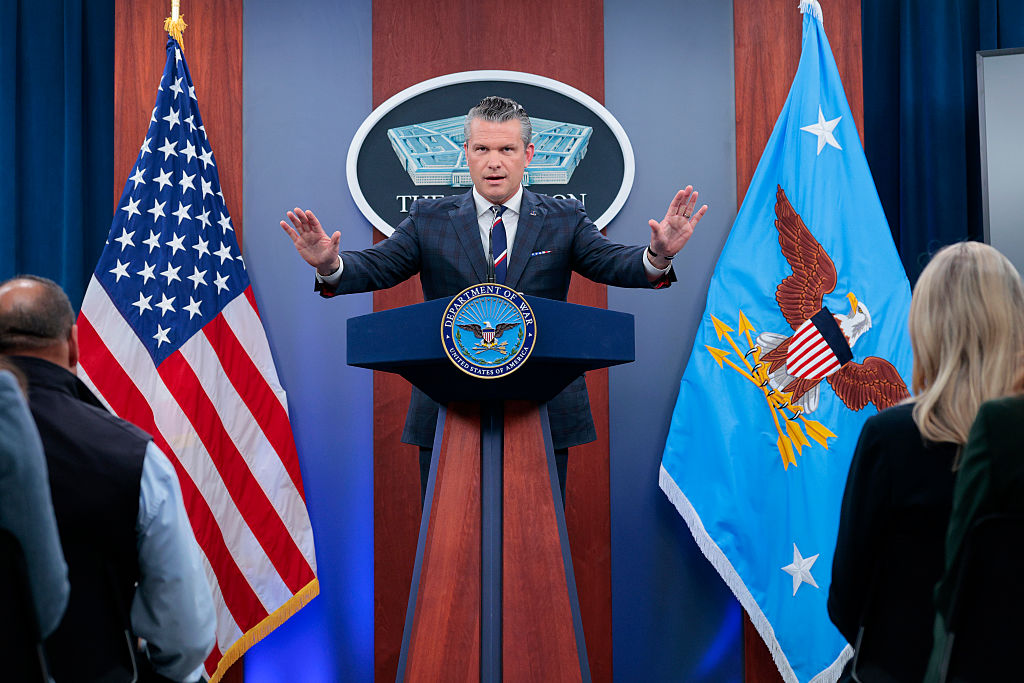
Earlier today, Hegseth used his first Pentagon press conference in six months to dismiss the impeachment effort as a “farce”. “We destroyed terror regimes’ capabilities. We sank the boats carrying poison into our communities. We put a narco dictator in handcuffs. These are not high crimes,” he said. “I was proud to execute them, and I would do it again tomorrow.”
Yet for all the bluster and bravado, the Secretary of War — as he styled himself following the revival of the department’s pre-1947 name — offered a feeble defense of his record at the press conference. In truth, he was always more a symptom of MAGA’s foreign-policy failure than its cause.
To wit, Hegseth was supposed to be a champion of the movement’s more restrained vision of foreign policy. Indeed, this is just how he presented himself early on, and why many critics of American neoconservatism and foreign interventionism backed his difficult nomination.
I was one of those champions. Indeed, when an avalanche of sexual-assault and drunkenness allegations dogged his nomination, I wrote one of the first pieces defending Hegseth on the merits. I would still defend him, because some of those allegations were indeed spurious. But it was notable that many of the defense types and ex-soldiers who came out of the woodwork to feed me supportive quotes saw Hegseth as an opponent of regime-change “forever wars”.
As one administration insider told me at the time: “Pete believes that the wars we were involved in [after 9/11] were a disaster for us, for our armed forces, and for the people of those countries. Like a lot of veterans, he believes that he was lied to, and he believes he has to shake up the [national-security] complex.”
Once he assumed office, Hegseth himself went out of his way to cultivate this image. When I spent a day traveling with him as he oversaw migrant-deportation operations at Guantánamo Bay, he described the post-9/11 wars as a “fucking mess,” adding that “they cost our country dearly: in blood, in treasure, in reputation. And the more you look at them, the more you realize the depth of the folly around what we thought we were gonna create in Iraq and Afghanistan. Iran effectively controls Iraq, the Taliban effectively controls Afghanistan.”
The Pete Hegseth of those days — the interview took place in January 2025 — might now add ruefully: “Iran effectively controls the Strait of Hormuz.”
Between those early days and February 2026, that vision was forgotten — by Trump himself, and the Iran hawks in his administration. Foremost among them is Hegseth, who has repeatedly pushed for escalation, according to my sources and public reporting.
The whole administration was responsible for the betrayal, and voters punished the GOP accordingly in the midterms. But Hegseth rendered it especially galling: he abandoned his wariness of foreign-policy quagmires and retained only the Trumpian bluster about “lethality” and “warfighters.” Add widespread complaints of mismanagement — head-spinning levels of staff turnover early on, paranoia in the front office, strained civilian-military relations, the bloodbath at a school in Iran — and Hegseth makes for an easy scapegoat for Democrats and antiwar Republicans alike.
But the arc of his tenure — from war-wary ex-soldier to an enthusiastic cheerleader for an ill-conceived war — indicts the whole administration.
Sohrab Ahmari is the US editor of UnHerd. His next book, on The Triumph of Normal, is forthcoming from HarperCollins.
 SohrabAhmari