









Oct 30 2026 - 7:00am
Despite another denial from Downing Street, speculation that a snap election is imminent isn’t going away. It’s no wonder. This week’s Budget is a policy vacuum that begs to be filled — by, say, a manifesto. Also, take a look at the Office for Budget Responsibility’s predictions for the economy. The decline of housebuilding, for instance, or the spending cuts implied by the Government’s borrowing plans. Does 2029 seem an auspicious time for a general election? No.
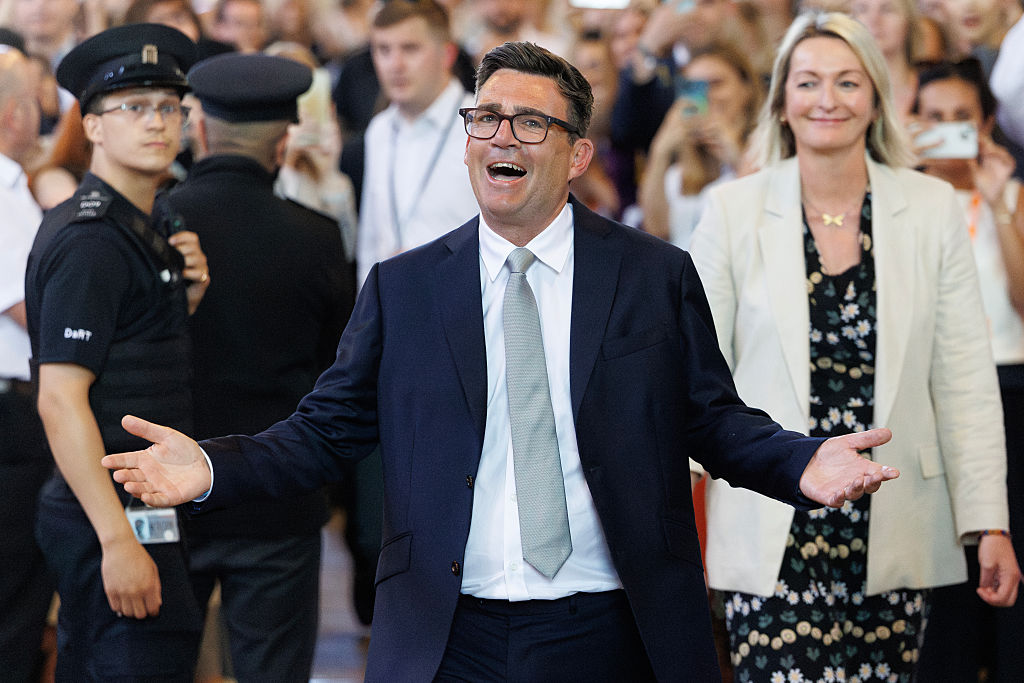
Then there’s Andy Burnham’s loose talk about rejoining the European Union in some way. But he can’t sit on the issue for too long, because his colleagues are already causing problems by floating their own ideas. And yet the Prime Minister won’t regain control of the debate he started unless he departs from Keir Starmer’s status quo. By Burnham’s own admission, however, that can’t happen in this parliament.
Of course, calling an early election would mean facing a new parliament. And yet that tactic doesn’t always work. In 2019, Boris Johnson gambled and won. In 2017, Theresa May gambled and lost. In 2007, Gordon Brown almost went for it then lost his nerve. Three precedents, three different outcomes.
But for the most relevant precedent, we need to look back more than a hundred years. In 1923, the prime minister was Stanley Baldwin. He was a Tory, but like Burnham he was sitting on a Commons majority and had plenty of time before he had to call an election. So what possessed him to go to the country so soon?
Crucially, Baldwin — like Burnham — was a replacement prime minister (his predecessor, Andrew Bonar Law, had stepped down due to ill health). That meant the Tory majority wasn’t Baldwin’s majority, which mattered because he wanted to make major changes to Government policy. Specifically, his plan was to tackle rising unemployment by raising trade barriers. However, this would have gone against a promise by the Conservatives at the 1922 general election — hence the need for a fresh mandate.
Burnham finds himself in a remarkably similar position. Though he’d argue that he wants to liberalize trade, rejoining the single market and/or customs union would subject the UK to the EU’s common external trade barriers with the rest of the world. And in any case, Starmer fought the 2024 general election on an explicit commitment — the “red lines” — not to do either of those things.
If that parallel isn’t close enough, consider the fact that Baldwin was emboldened by a seemingly divided opposition. In the early Twenties, the Labour Party was on the rise and the Liberal Party was split between the Asquith and Lloyd George factions. Today, the great schism is between the Conservatives and Reform UK, which will encourage Burnham to fight an election.
But here comes the twist. By fighting the 1923 election on a protectionist platform, Baldwin’s strategy backfired, inspiring the Liberals to reunite around the cause of free trade. The Tories lost 86 seats and their majority. The Liberals did well enough to enable Ramsay MacDonald to form a Labour minority government.
And so the question for Burnham is this: can he be sure that fighting a snap election on a promise to drag Britain back into Europe won’t rally and reunite the Right-of-center opposition? After his spectacular miscalculation, Baldwin was allowed to remain as Tory leader. Burnham may not be so readily forgiven.
Peter Franklin is Associate Editor of UnHerd. He was previously a policy advisor and speechwriter on environmental and social issues.
 peterfranklin_