




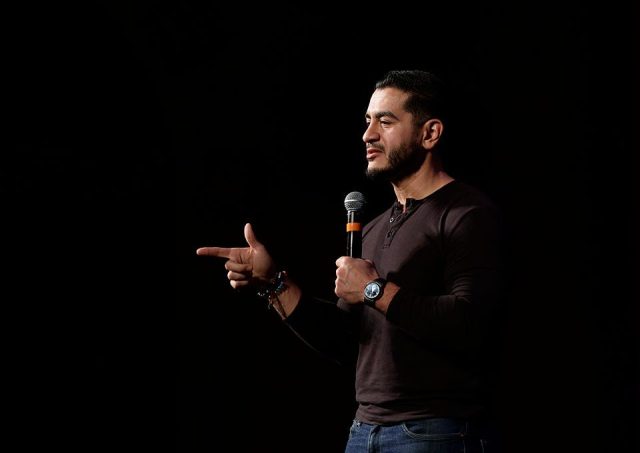
Abdul El-Sayed is attracting disenchanted swing voters in Michigan. (Getty)





When Donald Trump flew to Dearborn, Michigan, days before the 2024 election, he was greeted like a king. In between rounds of applause at the Great Commoner restaurant, he made a solemn pledge to the mostly Arab-American crowd: peace in the Middle East. As a token of their gratitude, members of the community gave Trump a peace plaque embossed with a Reagan quote: “Peace is not the absence of conflict, but the ability to deal with conflict by peaceful means.” Trump even clinched endorsements from several Michigan imams.
Two years on, the once Trump-loving Muslim community here looks back on those promises with bitterness. Some of Israel’s worst atrocities in the Gaza war, they believe, took place under Trump’s watch (and the bombings have continued even under his peace plan). Meanwhile, Trump has plunged America into yet another Middle East war — this time with Iran — that is now stretching into its ninth month. And it is putting upward pressure on gas and other consumer prices to boot. In Michigan, roughly 40% of the state’s population is struggling to afford basic necessities, and fuel costs have surged to nearly $5 a gallon, up from an average of $3 a gallon just before the war.
No wonder, then, that some of Trump’s own Muslim voters are beginning to reconsider their vote. Many are even prepared to back a very different kind of politician — Abdul El-Sayed, the progressive Democrat poised to become the state’s next senator, if polls are to be believed.
Earlier this month, MS NOW conducted a panel with 10 Michigan Trump voters, asking them whom they planned to support come 3 November. Only one voter raised her hand for Republican Mike Rogers, while five others raised theirs in support of El-Sayed. This seemed, to put it charitably, fanciful. Were half of Trump’s Michigan voters really planning to back a progressive well to the Left of most Democrats, never mind MAGA Republicans?
But last month, a New York Times/Siena poll suggested that a shift was underway, albeit less pronounced than the MS NOW panel suggested. It found that El-Sayed was garnering support from 8% of 2024 Trump voters, better than other Democratic Senate nominees in swing states. A recent UnHerd visit to Michigan revealed the reason: anger over the war in Gaza and the affordability crisis back home.
When Trump swept to power in 2024, Michigan was the final piece of the Democrats’ Blue Wall to crumble. In a state that Joe Biden had won narrowly four years earlier, anger over the war in Gaza and soaring inflation helped drive working-class and minority voters toward Trump. Nowhere were these gains more strikingly evident than in Dearborn, the nation’s largest Arab-majority city, where Trump won 42% of the vote.
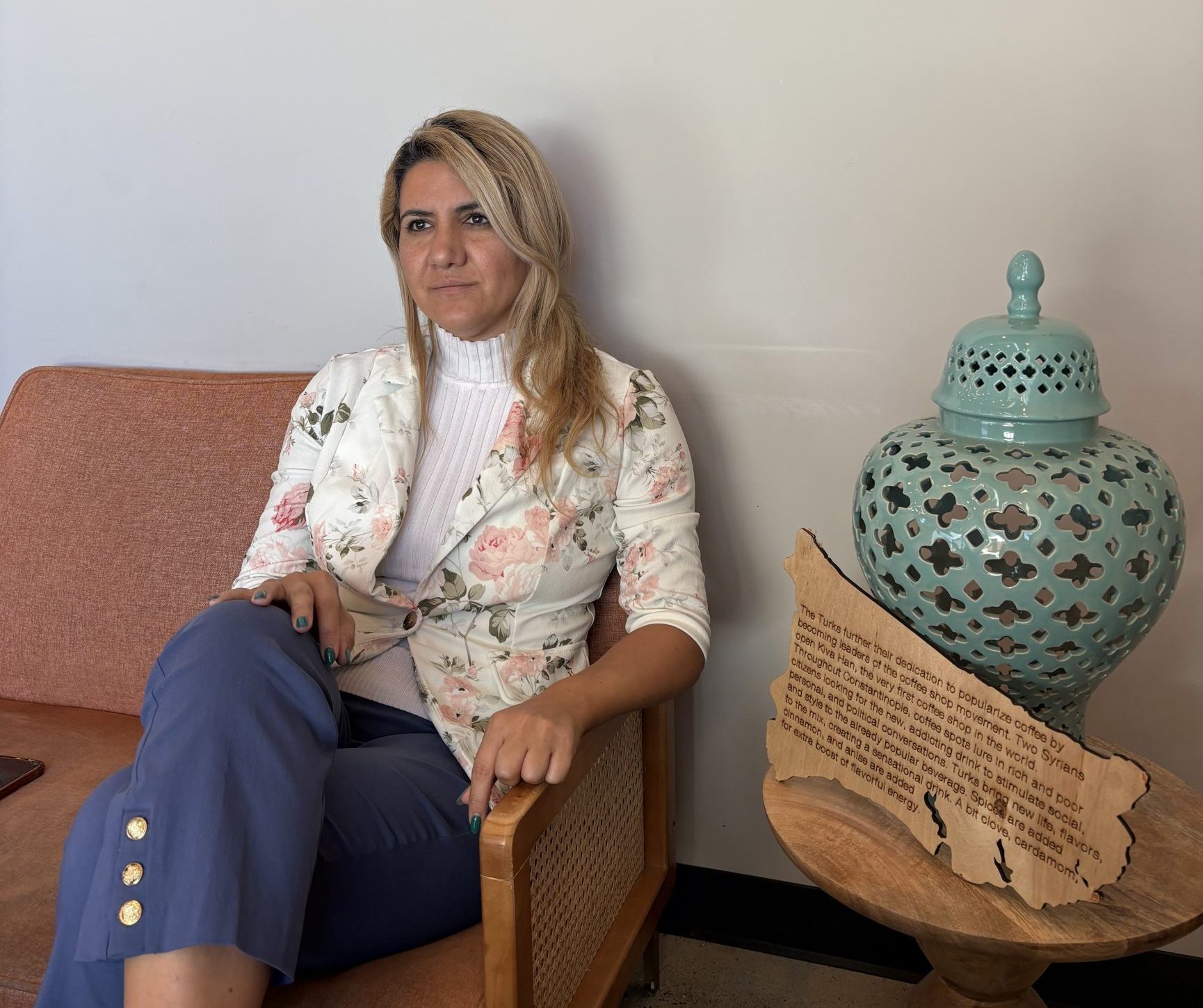
Among those who voted for Trump was Faye Nemer, who migrated to Dearborn from Lebanon as a child. A lifelong independent, she had rejected Trump in his first two presidential bids but changed her mind after meeting him in Dearborn. “Kamala Harris’s disregard for us was a complete slap in the face,” Nemer told me. “She had no interest in changing the Democrats’ position on the Middle East, whereas Trump came to us and said, ‘I want to make sure you have a voice and a seat at the table.’”
Ibrahim Duhaini, a Dearborn resident and local physician, felt similarly. Although he didn’t vote for Trump, he backed the Green Party, which won nearly a fifth of the ballots in Dearborn, potentially depriving Harris of a victory. But Duhaini felt comfortable with making what he described as a “soft vote” for Trump. “Although I did not vote for Trump,” he told me, “I knew that my support for the Greens would help him, too. I met Trump, and I had a very fruitful meeting with him. He said that he would bring peace and prosperity to the region.”
Today, both Nemer and Duhaini plan to vote for El-Sayed. They believe many others in their community, disillusioned by the war in Iran and the affordability crisis, will do the same.
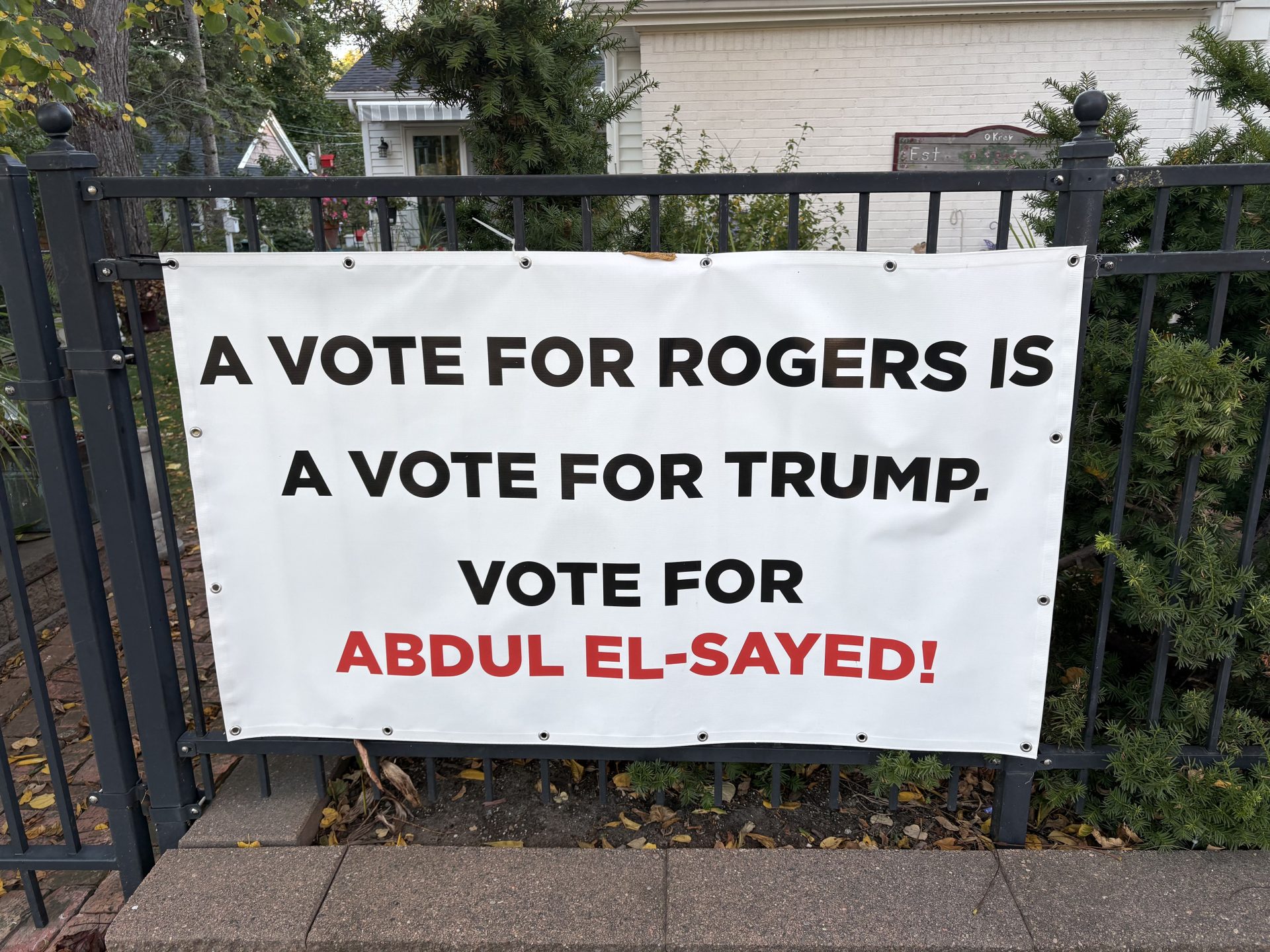
In West Dearborn, where mosques and Islamic centers stand alongside churches, Arabic signs line the streets, and bars are few and far between, there is not a Trump sign in sight. House windows and porches are plastered with Abdul El-Sayed signs reading: “Money out of politics! Money in your pocket! Medicare for all!” and Democratic volunteers are picketing on every street corner. Were Trump to show his face again here, it’s doubtful that he’d receive the same warm reaction as he did in 2024.
El-Sayed, a 41-year-old former public-health official, is vying to become America’s first Muslim senator. A progressive variously described as a Muslim Bruce Springsteen and an Arab Pete Buttigieg, he’s quick on his feet, adept at both soaring Obama-ian rhetoric and the polemical jab. One day he’s bantering with Fox News hosts about circumcisions, the next he’s sparring with audience members about Right-wing claims that he supports the Muslim Brotherhood (the only evidence for which seems to be tweets from his half-sister from more than a decade ago).
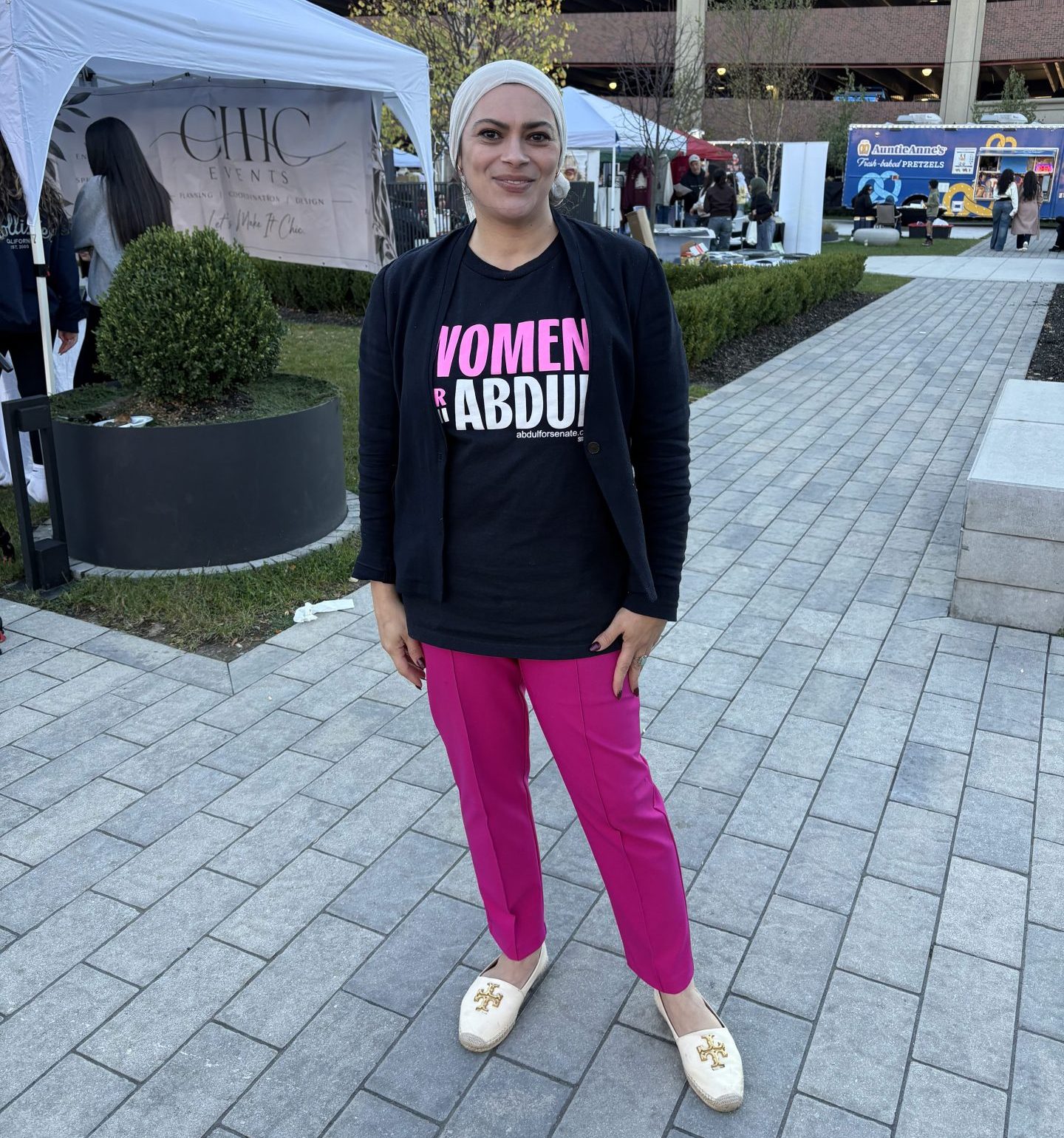
To his detractors, El-Sayed comes off as thin-skinned and condescending, which even Democratic strategist David Axelrod described as a “not appealing quality.” The RealClearPolitics polling average puts him 2.5 points ahead of Rogers, but some moderate Democrats believe an establishment candidate would be doing better in a political climate favorable to the Left. Some are even encouraging voters to leave El-Sayed’s spot on the ballot blank.
“I support Abdul because he is America First,” Nemer told me. “It’s not just his position on Israel — he wants to fix our broken health-care system and address the cost-of-living crisis. Ending the war in Iran is a good place to start.” Despite still receiving death threats over her vote, Nemer says that she doesn’t regret supporting Trump. She frames it as a wake-up call for Democrats, who took the Arab-American vote for granted: “The Democrats treated us terribly in 2024 — Harris deplatformed us at the DNC convention. The party still needs to improve, but there has been a sea change in its approach and outreach since that election.”
El-Sayed may be doing well with Arab-Americans, but there are other groups with whom he has struggled to connect. During his fractious primary battle against moderate Haley Stevens, El-Sayed severely underperformed with Jewish voters, in part thanks to his campaigning with far-Left streamer Hasan Piker, his equivocal remarks about a Michigan temple attack, and his uncompromising stance in favor of ending foreign aid for Israel (and, to be fair, all other foreign states). His standing with this community has not improved in the general, and last month, a coalition of Michigan rabbis and Jewish leaders petitioned voters to withhold their support until he tempers his Israel rhetoric and policies.
Long-simmering tensions between the black and Arab-American community in Michigan have also hurt El-Sayed. The Democratic nominee has responded with a not-so-subtle pitch to black voters that includes late-night visits to gas stations to purchase Doritos and soda. He has also ordered fried chicken on a black-influencer podcast.
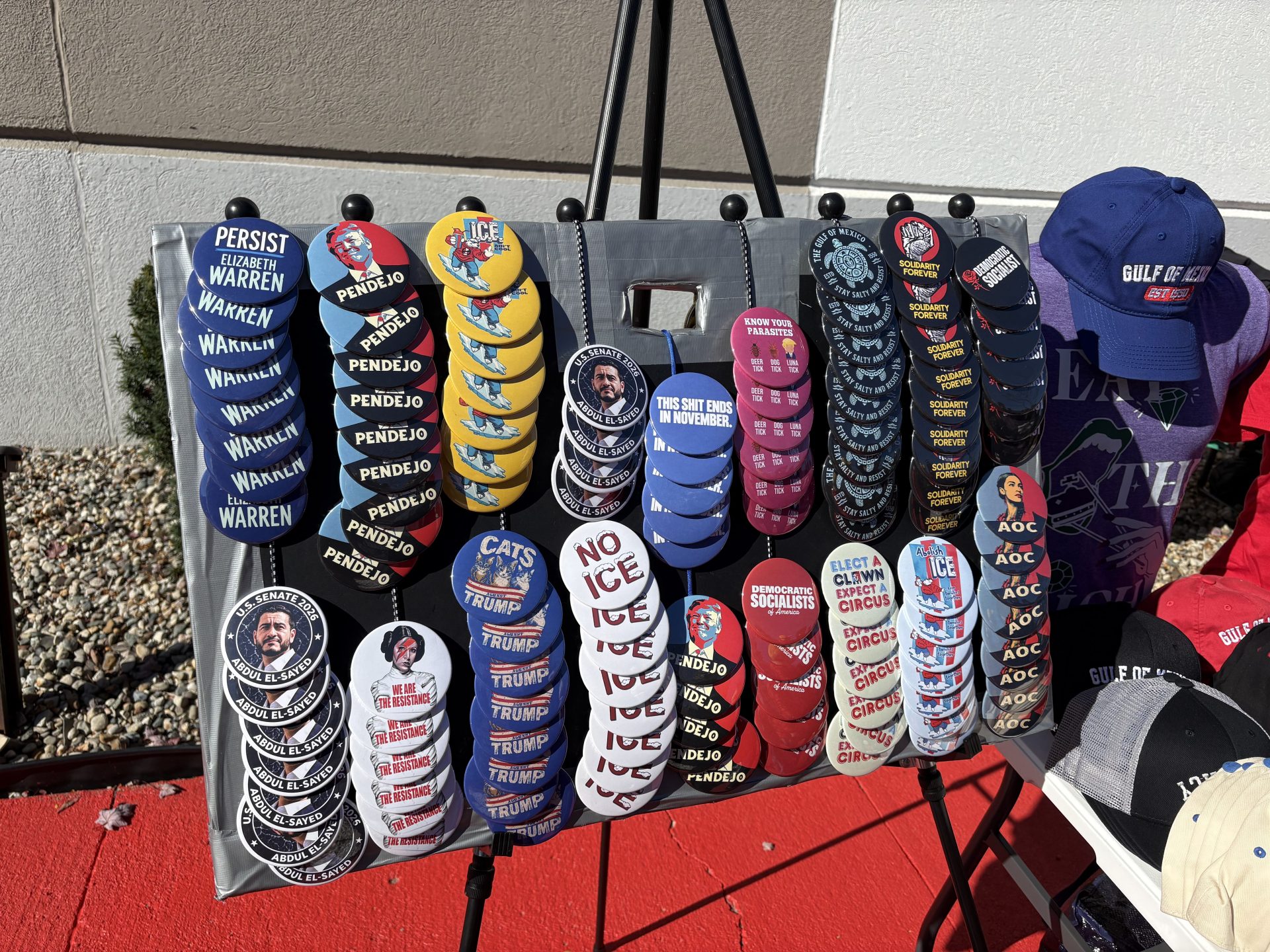
If his rally in the majority-black city of Flint was anything to go by, El-Sayed’s outreach to this community didn’t seem to be landing. Most of the attendees were older and white, with Democratic Socialists of America and “AOC for President” badges pinned on their shirts. When he took to the stage, El-Sayed was met with raucous cheers as he lamented the money being spent to defeat him, imploring the audience to “choose between the many and the money.” He was most animated when attacking Rogers, his GOP opponent, whom he derided as a “non-playing character” (NPC) and a “human sock puppet, doing what Trump and the corporations want him to do.”
Trump and Rogers have made El-Sayed’s faith a centerpiece of the GOP campaign. The President regularly refers to him as Mohammed and “a Muslim Brotherhood guy,” while Rogers has more of a tightrope to walk. Wary of angering the state’s 350,000 or so Muslim-Americans, he has tried to distinguish between El-Sayed’s purported Islamist political ties and his faith. Out on the campaign trail, he tends to avoid the issue altogether. The GOP flyers handed out to Dearborn residents made no mention of El-Sayed’s Muslim background; all focused on his “radical” agenda.
It would be wrong to suggest, however, that all voters switching from Trump to El-Sayed are Muslim-Americans. Stephania Messina, a Detroit resident, is a former Trump voter from a conservative Christian background. In 2016, she and her family were enamored with Trump and in particular his message on China. They saw Trump as the man who could bring back jobs from overseas after Michigan’s manufacturing industry was hollowed out by decades of offshoring.
But over the last few years, she and other members of her community became disillusioned with Trump. “When you are confronted with the stark, visceral reality of Americans being murdered on the streets by ICE, that just cannot be written off as fake news,” she told me. These events “appalled” the evangelical Christians in her community, forcing them to reconsider their political allegiances. “Most of my family are evangelical Christians who voted for Trump. But in the last two years, my brother, my son, and his four friends have all denounced Trump. Nearly all of them are now voting for Abdul.”
Christian conservatives are, for the most part, still riding with Trump. But it is surely a worrying sign for the President that even members of this most loyal constituency are beginning to turn against him. That might sound like good news for Democrats, yet few of the people I spoke to expressed any real affection for the party, either. Add El-Sayed’s difficulties with two central Democratic constituencies — Jewish and black voters — and Michigan’s Senate race has become an unusually tangled contest of ideology, identity, and resentment.
This race is defined as much by what voters oppose as by what they support: they are anti-Israel or anti-Muslim, anti-Trump or anti-Left. What many voters share, though, is a deep anger at the status quo, be it directed at the administration or the political system writ large. Whoever wins next week’s election — the Trump cipher or the hard-Left progressive — there is very little sign that that anger will dissipate anytime soon. As one Michigander told me after the Flint rally, “the whole country looks at Michigan when it’s an election. But it turns away as soon as it’s over.”
