









October 20 2026 - 7:00am
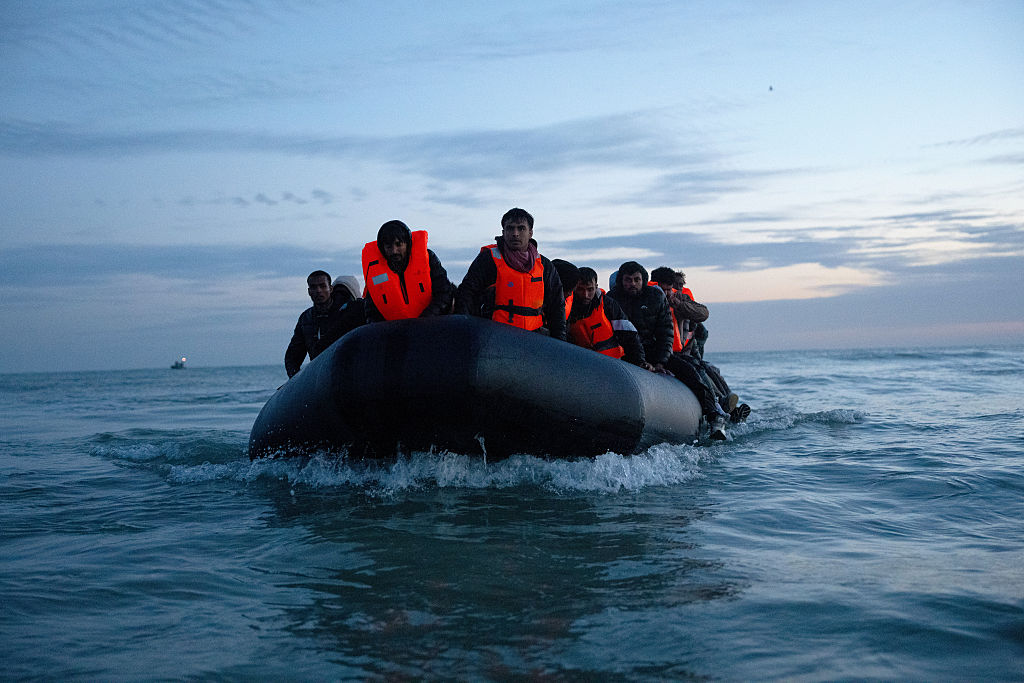
Another day, another disaster allegedly wrought by Brexit. The latest example comes from Labour minister Stephen Kinnock, who said on the most recent episode of Question Time that the precipitous rise in illegal migrants crossing the English Channel is the result of the 2016 vote to leave the European Union. This claim can be added to an ever-growing list of modern-day ills attributed to the referendum result, from the gloom afflicting Britain’s capitalists, to the decline in regional funding, higher rates of inflation and — horror of horrors — having to stand in a visa queue with non-EU travelers at airports. Some have even blamed Brexit for the Russian invasion of Ukraine in 2022.
When Kinnock was challenged on X by the broadcaster Andrew Neil over his claim, he doubled down, arguing that the deal Tony Blair’s government struck with France back in 2002 reduced the number of lorry migrants, forcing more crossings into dinghies. He further averred that the EU Dublin Regulation, which allowed for compulsory redistribution of illegal migrants across the bloc, acted as a deterrent to new arrivals. The implication is that it is the absence of this law which helps explain the surge in small boat crossings since.
Apart from Kinnock’s loose grasp of the facts — the number of illegal migrants smuggling themselves in lorries peaked in 2015, long after the 2002 agreement — it is odd to claim that Britain had it better in the EU with illegal migration. That’s because the bloc has also consistently been subject to vast flows of illegal migration since 2016 — unless we want to blame Brexit for illegal migration into the EU, too.
Of course, Britain took in more illegal migrants than it expelled under the Dublin framework while the country was still in the EU. And if Labour politicians were really concerned about a deterrent for illegal migration, they would not have voted against the Tories’ Rwanda scheme. Yet Kinnock himself voted three times against that very scheme. Deterrents against illegal migration are only legitimate, it seems, if approved by Brussels, but are “unlawful” and “unworkable”, in Kinnock’s words, if passed by a sovereign parliament in Westminster.
Small boat crossings are one of most totemic examples used to demonstrate the supposed paradoxical folly of Brexit, that a vote for stronger border controls has resulted in a weaker, more porous border. Yet the real paradox of the vote is that there are so many politicians like Kinnock — elected representatives who think the national parliaments in which they sit are illegitimate unless they are approved by authorities outside the country. More British voters voted for Brexit than have voted for anything in the country’s history before or since: it represents the kind of democratic power of which most politicians could only dream in the modern era. Nor is there any doubt that it was indeed a vote for tighter border controls.
Yet the persistent pattern since the Brexit vote is that Britain’s leaders have refused to accept the responsibility thrust upon them. It is this fear that makes the idea of returning to Brussels so alluring, the prospect of once again being able to shunt responsibility away from Parliament into the committee rooms of Brussels.
Philip Cunliffe is Associate Professor of International Relations at the Department of Risk and Disaster Reduction, University College London. He is the author of seven books, including, most recently: The National Interest: Politics after Globalization.
 thephilippics