









October 19 2026 - 5:00pm
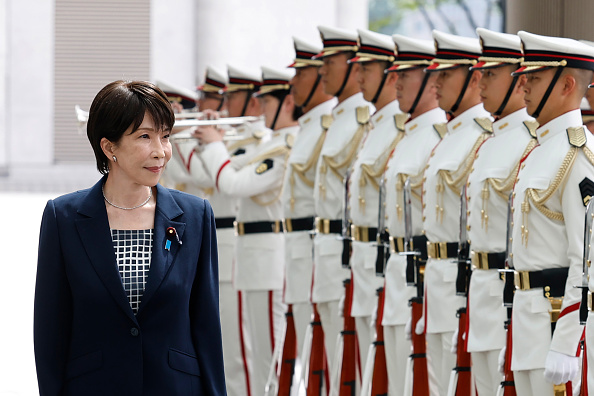
Japan’s Prime Minister Sanae Takaichi has said that her government is “seriously considering” introducing the use of nuclear-powered submarines. Speaking before the Diet (Japan’s national legislature) last week, Takaichi indicated that the move could be part of an update to the country’s defense strategy planned for later this year.
Nuclear-fueled vessels would considerably extend the range at which Japan’s naval self-defense forces (SDF) could operate, with one report predicting an increased duration of 80 days at sea. The greater speed and flexibility of nuclear-fueled vessels would also be more suitable for the Vertical Launch System (VLS) missiles that Japan is planning to acquire. But, more importantly, the move is evidence of a conceptual change in Japan’s defensive posture, after 80 years of severe constraint as a pacifist country blocked by international and domestic agreements from developing nuclear weapons.
Takaichi has already committed to revising the constitution and remaking the Japanese military — giving a hint of her resolve when she implied that her country would respond militarily were China to invade Taiwan. Theoretically, Japan is constrained by the Atomic Energy Law of 1955 that forbids the military use of nuclear energy, including for SDF vessels. But Takaichi looks set to ignore that. She has already stated that there is “room for discussion” over the wording of Japan’s Three-Non-Nuclear Principles, which were adopted in 1971 and forbid the country from possessing, producing or introducing nuclear weapons.
Such posturing has already led to furious responses from the Chinese, and many question whether the nuclear submarines are a first step towards Japan either hosting or even producing nuclear weapons.
Takaichi has meanwhile stressed that she is simply working in tandem with allies to play a greater part in the defense of the region. Australia is planning a fleet of nuclear submarines through a tripartite agreement with the US and UK, while South Korea is planning to develop its own. And few would dispute that the region has become significantly more tense in recent years as China continually threatens Taiwan and a more confident and permanently belligerent North Korea edges closer to Russia.
Yet any move towards upgrading or increasing the military, or adopting a more aggressive posture, especially when a nuclear — the very word retains a powerful negative force in the Japanese imagination — element is involved, is bound to provoke a fierce domestic response. Takaichi’s comments in May that the pacifist constitution needed to be updated “to reflect the demands of the times” brought thousands onto the streets of Tokyo. Acquiring even one nuclear submarine would also be immensely expensive, costing around a trillion yen (roughly £5 billion), at a time when the Japanese economy is especially fragile.
Nuclear submarines would, however, go down well with the Trump administration, which is urging Japan — along with allies across the world — to contribute more to its own defense. Takaichi may be counting on some trade and tariff concessions as a reward for her willingness to upgrade.
But in revising the constitution, the Japanese PM faces considerable hurdles. A two-thirds majority in both houses of parliament is required, along with a referendum. Even if she manages the former (she lacks a majority in the Upper House), opinion polls provide a confusing picture, with some pointing to support for revision and others for the status quo. It would likely be very tight.
Should she fail, Takaichi may have a Plan B, of which the nuclear upgrade is a sign: a significantly strengthened SDF with revision to the nuclear principles, leading to deeper operational alignment with the US and others. These arrangements would render the constitutional constraints less inhibiting.
One way or another, the Takaichi era is likely to bring about a sea change to Japan’s defense strategy. The sun may be setting on a purely pacifist Japan.
