









October 17 2026 - 8:00am
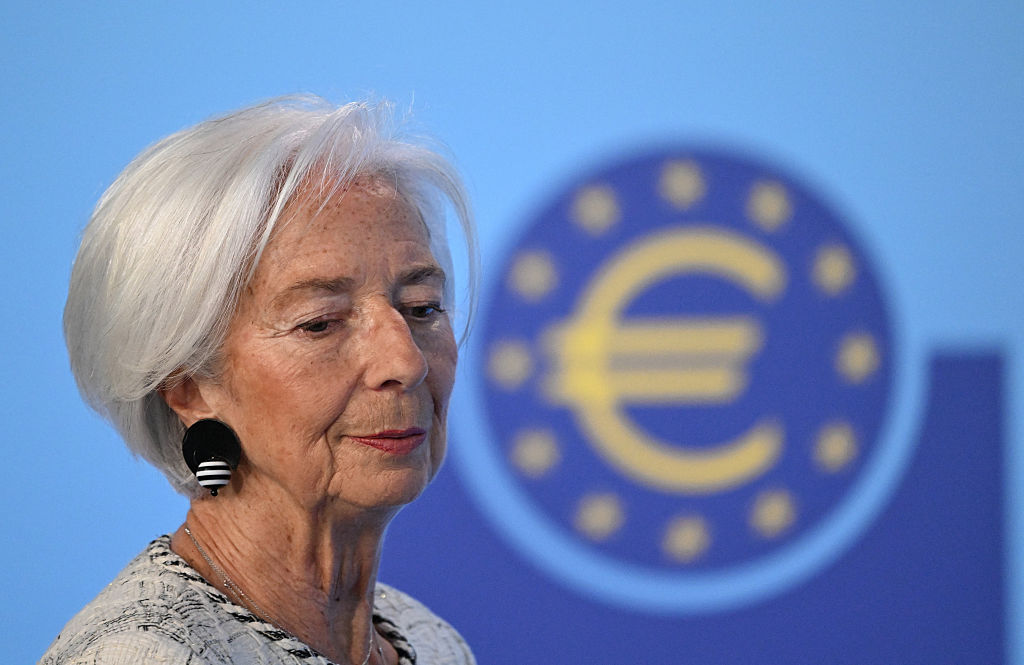
Reports that Christine Lagarde would be stepping down as president of the European Central Bank (ECB) to take up a role as chair of the World Economic Forum (WEF) first emerged last year. That was well before the recent turmoil in the French bond markets.
The thinking back then was that Lagarde’s early departure would give Emmanuel Macron and his colleagues in the European Council an opportunity to appoint another centrist to the ECB presidency. This was seen as an insurance policy against a potential victory for Marine Le Pen and the Rassemblement National (RN) in the 2027 French presidential elections. Right now, there is an additional concern about Lagarde being drawn into the French election campaign. This is why there are new reports that her move might happen faster than previously thought. While it may be hard to understand why one of the world’s top central bankers would aspire to run an organization like the WEF, it is clear why she would not want to be at the ECB during the election campaign.
Unlike Mario Draghi’s response to the 2012 eurozone crisis, the current ECB president would not be in a position to do whatever it takes if France suffers a financial crisis in the run-up to elections next April or afterwards. This has nothing to do with the nationality of the president. It is because of the political and legal constraints the ECB would face. As Draghi suggested this week, the scope for ECB intervention is much more limited today than it was in the last decade, when inflation was comparatively low.
After the pandemic, the ECB gave itself the Transmission Protection Instrument (TPI), a tool to support the “smooth transmission” of monetary policy across the eurozone, and to ensure that it had another, more flexible instrument to ward off a speculative attack on a particular country’s bond market. But there is no question of a speculative attack against France. What’s happening right now is that international investors are selling bonds. Lagarde’s recent announcement that the ECB had instruments available to defend against unwarranted price movements failed to impress the market for that very reason. The price of French bonds has fallen because people are selling. For the ECB to have a lasting impact on French bond yields, it would have to intervene — not verbally, but through buying.
As ECB president, Draghi introduced the Outright Monetary Transactions (OMT) program to allow the bank to buy euro area countries’ bonds and bolster the currency, albeit with hard conditions imposed. The OMT is a more suitable program than TPI to deal with a situation like the one in which France presently finds itself. But it is unlikely that any French government, present or future, would ever accept it. And it is not clear at all that the ECB can bail out a country suffering from a financial crisis as a result of policy choices unless that country is willing to accept a hard correction.
As Draghi has reminded us, his asset purchases occurred at a time when inflation was below target. The ECB is significantly more constrained today than it was back then.
This is an edited version of an article that first appeared in the Eurointelligence newsletter.
