




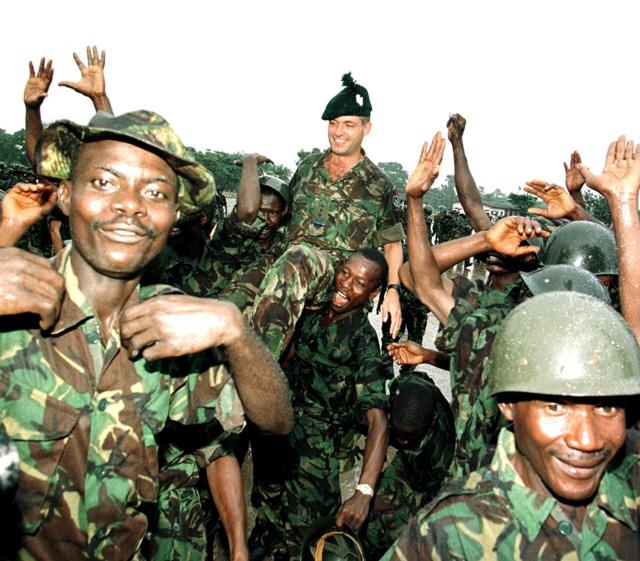
A camp not far from Freetown, following the British intervention in 2000. (Seyllou Diallo/Getty)





You don’t have to travel long in Sierra Leone to hear stories of its 11-year-long war. On my second day in the country, dazzled by heat, I visited a secondary school and met its head teacher, Joseph M Kai. It was Independence Day – 27 April – but the celebrations were muted, as Sierra Leone’s President, Julius Maada Bio, was worried that the partying might spill into anti-government protests. Still, Kai’s pupils had the day off, and they were making the most of it, playing a riotous game of soccer on the dusty pitch.
Kai looked out at the boys playing, and told me about his childhood during the war. He was, he said, younger than his pupils when he saw someone burned alive in front of him. The man was a rebel, and a few weeks previously, he’d shot another person, an act which Kai witnessed too. Now, the murderer was at the mercy of a mob, seeking revenge.
They shoved a tire around his neck, doused him with gasoline, and set him alight. This was 1997, Freetown, the capital of Sierra Leone. Kai and his family had been driven from their home in Kenema, a city in the east of the country, by the rebel advance. They arrived in Freetown among thousands of other refugees. “We were accused of being rebels, spat at, called ‘monkeys’, people said we had tails,” he says. Kai’s older brother didn’t make it – he was captured by the rebels and taken to Liberia.
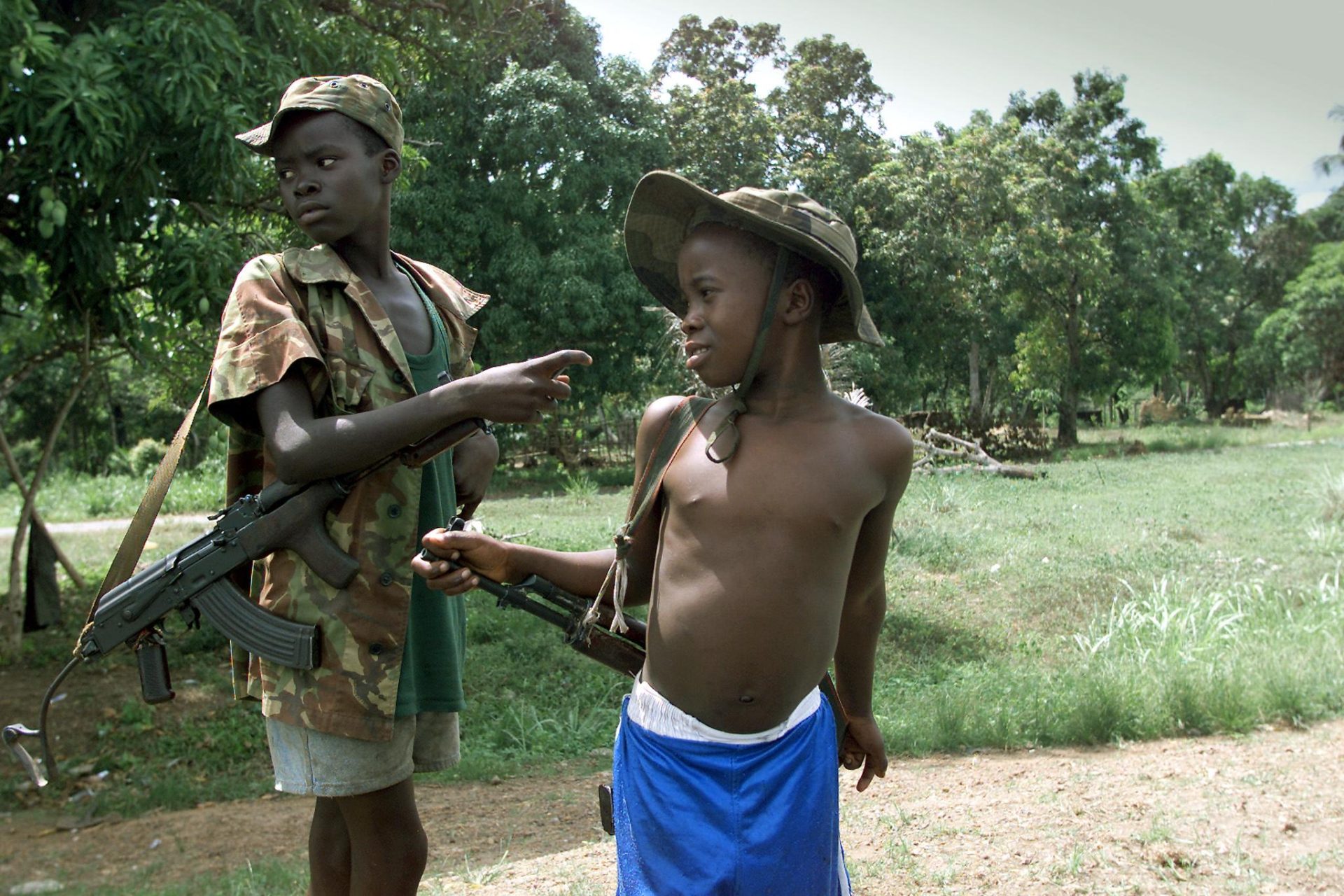
Kai’s family were educated, but in Freetown there was no work. So Kai and his siblings sold charcoal to support themselves. They sheltered in a hotel commandeered by “Kamajors”, a civil defense militia, who wore voodoo-infused “body-armor”: string vests, hung with woolen charms and trinkets. When there was a general amnesty for weapons in 1999, Kai’s mother persuaded him to take in one of their guns to receive payment. It was a believable story – child soldiers were common. The money kept them going for a while. But “it was very, very hard,” Kai says. Throughout the war, he barely went to school.
***
It’s been 25 years since the end of Sierra Leone’s war. What began as an army uprising against the corrupt administration of the then-President Joseph Momah on 23 March, 1991, swiftly spilled into a bloody regional conflict. In a small country of five million people, more than 50,000 people were killed, and hundreds of thousands more wounded, disabled and displaced. At one point, the army rebels held almost all the country, including parts of Freetown. Speak to anyone in Sierra Leone over the age of 30, and they will have stories of trauma and loss.
It’s too easy to dismiss Sierra Leone’s conflict as a historic tragedy – simply the kind of thing that happens in Africa, as inevitable as the rains. But the British military intervention, which brought the war to an end in an extraordinary fashion in 2001 – through concentrated force, in-depth understanding of regional politics and clear, boundaried objectives – showed how Western powers can use military force humanely and effectively to create change, including in current conflicts, such as Iran.
Yet after a bright period of stabilization and peace, the country seems to be backsliding into the conditions which led to the war in the first place. Indeed, UnHerd can today report that Britain has ended its permanent military presence in Sierra Leone, citing security concerns. And as the Western powers have pulled out of West Africa, other countries – principally China and Russia – have hungrily stepped in to fill the breach. Sierra Leone today provides a front-row seat to the new Great Game, as Western and non-Western powers scramble to control their “spheres of influence” through diplomatic, military and economic might.
***
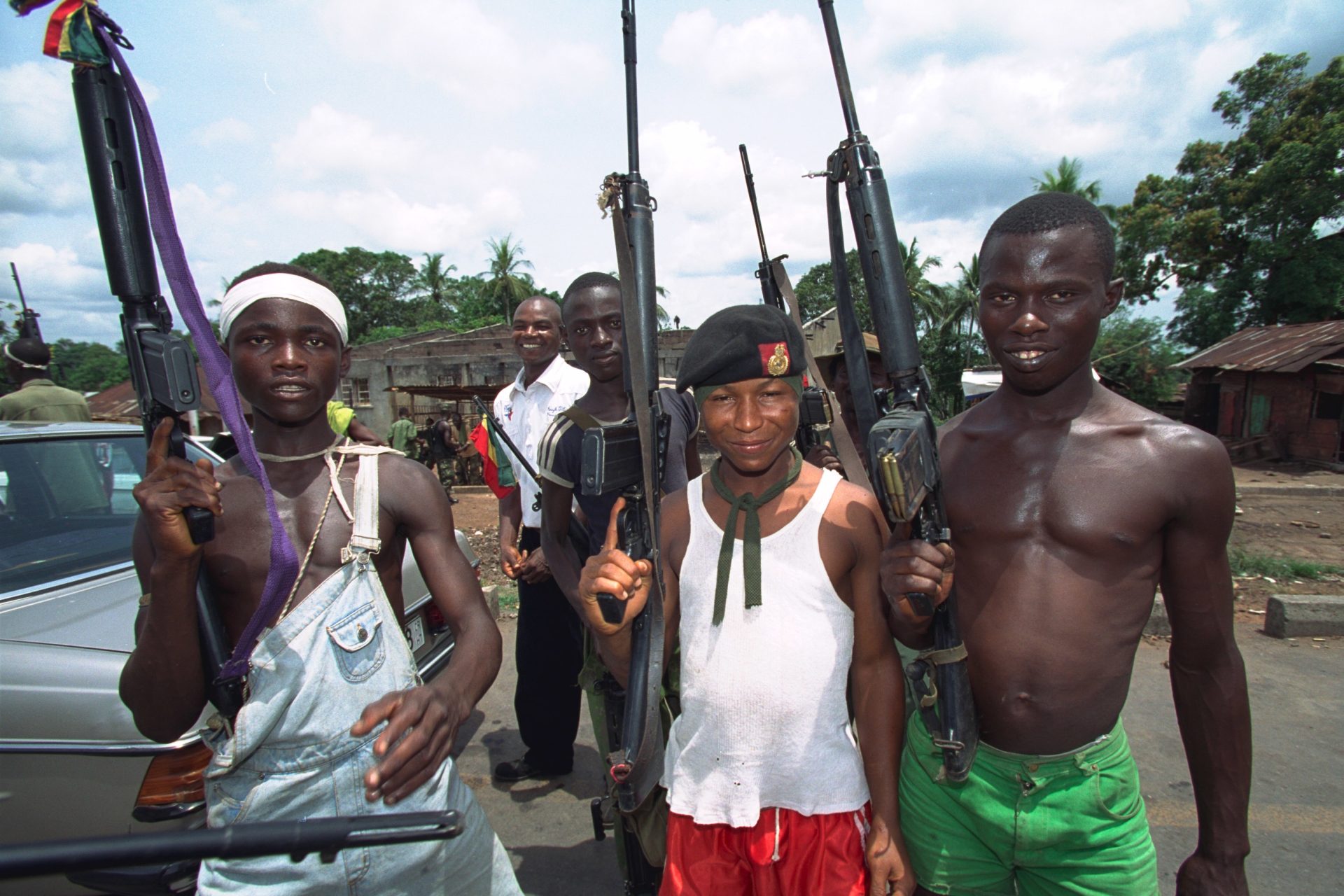
Even by the standards of Africa’s civil conflicts, Sierra Leone’s war was breathtaking in its brutality. It began when a breakaway commander in the Sierra Leone army, Foday Sankoh, led an incursion from neighboring Liberia. His nominal goal was to overthrow Momoh’s government. But sponsored by Charles Taylor, the dictator of Liberia, who wanted a piece of Sierra Leone’s diamond industry, Sankoh’s Revolutionary United Front (RUF) ran riot. Allied with elements of the Sierra Leone Army — a faction which came to be called the Armed Forces Revolutionary Council (AFRC) — the rebels terrorized ordinary Sierra Leoneans. In response, many formed militias, the Kamajors, to fight back. They were a rag-tag bunch: alongside their faith in voodoo-infused protection from bullets, they also believed that a mirror could deflect an RPG.
The rebels lacked a central command structure, and individual commanders effectively acted as private warlords, rampaging across the country, looting, raping and kidnapping children to fight for them. Among the various factions were foreign mercenaries from Britain and South Africa, the Kamajors and the West Side Boys, a gang of drugged-up thugs. Adding to the chaos were the Sierra Leone Army’s “sobels” — soldiers by day, rebels by night. Child soldiers were used by all sides — but were a signature of the RUF, as were mass mutilations. Fighters would cut off people’s arms to spread terror among the population, especially after the 1996 election returned a democratically-elected President. (“Vote for the government, lose your hand.”)
By late 1999, it looked like Sankoh and the rebels were poised to seize full control of the country. The previous decade had seen coups, counter-coups and democratic elections; there had been half-hearted attempts at peace deals and disarmament. Though the government was nominally run by Ahmad Tejan Kabbah, a former UN development worker who had been elected by a landslide in 1996, the power lay with Sankoh. He paid lip-service to the 1997 Lome Peace Agreement, which was supposed to defuse the fighting, but refused to disarm the RUF and had himself installed as Minister for Mines. The UN peacekeeping forces were underpowered and ineffective; the rebels were becoming increasingly assertive, attacking positions on the way to the airport and threatening Freetown.
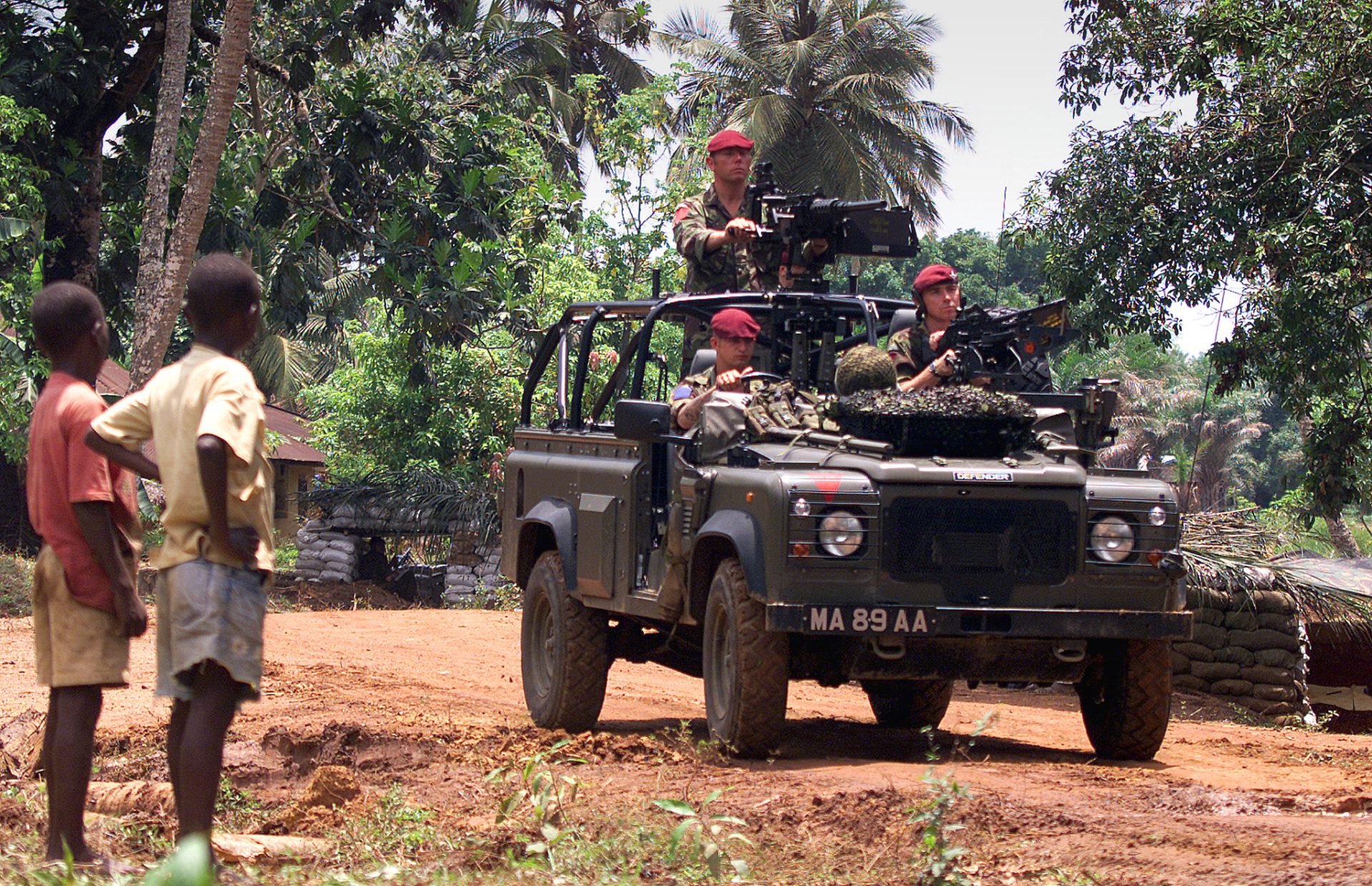
At this point, the Foreign Office ordered a Non-Combatant Evacuation (NEO) — Operation Palliser — of British citizens, headed by the then-Brigadier, David Richards, who had already visited the country on several occasions. With a small team of British officers, paratroopers and special forces soldiers, he set about taking the fight to the RUF. This went explicitly against orders from London, who wanted Richards to remain solely focused on the evacuation mission. He ignored them, rallying beleaguered UN troops and forging an “unholy alliance” between the Sierra Leone Army (SLA), the Kamajors and warlord Johnny Paul Koroma’s West Side Boys — all of whom had been at each other’s throats in previous months. Using British troops as a spearhead, they pushed back against the RUF with maximum force. They were aided in this blitzkrieg campaign by Neall Ellis, an eccentric South African mercenary who piloted a Russian-made Hind Mi-24 attack helicopter.
Within weeks, the RUF were on the back foot, and driven to the negotiating table. Whitehall — despite sneers about Richards’ buccaneering tactics, earning him the nickname “Richards of Africa” — was forced to concede that Operation Palliser had been a success. The lightning campaign was the making of Richards’s career; afterwards, he went on to command NATO forces in Iraq and Afghanistan, and served as Chief of Defense Staff. By the end of 2000, Sankoh was in prison awaiting trial, and the democratically-elected government could begin to rebuild. Thirteen of the ringleaders of the conflict were put on trial in the high court in Freetown. Sankoh died before he could begin his sentence, but Charles Taylor, the Liberian dictator, was sentenced to 50 years for war crimes and crimes against humanity. He is currently serving his term at HMP Frankland in County Durham.
Yet Richards says now that he wasn’t concerned about the storm the Sierra Leone intervention caused back home. “I never expected to be a Field Marshal or anything like that. I had a rather romantic idea of what the military could do — that the Armed Forces could make people’s lives better, rather than the conventional view of armies as brutal killing machines. This was the last British-only foreign intervention. We had sufficient military muscle to do it then. I’m not sure we could do it now.”
***
Unlike the sprawling, messy interventions in Iraq and Afghanistan – and now in Iran – Richards’s campaign was short, sharp and goal-limited. There were no lofty aspirations about “regime change” or “sowing the seeds of democracy”; instead, the campaign was about supporting Kabbah’s military until they could stand on their own against the RUF, and then lending a hand as Kabbah sought to shore up his country again. To this end, for ten years afterwards, the British ran a training center for future officers in Freetown and provided foreign aid to support the government. “We helped get it back on its feet,” says Richards. “Most coups and dictatorships in Africa are born of the armed forces, so we were very keen in Sierra Leone that we had a democratically-elected president, with an accountable armed forces.”
After that first decade, British support began to dwindle. Since 2019, the UK’s Official Development Assistance (ODA) has been cut from 0.7% to 0.5% of Gross National Income; and, as of this year, it will hit its lowest since 2008 — down to 0.3%. This drop in foreign aid has blindsided countries like Sierra Leone. In the country, things seem more precarious; politics appears to be polarizing along the lines of old tribal animosities. So far, presidential elections have peacefully rotated every five years between the two main parties, the SLPP and the APC, and no president has tried to push their two-term limit. But the current President Julius Maada Bio is seen in some quarters as autocratic and nepotistic — and some Sierra Leoneans I spoke to felt it was only a matter of time before the peaceful transition of power broke down. In addition, many of the factors that led to the war — illiteracy, uneven development, drugs and corruption — are still present; by themselves, each is a manageable issue. But taken together, their effect is corrosive, especially given the context of Sierra Leone’s endemic poverty. The minimum monthly wage is 1,200 Leones (less than £40), and outside of Freetown, mains electricity and running water are scarce. People make do with solar power units, but they also look across to the nearby Ivory Coast, which has almost comprehensive mains electricity coverage, and wonder what is going wrong.
One compelling answer to that question is corruption. It operates at all levels — I was frisked for money several times by policemen at the ubiquitous roadblocks — but, more damagingly, it pervades the apparatus of the state. Only 6% of businesses which can pay tax do so, and the main industries — mining, ports and defense — are run by the President’s inner circle. “My time to eat,” runs a local saying. This lack of altruism leads to widespread culture of short-termism: few ordinary Sierra Leoneans have many savings, and the economy still operates on a wartime GDP. After all, why bother to save, to build businesses, to invest, if an iffy contract or an insufficiently-stuffed brown envelope could undermine all your efforts?
Drugs are a caustic problem, too. “Kush” — a synthetic, psychoactive drug which sends the user into a brief, catatonic high — is endemic. Addicts are easily identified, stumbling in a zombie-like daze through the streets; in 2024, the President declared its abuse a national health emergency. It mostly leads to petty crime as addicts steal to afford a hit — but its long-term use is lethal. Last year, a corpse lay outside on the smart streets of the embassy quarter for days, as the unlucky soul had no one to bury them.
West Africa, and Sierra Leone in particular, also appears to be becoming a hub for global cocaine trafficking — and, most concerningly, the Sierra Leonean government seems to be involved. Jos Leijdekkers, a Dutch cocaine kingpin, sentenced to 25 years in absentia in the Netherlands, appears to be operating with impunity in Freetown, enjoying Sierra Leone’s lack of an extradition treaty with the Netherlands. He is even rumoured to be married to the President’s step-daughter and the father of her child.
Still, Sierra Leone is far from a failed state: some of the robust civil society so carefully built after the war remains. No-one, aside from the police and the armed forces, carries guns. And despite the occasional flutterings of unrest — there was a squib of a coup in November 2023, in which 17 soldiers died — the upper echelons of the armed forces are seen as competent and loyal. “Coup-proof”, in the words of one insider. (Though whether they would stand up to a determined incursion from neighboring Liberia or Guinea, a distant but plausible scenario, is another matter.) In addition, Freetown has a small but feisty independent media. And Sierra Leonean social media — while occasionally unhelpfully hysterical — is rambunctious and critical: a vital outlet via which to safely complain against the government and the state of the country.
***
Traveling through Sierra Leone 25 years after its war, you can’t help but call to mind other, more recent conflicts, such as Afghanistan and Iran. So what went right in the 2000 Sierra Leone intervention — and what is going wrong with more recent Western interventions?
For a start, militarily, there was sufficient use of concentrated force to deal a “shock and awe” blow to the RUF, vaporizing desire to fight. In one memorable episode, the RUF were goaded into attacking a small, isolated force of British soldiers near the airport. This was, in fact, a ruse and they were met with overwhelming firepower, killing dozens of rebels. “Clout, don’t dribble” was the maxim which lay behind any engagement with the RUF.
Richards also worked with a small, agile command structure, with responsibility for everyday tactical decisions delegated to trusted commanders. And he could also operate autonomously — free from both oversight and backseat battle-fielding from London, but also without having to manage other allies in the field. Lastly, he and his team understood the country. Their multiple previous visits meant that they knew its top people, knew where power lay and could navigate its complex tribal structures adroitly.
All of these factors were absent or lacking when it came to Iraq and Afghanistan — and it seems Trump is in danger of making the same mistakes with Iran too. From the first in Iran, there has been a lack of clear, obtainable objective — is it regime change? Neutralizing Iran’s nuclear capability? Reopening the Straits of Hormuz? It’s been all of these and more throughout the months-long conflict. Another key difference was that Sierra Leone was already at war: Britain could back one side against the other. In Iran, America initially appeared to be attempting to topple a regime, and keep a lid on any resulting instability indefinitely: “Pandora’s Box” doesn’t begin to do it justice.
And while the initial US strikes accorded with the idea of maximum, overwhelming force, they failed to deal with a knockout blow. The escalating nature of the fighting — and the way that Iran is able to wreak havoc through asymmetric drone strikes and small boat attacks — wasn’t factored in beforehand. Nor was the unpredictable way it might draw in regional allies. As Richards puts it, “I think it will be looked on as an example of how not to run operations, because of the chaos it’s caused to the global economy. And if it causes a recession, I don’t think Trump will ever be forgiven.”
And once the Iran intervention is over, what then? Again, Sierra Leone’s recovery, though imperfect, is instructive. After a promising start, which brought much-needed prosperity and stability, Britain and other Western countries took their eye off the region. In Britain’s case, this absentmindedness is especially unforgivable. The UK’s ties to Sierra Leone run deep — the state was established in 1787 by abolitionists as a refuge for escaped slaves, and it was a British colony and protectorate until independence in 1961. It sits in a key position geographically, with the largest natural harbor on the west coast of Africa. Yet even before the recent military withdrawal, Whitehall appeared to have no grand strategy for the country — or the region more broadly. There is not only, therefore, a lingering moral obligation to Sierra Leone, but also, most pressingly, an opportunity. English is widely spoken and Britain, unlike the region’s other former colonial masters, is largely looked on fondly. I remember whizzing on the back of a motorbike over stone bridges deep in the northern bush, while my guide proudly pointed out that they were built during the period of the British Protectorate, and still standing many decades on.
Into the breach, Sierra Leone has welcomed other partners. The Lebanese community, traditionally involved in the country’s mineral industry, provides 30% of the country’s GDP. China is heavily involved in mining as well. In fact, the Chinese have rebuilt the old British railway to neighboring Liberia, which last ran a passenger service in 1975; its massive, 90-carriage long trains now ferry gold, bauxite and coltan. Turkey is a key player as well. Its Karpowership, a floating power station anchored in Freetown harbor, provides 80% of the city’s electricity. Disputes over unpaid debts have frequently led to blackouts: powerboat diplomacy in action. Lastly, Russia is heavily invested in Sierra Leone’s shipping industry. Its boats provide a “shadow fleet” of Sierra Leonean-flagged vessels, running oil and avoiding international sanctions. Quite whether this is an explicit arrangement with the Sierra Leonean government is unclear; nonetheless, to date around 85 tankers registered to Sierra Leone have been sanctioned by the US, UK and EU for connections to Russian oil trade.
The danger here is twofold. First, that Sierra Leone might slip back toward the corruption, inequality and disillusionment which were among the factors that led to its 11-year war. Such a result would be a disaster for the ordinary people of Sierra Leone, and would have profound consequences for Western security. As it stands, Sierra Leone has been relatively untouched by the Islamic terrorism which has ravaged nearby Mali and the Sahel; a breakdown in law and order would create fertile conditions for terror. Any conflict would also create a massive refugee crisis which, as recent years has taught us, will inevitably end up on European doorsteps.
But even if that doesn’t come to pass, Sierra Leone deserves better than to become a vassal state, carved up between China, Russia. Or to become a safe haven for international organized crime. On my travels through the country, I found a deep optimism, a desire to reckon with its past and hope that, through education and a robust civil society, life might be different.
And by reaching out into the world again in this way, Britain may begin to strengthen its position – at home, and abroad. It’s perhaps naive to think it can recapture the swashbuckling success of the 2001 intervention. But to pull back entirely, and pull up the drawbridges, is also a mistake.