





“We all want to feel smart: that’s what propelled Gladwell to stardom.” (Robby Klein/Getty)





The mathematics professor Graham Gladwell, who died in 2017, used to lay down a rule for his students. “If you can obtain a simple result in a complicated way, you should be able to obtain that simple result in a simple way.” His son clearly took these words to heart. In Malcolm Gladwell’s essays, books, and podcasts, simplicity is king.
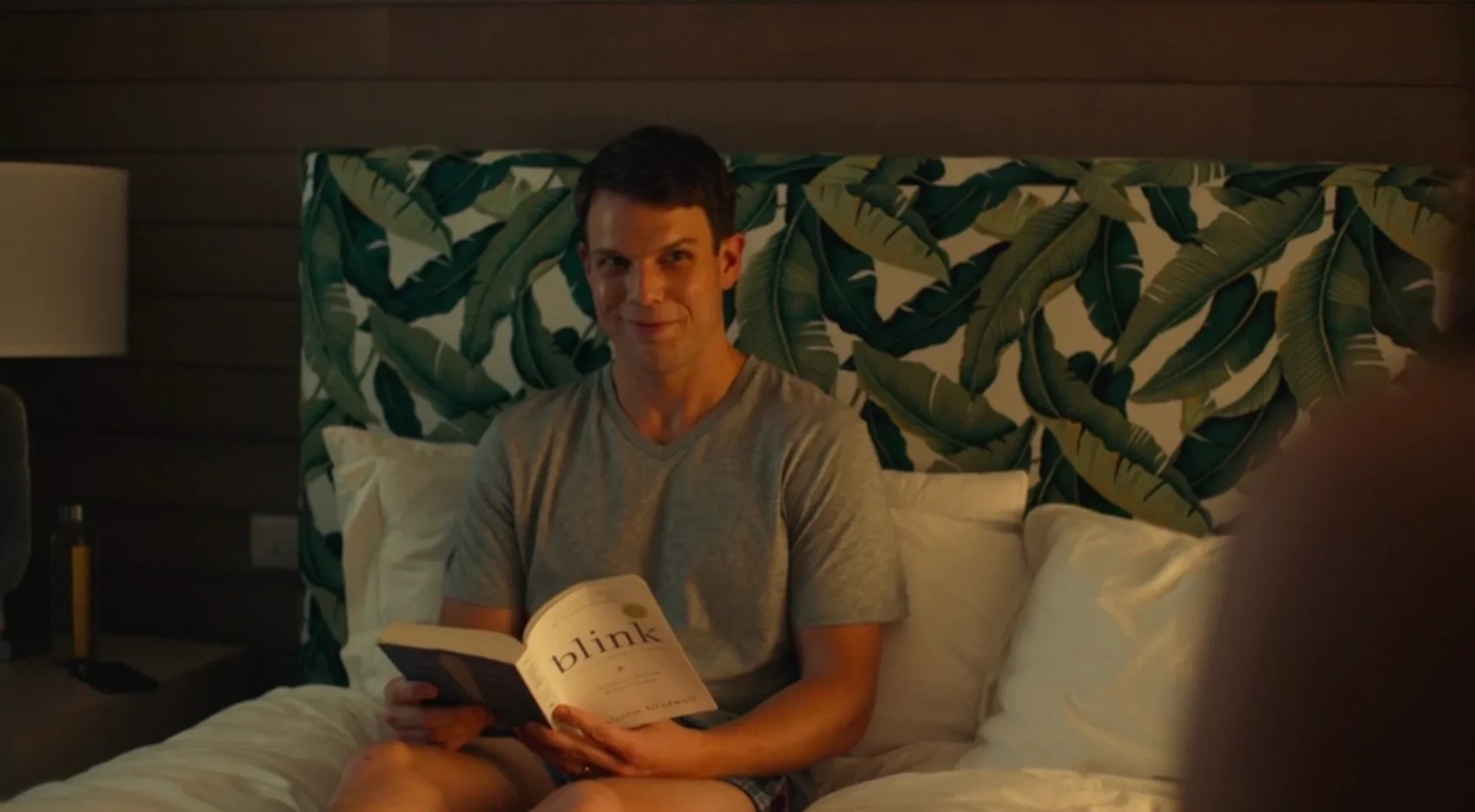
Simplicity, though an attractive quality in a writer, is often wielded as an insult. Nobody wants to be accused of “simplifying” a subject, or, worse, to be called “simplistic”. These are, alas, the words that cling to Gladwell today. The first season of The White Lotus features prissy nepo baby newlywed: Shane, the most punchable face ever to appear on screen. Every prop in The White Lotus is there for a reason: so why is it Gladwell’s Blink (2005) that Shane brings along for performative holiday reading? Mike White, The White Lotus showrunner, provided an explanation. Gladwell, he remarked, is “the kind of writer that makes you feel smart while you’re reading it whether you are or aren’t”. Shane desperately wants to feel smart.
We all want to feel smart: that’s what propelled Gladwell to stardom. When he published The Tipping Point in 2000, he was the toast of the town. Everyone was happily identifying the “Connectors”, “Mavens”, and “Salesmen” in their social circles. Two years ago, however, a long-awaited sequel, Revenge of the Tipping Point, met a frosty reception. The New York Times asked whether Gladwell had “run out of ideas”. In the FT, it was described as “little more than well-put-together quackery”. When people wrinkle their noses at any mention of Gladwell, you know that damning phrase — “airport book” — is never far from their lips. Airport books: big text, sensationalist claims, style over substance. It was, one imagines, at the airport, en route to Hawaii, that Shane laid eyes on Blink and was reeled in by its subtitle, “The power of thinking without thinking”.
All this makes Gladwell an easy target for put-downs. “You’re very good at adjectives, Malcolm,” Matt Ridley once said in a debate, “but can we have some facts?” It must get under his skin. He is not, I think, a hack looking for a quick buck (although his writing has earned him millions). Gladwell is earnest; he believes in what he’s doing. That’s part of his charisma and appeal. Those are not things he is short on; nor is he short on talent. Gladwell calls his essays and books “conversation starters”, and that they are. He spins a good yarn. He might be the most influential practitioner of his genre currently living: pick up any popular nonfiction book from the last 15 years or so and you will find that every chapter begins with an arresting anecdote. People in the trade call this a “malcolm”. Montaigne did “malcolms” too, from time to time, and so have many since — but Gladwell perfected the craft. It is one of his ways of simplifying the raw material that he picks up from the social science journals. Far better to begin with a breezy, colorful story than the impotent droning of “This paper argues…”
But the reason he now attracts so much sneering and mockery is that he was fêted out of all proportion in his heyday. He was described by The Guardian as “the man who can’t stop thinking”; he thinks so hard, said Foreign Policy, that he has “changed how we think about thought itself”. The Noughties were the golden age of popular social science. In Gladwell — skinny, soft-spoken, scruffy in just the right way — the genre found its apotheosis. It reached, so to speak, its tipping point.
It was Gladwell, more than anyone, who decreed that the purpose of literary nonfiction was to fire insights from the social sciences at a carousel of “common assumptions”. Public intellectuals existed to make you “look at things in a new light” — or, at least, to trick you into believing as much. “The world — much as we want it to — does not accord with our intuition”, Gladwell wrote in The Tipping Point: this might as well have been the motto of the movement that spawned Freakonomics, Thinking Fast and Slow, Nudge, and so much else. This genre veered between extremes: either these books would go out of their way to surprise you with something ostentatiously, screechingly counterintuitive, or else they would dress up commonplaces and clichés with fancy, scientific-seeming titles. We all know the saying about big fish in little ponds. It takes a Gladwell to popularize the “Big-Fish-Little-Pond Effect”.
All was not well with this genre, however. In the course of the 2010s, it was knocked off its pedestal. In 2012, Jonah Lehrer, a young Gladwell-in-the-making, was found to have plagiarized and falsified data in his book Imagine: How Creativity Works. Oliver Sacks was one of the most revered proto-Gladwells: well, it turns out that lots of his stories were made up, too. Then the “replication crisis” arrived, and with it the creeping realization that many of the famous studies and papers underpinning the genre were worthless junk. The set-pieces in these books came under increased scrutiny. Readers of The Tipping Point knew all about Kitty Genovese, the 28-year-old bartender who was brutally murdered while 38 witnesses heard her cries and did nothing. But one recent paper concludes that there is “no evidence for the presence of 38 witnesses, or that witnesses observed the murder, or that witnesses remained inactive”. So much for that, then. The Stanford prison experiment is another old nag in the Gladwellian stable; but few exercises in psychology have been more comprehensively discredited.
Behavioral economics, social psychology: these were held up in the early 2000s as the surest paths to enlightenment. Well, whether enlightenment was the aim, or marketing advice, was always an open matter. This was a time when restaurants started putting their most expensive wines at the top of their wine list (Daniel Kahneman called this “anchoring”). Pubs, heeding the gospel of Thaler and Sunstein, painted flies on their urinals. David Cameron’s “Nudge Unit” was the highest authority in the land. But all that is gone. The age of the social scientist is over.
The time of the historian has come. History, almost by definition, is safe from the replication crisis. It offers authors “malcolms” aplenty, without having to stand for some grand, universal point. And history is what Gladwell has turned to, along with the upper-middle-brow reading public. It is, as the New Statesman announced in 2023, the stock-in-trade of “Waterstones Dad” — an archetype who was formerly Gladwell’s most enthusiastic customer, and who now, for good reason, finds ample stimulation and nourishment in The Rest Is History. In 2016, Gladwell named his podcast Revisionist History, as though to signal this new direction.
In history, alas, Gladwell tends to find himself on weaker ground. There is some history in Talking to Strangers (2019), chiefly concerning Chamberlain and Hitler in the run-up to Munich and the Second World War. “The people who were right about Hitler”, Churchill first and foremost, “were those who knew the least about him personally”, says Gladwell; “the people who were wrong about Hitler were the ones who had talked with him for hours.” It is a characteristically daring formulation, neatly illustrating a wider argument about how we overestimate our ability to get the measure of the people we meet. But is it true? Not really. Horace Rumbold, Britain’s ambassador to Germany from 1928 to 1933, doesn’t feature in Gladwell’s discussion. Rumbold knew Hitler and took the trouble to read Mein Kampf; he understood perfectly well what Hitler was about. In April 1933 he reported his “impression”, borne of experience and careful observation, “that the persons directing the policy of the Hitler government are not normal”.
There can be no room for Rumbold in Gladwell’s book, because Rumbold would get in the way of its big idea. The idea reigns supreme, and all historical facts and events must bend to it. The same flaws bedeviled The Bomber Mafia (2021), hence its hostile reception among historians. “Borders on reckless”, was the verdict of some specialists in the Second World War in Japan; “a work best avoided” was another. Gladwell flattens the complex story of Haywood Hansell and Curtis LeMay, the American generals who clashed over how to bomb Japan, into a tedious, heavy-handed allegory. Satan tried to tempt Jesus to “do evil that good may come”, says Gladwell, and Haywood Hansel, by advocating precision striking, “sided with Jesus on that question”. But LeMay, who oversaw the firebombing of Tokyo, “would have thought long and hard about going with Satan”. We are left with a cosmic struggle between good and evil. And we are left none the wiser about the practical concerns weighing on the minds of either party.
The American Way of Killing, Gladwell’s new polemic on gun violence, is another history book weak on history. Why, he asks, does America have the Second Amendment in the first place? Fumes of the “1619 project” waft into his answer: it is because of slavery. The author of the Second Amendment, James Madison, was a Southern planter. He was disturbed by the thought of slave revolt; he hoped that roving militias might keep the slaves in check. What he meant in the Second Amendment, according to Gladwell, was something like “A well regulated militia being necessary to the security of slave-owners, the right of citizens of states like Virginia and South Carolina to keep and bear arms shall not be infringed”.
There is no sense here of Madison the republican revolutionary, simply doing as republican revolutionaries do. The militia, and the arm-bearing rights that tend to accompany it, have a noble pedigree in republican thought. It animated radical Whigs and “Commonwealthmen” in 17th- and 18th-century Britain, many of whose books ended up in the libraries of America’s founding fathers. For good or for ill, the indispensability of the militia for political liberty was the sort of thing the founders drank in with their mother’s milk. It was not merely an expedient for slave-owners. A more hard-headed republican revolutionary, Madison’s near-contemporary Maximilien Robespierre, supported the right to bear arms; and he also abolished slavery. Yet again, an important part of the story is sacrificed in service to the big idea.
Gladwell toys with the idea that Madison did not care about the Second Amendment one way or the other; it was simply a bone that he could throw at fellow planters in Virginia in order to get them on board with the constitution. Perhaps, in this book, Gladwell is up to something similar: perhaps the 1619-esque part of his argument is a bone thrown to his more progressively-minded readers. For The American Way of Killing is not, despite appearances, a conventional exposition of American progressivism. Gladwell got his start in the writing world at Right-wing magazines, such as the American Spectator. A big part of The Tipping Point is an endorsement of the broken windows theory of crime prevention, most famously put into practice by Rudy Giuliani. And the principal argument of this new book, once the patchy history is out of the way, is that police are overall good, and that there should be a lot more of them. Los Angeles, he points out, has 8,500 police officers; Berlin, about the same size, has 18,000. He posits a negative correlation between the number of police officers and violent crime; one of the reasons gun violence in America is out of control is that there is too little policing. The American Way of Killing is an angry book. Almost nowhere is Gladwell angrier than when he takes the fight to the “anti-police activists” who, in the wake of George Floyd, were effectively given a carte blanche across Blue America to make the gun epidemic worse.
That, anyway, is my Straussian reading of his work, informed, perhaps, by my begrudging respect for a master craftsman. Most likely, he plays fast and loose with the historical record because it exists only to support whichever big idea he is pushing. Simplicity of expression is a great virtue in history; but it is hard to squeeze grand moral lessons out of the complicated facts. Perhaps social science, Gladwell’s natural métier, can brook simplification in a way that history cannot. But at least The American Way of Killing might make Shane feel smart.
