









September 10 2026 - 6:00pm
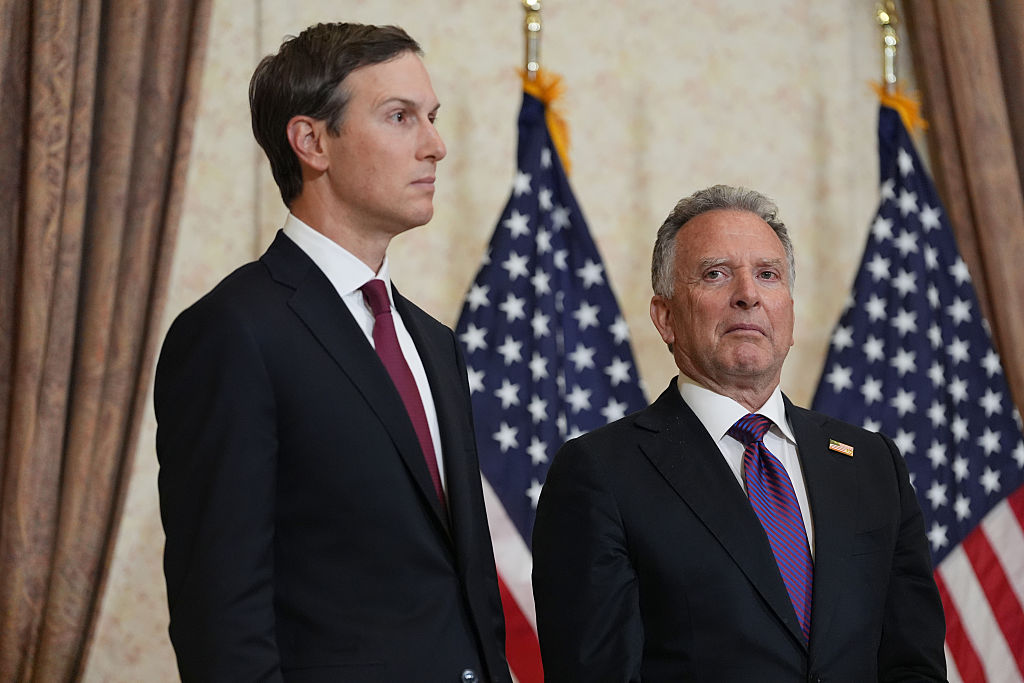
The White House is reportedly considering reducing the involvement of US special envoys Jared Kushner and Steve Witkoff in the Russia-Ukraine peace process. Really, this is something the administration should have done far sooner.
After more than a year and a half of talks, the duo have made little progress toward a settlement between the countries. Meanwhile, the war drags on, the death toll mounts, and the danger of the conflict entering an escalatory spiral that sucks in the rest of Europe remains all too real. The Witkoff-Kushner partnership has been far too casual for the task it seeks to accomplish.
In Washington, process is too often confused with progress, and small or meaningless “deliverables” are too often touted as “game-changers”. But diplomatic breakthroughs are also exercises in building trust. It’s worth recalling Ronald Reagan’s mantra as he negotiated the groundbreaking 1987 Intermediate-Range Nuclear Forces Treaty with Mikhail Gorbachev: “Trust, but verify.”
Witkoff and Kushner have not put a real process in place, and spitballing is no substitute for real diplomacy. As the scholars Matt Waldman and Samuel Charap note in a piece last month for Foreign Affairs, mediating an end to a war is no mean feat. According to the authors, “mediation requires sustained and continuous efforts by a highly capable team. That means assembling a group of individuals whose primary job is ending the conflict and who have professional expertise and deep knowledge of its history and dynamics.” It’s worth remembering that the Paris Peace Accords to end the Vietnam War took nearly five years, while negotiations between the US and the Taliban lasted a decade.
Yet the most serious, perhaps insurmountable obstacle the duo faces — aside from their own inexperience — is that Trump has sent them to Moscow as though they are trusted third-party intermediaries who only have the best interests of both Russia and Ukraine at heart. But the US is most certainly not a third party to the war in Ukraine: it is, as it was in the wars in Afghanistan and Vietnam, a co-belligerent.
Without US intelligence, military and financial support, the war would have been over for Kyiv almost as quickly as it began. To this point, American covert assistance to Ukraine started at least eight years before the Russian invasion of February 2022. In other words, Kushner and Witkoff are negotiating from a position they do not occupy and that the Russians cannot and likely do not take seriously: as a third party solely interested in a peaceful settlement.
The Trump administration needs to drop the charade and enter direct negotiations with Moscow, not only as a co-belligerent, but as the principal co-belligerent that controls both Ukraine’s economy and its military. Kyiv would be obliged to toe the line because it has no choice: without US support, the game is up, which gives Washington all the leverage it needs. The Biden administration’s mantra of “nothing about Ukraine without Ukraine” was self-defeating as it made Washington hostage to Volodymyr Zelensky’s whims.
A change in stance should come with a change in personnel. For that, Trump might well turn to Deputy Secretary of State Christopher Landau and outgoing Deputy National Security Adviser Andy Baker to represent the administration in serious peace talks. Landau is a respected legal mind and diplomat, having previously served as US ambassador to Mexico during the first Trump term. Baker, a longtime aide to Vice President JD Vance, was a career Foreign Service officer who holds a doctorate in international relations from Oxford. Each has the gravitas and experience needed to negotiate directly with Moscow on behalf of Ukraine and issue much-needed directives to resistant European allies.
With the midterms approaching, Trump’s room to maneuver is running out. It’s time to sack the dilettantes and bring in the professionals. Only then can America forge a serious path toward peace.