









September 9 2026 - 11:55am
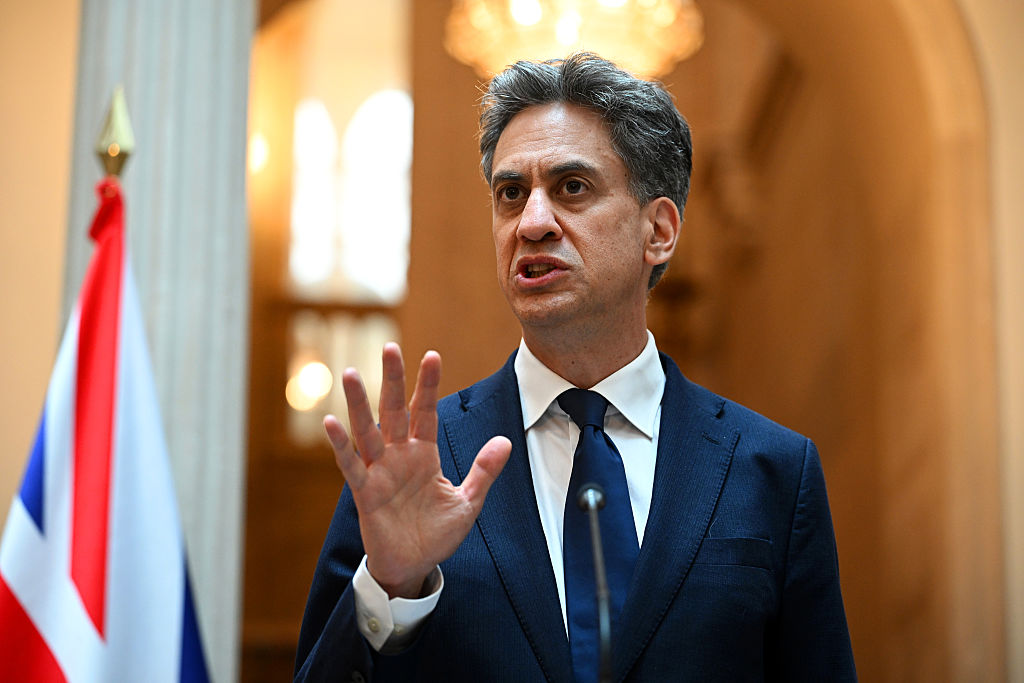
Andy Burnham’s government is stuck between change and continuity, utopian radicalism and difficult realities, and much of the shift from Starmerism has so far taken place at the level of vibes. But Labour’s latest signaling pivot on Israel and Palestine is consequential. Yesterday, Foreign Secretary Ed Miliband delivered a Commons speech which encompassed his Jewish heritage, his support for a two-state solution, and a broad justification for the Government’s decision to ban goods from Israeli settlements.
The trade volume will be negligible, the effect on the ethnic cleansing carried out by Israeli settlers virtually non-existent, but the message will be heard loud and clear among that significant proportion of voters who have abandoned Labour over its supposedly ineffectual response to the war in Gaza. For many of these jaded progressives, Keir Starmer and his allies represented not just a bumbling set of north London lawyers, near-uniquely unsuited to their great offices, but instead enablers of genocide. For a whole generation of university graduates, all consuming politics via short-form vertical video, “Free Palestine” has become a cultural-political axiom.
It’s in this context that a dilettante such as Zack Polanski can emerge to articulate the superficial rebel politics of the Greta-Gaza crowd and command 13% in the polls, eating into Labour’s natural territory. Far more than two decades of wage stagnation, a creaking public realm or a housing crisis, the tribalistic conflicts of the Near East have become the totemic issue par excellence for much of the Left’s fragmented social bloc, with Israel cast as the ultimate demonic Other in a new Manichean worldview.
Burnham and Miliband are no doubt motivated by more than political considerations, however. This isn’t merely a cynical attempt to heal Labour’s bifurcated voter coalition. Aside from justified moral qualms about rising settler violence in the occupied territories, the Prime Minister and his Foreign Secretary are attempting to resolve a core paradox entrenched by their predecessors.
Starmer managed to head a government that recognized the Palestinian state for the first time, sanctioned Israeli government ministers, and imposed bans on arms exports to Tel Aviv. Despite all of this, progressives and Muslim voters each abandoned the Labour Party in droves, compelled by the genuinely impressive separation between the messaging of Starmerism towards many of its core voters (we are very Right-wing and we hate you) and the actual substance (progressive soft-Left Labourism at home and abroad).
What’s more, the political risks of the new settlement goods boycotts are few, with a plurality of voters of every party supportive of the move, and even the British Right cooling on its love affair with the Jewish state as a bastion of Western values against Islamism. Following years of graphic footage from the Gaza Strip, High Tory patricians are now just as likely to stand in Parliament to express sympathy with “the Arabs” in the manner of inter-war Orientalists.
But for now, Burnham is focused on his primary political mission: puncturing the central contradictions and political dysfunctions of his hapless predecessor, and bringing the broader Left back into the Labour tent. This is a major step in that direction.
Jonny Ball is a Contributing Editor at UnHerd. He formerly wrote under the name Despotic Inroad.
 DespoticInroad