









September 8 2026 - 10:40am
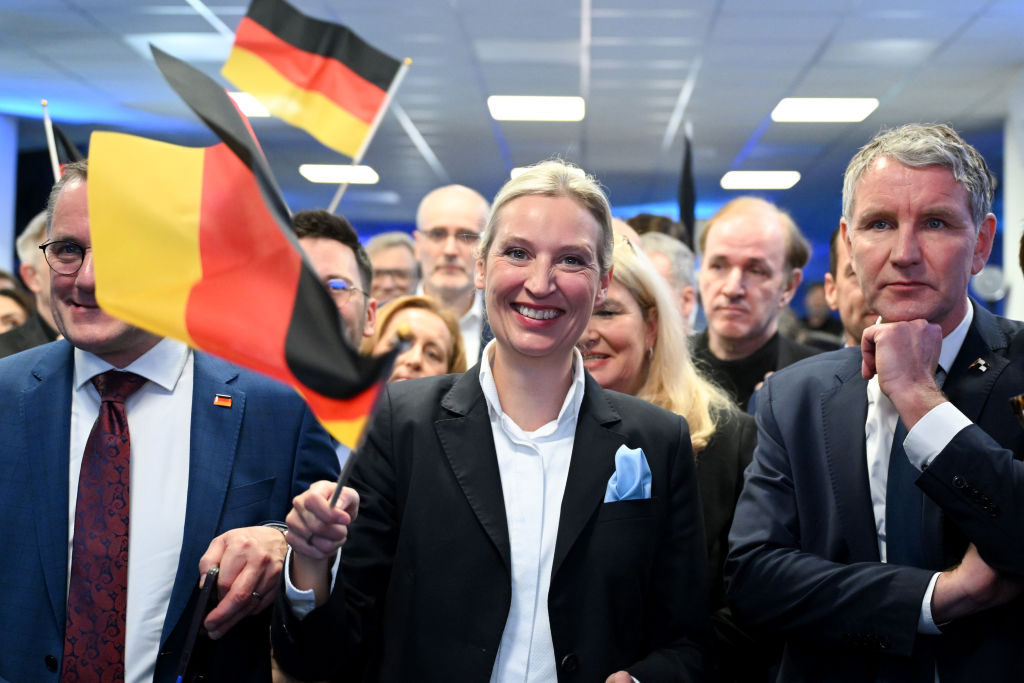
The AfD’s victory in Saxony-Anhalt on Sunday was crushing. The party achieved 43.8% of the vote share, more than double its 2021 result though still short of an absolute majority of seats. But this was a historic election in other respects. At 77.8%, the turnout was the highest the state has recorded since reunification, in a region long synonymous with electoral apathy. The AfD did not merely win over disillusioned Christian Democrats — it brought back voters who had given up on the ballot box altogether.
Now, the real challenge for the AfD begins. Aside from the question of whether the party will be able to form a government or not — and the extraordinary measures being considered by the establishment to prevent a possible AfD state government from exercising its mandate — a larger problem looms. One exit poll found that nearly two-thirds of workers voted for the AfD. When asked what drove their vote, migration came sixth, behind education. Social security topped the list, followed by peace in Europe and the economy. In other words, this was primarily a vote about pensions, wages, energy bills and war — not about migration.
This leaves the AfD with a problem, because its economic program is poorly equipped to answer any of the problems facing Germany. The party is calling for the tax system to be simplified, and is proposing an income tax schedule with a small number of bands that would provide tax relief for everyone. It wants to increase the basic tax-free allowance while abolishing wealth and inheritance taxes. Corporate taxes are also to be reduced to a “competitive level”. Meanwhile, the AfD has promised higher pensions as well as generous one-off payments for every newborn child.
The problem is how all this would be paid for, especially considering that the AfD wants to retain the constitutional debt brake — the legal rule that limits how much money the government can borrow. Combined with the party’s support for hiking defense spending, it’s hard not to see the contradiction inherent in its economic agenda and why it is likely to lead to further welfare cuts. This contradiction mirrors an internal conflict that has been playing out for a long time. As one German commentator put it, “two camps can be identified within the party program, representing fundamentally opposing convictions: those who want to restrict the influence of the state and leave the economy to the free market, and those who want to appeal to economically disadvantaged voters through an extensive welfare state.”
It is telling in this regard that the party’s program for the Saxony-Anhalt election had little to say about socio-economic issues, concentrating on remigration and culture-war symbolism. Promises included defunding the foundations that sustain rival parties’ hinterlands, stripping rainbow flags from public buildings.
This is a contradiction that the party will soon be forced to address. For as long as migration has dominated the debate, economics and welfare were not much of a problem. However, two themes are now clashing. Friedrich Merz has moved sharply Right on migration, narrowing the ground on which the AfD is uniquely positioned. His proposed economic reforms, such as the mooted abolition of the pension at 63 for long-serving workers, have forced questions that the party’s welfare program avoids addressing. To its credit, the AfD has opposed Merz’s abolition of the pension at 63, but a single defensive position is no replacement for an economic agenda. If the party does not want to squander a mandate of this size, it will have to address its voters’ demand for social and economic security.
Thomas Fazi is an UnHerd columnist and translator. His latest book is The Covid Consensus, co-authored with Toby Green.
 battleforeurope