









August 28 2026 - 4:00pm
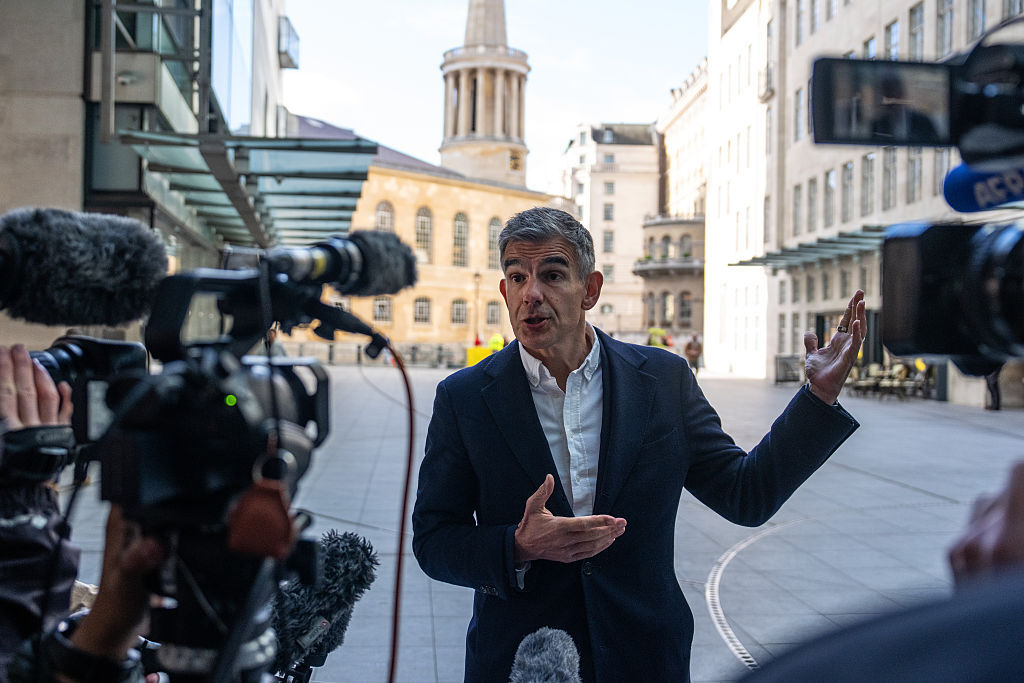
We spend hours of our lives consuming media selected not by an expert editor, but by our own tastes, our networks, and, mostly, by algorithms whose primary purpose is to keep us scrolling. It doesn’t have to be this way, Matt Brittin, director general of the BBC, told the Edinburgh TV Festival. Instead, we could have a public service YouTube-style algorithm, which would be an “open platform for creativity” and local news, under Auntie Beeb’s kindly guiding hand.
This idea isn’t entirely new. Since 2018, the BBC has worked on the idea of a “public service internet” project, aiming to recreate the online sphere as a space where public debate, trustworthy content, and data privacy work together. It’s a noble aspiration, and arguably the Corporation should be moving away from a top-down broadcast model towards a platform where audiences can have their own input into the content, as well as watching and listening. The hiring of Matt Brittin, whose previous career includes 18 years at Google but none in broadcasting, is a clear signal of this change of direction.
Amid growing concerns about over-reliance on technology from other countries — and a government-backed Sovereign AI project in the works — perhaps the time has come for a public service algorithm. A British-made equivalent of YouTube could, then, get political and public backing. The alternative would be no more Silicon Valley behemoths, which can be arbitrarily withdrawn or used to gather data on UK citizens as the political weather changes across the Atlantic.
And there’s the rub. A BBC iPlayer — rebranded as YOUPlayer perhaps — would have editorial control that the commercial platforms lack, and guidelines for contributors that go beyond “don’t break the law”. What should those editorial guidelines be? The BBC’s own news and current affairs output already faces accusations of dumbing down to chase online audiences, and of bias in relation to certain hot political issues.
One of the factors driving people away from trusted news sources towards content shared online by relatively unregulated platforms is precisely the decline of trust in mainstream media, and the desire to seek out other opinions and information. The people who already feel that news and views on their favorite hot topic are sidelined, or even suppressed, by the BBC are unlikely to return just because the new platform includes user-generated content. After all, somebody will have selected the content and given it a BBC stamp of approval.
A cynical eye might even look at the new public service algorithm platform as a mere money-saving extension of what the BBC is already doing: chasing online audiences, and replacing professional journalists with unpaid contributors. This comes with serious risks. The pressure to post attention-grabbing visual content already makes the traditional journalist’s job of verifying what’s there more difficult. When the material comes from amateur contributors with little legal liability, those risks multiply.
It’s undeniable that the media landscape has radically transformed since the BBC’s foundation a century ago, and not just in technological terms. There is still an appetite for trustworthy news sources, even if we access them via social media on our phones. The majority of British adults broadly trust BBC News coverage. But the culture of general deference and trust in professions and institutions has been transformed into an atmosphere of conditional trust and skepticism that varies across fragmented audiences.
The difficult question facing Brittin, and the wider BBC, is how to survive in this new environment. Is it possible to retain the public’s trust as a source of factually accurate and relatively unbiased news, while chasing ever-more atomized audiences through a blizzard of seductive content? It’s unlikely this public service algorithm platform will bring to that mission what iPlayer has not.
Timandra Harkness presents the BBC Radio 4 series, FutureProofing and How To Disagree. Her book, Technology is Not the Problem, is published by Harper Collins.
 TimandraHarknes