









July 29 2026 - 7:00am
It is hard to persuade the reluctant masses that women can have penises, and so fear has become a substitute for reason. Just as parents invoke the bogeyman to control unruly children, politicians and NGOs now warn of Donald Trump and the ever-looming specter of the far-Right.
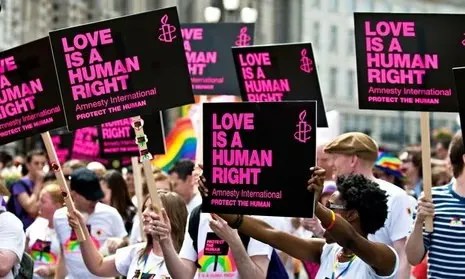
That is precisely the tactic adopted by Amnesty UK in its reports “Like A Snowball” and “A Growing Threat”. Rather than treating sex-realist organizations as groups with whom it simply disagreed, both reports placed them within the same supposedly sinister ecosystem as ultra-hardline Christian groups and far-Right movements. The strategy ultimately backfired: the second report was quietly withdrawn after many of those named challenged its allegations and instructed lawyers.
In the weeks since the story broke, Amnesty UK has been battered by a succession of excoriating articles. Its chief executive, Kerry Moscogiuri, has even belatedly agreed to meet representatives of Sex Matters, one of the human rights charities that Amnesty smeared as “anti-rights”. Then yesterday came the coup de grâce: a very public spanking from JK Rowling.
The author and women’s rights campaigner published a legal letter sent on behalf of Beira’s Place, the women-only support service she helped found. The letter accuses Amnesty UK of conducting an “ongoing campaign” to defame the charity by falsely branding it “anti-rights”, while portraying the vulnerable women who rely on its services as anti-trans bigots. She accompanied it with a blistering verdict: Amnesty UK “has become what it was created to fight”. Having abandoned “freedom of speech and belief”, she wrote, it “has become the tyrant that persecutes those who don’t espouse what it decrees acceptable beliefs”.
Former Amnesty supporters stubborn enough to believe there are only two sexes may be surprised to learn they now occupy the same ideological universe as Trumpian reactionaries and Christian fundamentalists. They may reasonably ask when it became controversial to say that women need spaces and services away from men.
Part of the answer lies in the cozy clique of well-funded NGOs. Amnesty UK is not an outlier; it is following the lead of its parent organization. Across the world, Amnesty International has championed legal gender self-identification, celebrated proposals allowing children as young as six to change their legal sex in Norway, criticized the housing of trans-identifying men in Nicaragua’s male prison estate, and intervened against For Women Scotland in the UK Supreme Court case that confirmed the Equality Act’s definition of sex. Wherever sex and gender identity collide, Amnesty has consistently chosen the latter.
Unlike the most vocal opponents of transgenderism, whose arguments are aired in public, wealthy NGOs such as Amnesty International use their well-earned reputations to lobby politicians behind closed doors. Their UK branch does so despite poll after poll showing that most Britons support single-sex spaces and services. It seems they believe the plebs need educating.
That conviction leaves Amnesty UK in an awkward position. The organization is now so far steeped in rainbows that wading back will be tough. Its staff will have spent years absorbing the belief that treating biological sex as significant is itself a form of prejudice. Should Kerry Moscogiuri conclude after meeting Sex Matters that Amnesty has got this wrong, apologizing to Beira’s Place and the other organizations that say they have been defamed would trigger an internal reckoning.
Decision-makers at the UK branch can either alienate staff, activists and the wider Amnesty movement, or continue defending a position that is becoming increasingly difficult to sustain. The obvious, if cowardly move, would be to apologize externally while telling gender-addled staff and stakeholders “JK Rowling made us do it.” But if Moscogiuri shares the principles of Amnesty’s founders, she will be brave and accept that freedom of belief matters.
Amnesty once urged governments to defend dissidents. Today it treats ordinary people who believe biological sex matters as extremists to be marginalized rather than citizens to be heard. If the organization cannot distinguish disagreement from hatred, the greatest threat to Amnesty’s reputation will not come from the far-Right bogeymen. It will come from Amnesty itself.
