




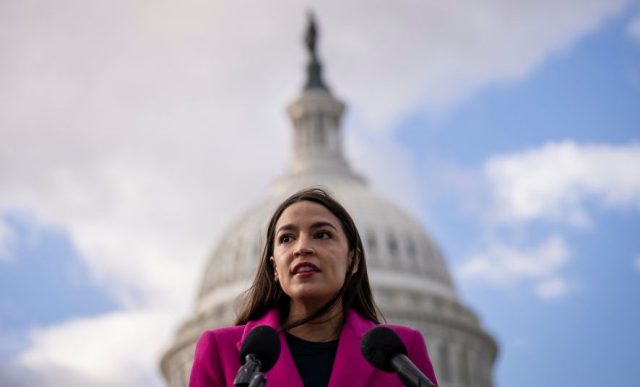
Alexandria Ocasio-Cortez is a favorite for the Democratic presidential nomination in 2028. (Drew Angerer/Getty)





Last week, the US Department of State issued a 100-page report titled “Cuba: The Capital of 21st Century Communism”. In the days since, many in the press have interpreted the report as a potential prelude to US military action against Havana, long supposed to be a dream of Cuban-American Secretary of State Marco Rubio.
The report does indeed read like a criminal indictment. It chronicles the 75-year history of espionage and political subversion by Fidel Castro’s regime against the US, as well as the relationships between current Left-wing organizations in the US (like the Democratic Socialists of America and the National Lawyers Guild) and operatives in Havana.
If intended as a piece of prewar propaganda, it’s a curious one. Grandiose title notwithstanding, the report does little to prove that Cuba in 2026 remains the powerhouse of intelligence and political operations that it was in the Seventies or even the early 2000s. If anything, it shows that the seeds of political subversion that Cuba sowed on American soil in those earlier decades have become self-sustaining.
But if the report fails as a military cri de coeur, it provides a brilliant summary of the political strategy of Third-Worldism — pioneered by Fidel Castro and Che Guevara and now practiced by governments and organizations worldwide from South Africa to Hamas. And in the process, it turns a mirror back on the United States, asking what it is that makes free societies like our own uniquely susceptible to subversion by overseas Left-wing totalitarians.
The report begins by establishing a central fact in Cold War history that remains little-understood. This is that by the time of the Cuban Revolution in 1953, the Soviet Union and Cuba were practicing fundamentally different types of communism. And it was the Cuban type that would dominate the international politics of the late 20th century.
On top of Russia’s class-struggle communism, Cuba superimposed an element of racial and ethnic struggle. By identifying liberation from white colonial oppressors with a communist command-and-control economic system, Cuba and other Third-Worldist political movements were able to maintain the approval of the mostly rural poor populations they controlled, even while making their lives materially worse.
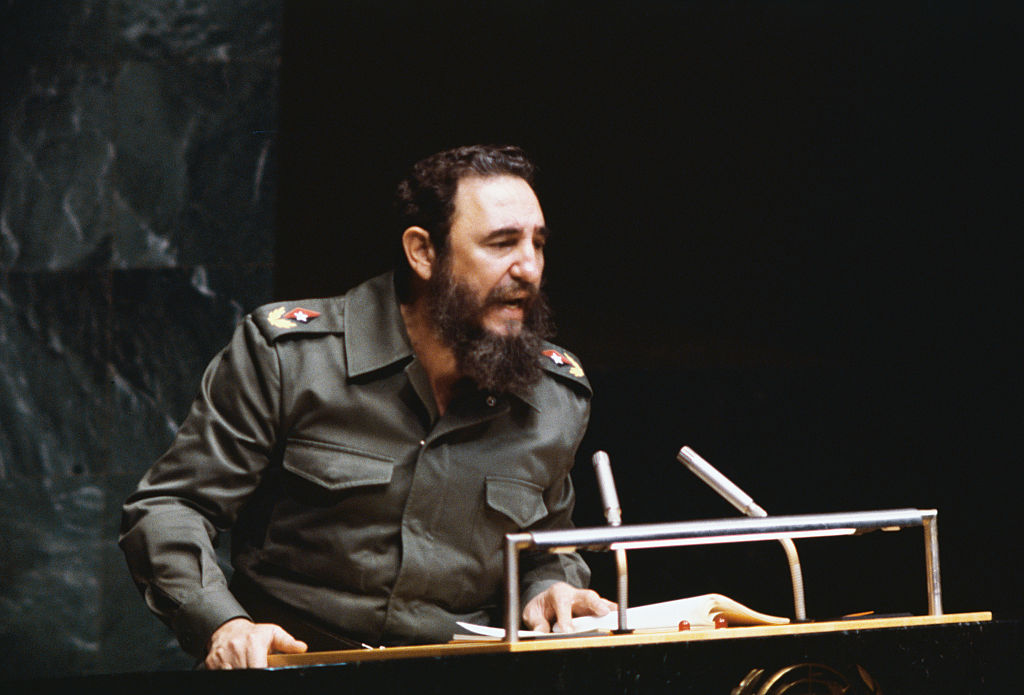
Castro and Guevara’s Third-Worldist communism also appealed far more to the ethnically-diverse First World than the ideologies of Stalin and Khrushchev did. And observing this, Leftist governments around the world were quick to emulate Cuba, finding that they could attract a broad base of public support inside nations like the United States by appealing to a racial or ethnic “coalition of the oppressed”. This strategy helped Ho Chi Minh in North Vietnam and the Sandinistas in Nicaragua, among others, to build fifth columns of support within the US, sowing internal divisions over American foreign policy toward those nations. More importantly, Third-Worldism allowed communist ideologues to strike a blow against the capitalist powers by convincing them to degrade themselves from within.
The strategy’s secret was its ability to achieve impressive foreign influence for minimal economic cost. While Castro’s Cuba devoted significant resources to supporting Leftist political or paramilitary activities from Venezuela to Angola, as well as spying and subversion in the US, its outlays on those activities were dwarfed by those of the Soviet Union. It was the emotional tug of the Third-Worldist message, more than money, that enabled tinpot Leftist dictatorships, even while their domestic economies and political systems languished, to conduct effective international public relations campaigns on the cheap.
The appeal of Third-Worldism made it easy for Cuba’s Dirección de Inteligencia (DI) to recruit intelligence assets in the United States. All Cuban agents had to do was lie in wait at US policy schools, find students whose political sympathies had so alienated them from their country that they were ready to betray it, and wait for those students — once graduated — to achieve high-ranking positions in government. The State Department’s report cites three of many such cases, all of whom — Victor Manuel Rocha, Ana Belén Montes, and Walter and Gwendolyn Myers — operated as spies for Cuba over multiple decades. All are remarkable for their monolithic loyalty to the Cuban regime, their remorselessness, and their purely political motivations. As the authors write of Montes, who was once considered the Defense Intelligence Agency’s top Cuba analyst:
When the Department of Defense’s Inspector General completed a review of [her] case in 2005, it found no credible evidence that Montes accepted any significant financial compensation from the Cubans. Her motives were purely political: The review found that “her ideological disposition fostered a negative view of U.S. foreign policy, and that fixation coupled with a sense of moral righteousness sealed her commitment to a cause from which there was no alternative, at least in her mind.
As it recruited spies, Castroist Cuba forged political alliances with nascent Left-wing activists and organizations in the US. To understand how, we must recall that prior to Cuba’s formal alliance with the Soviet Union, many Americans had sympathized with Cuba’s revolution and greatly admired Castro. In 1959, he had even undertaken a whistlestop tour of the United States. On a stop in Boston, he delivered an address to Harvard students where he was introduced by McGeorge Bundy, then the dean of the Faculty of Arts and Sciences.
Three years later, the very same McGeorge Bundy would be plotting to slip him an exploding cigar as John F. Kennedy’s national security adviser. Castro’s reputation among mainstream Americans had soured dramatically following his public embrace of communism and the Soviet Union, yet he maintained a cult following among students on the American Left. As America’s civil rights movement morphed into the radicalism and riots of the Vietnam era, Castro made sure that Cuba was there to support and nurture that radicalism.
As the State Department report chronicles, Cuba’s main tool for achieving this was an exchange program for Left-wing activists called the Venceremos (“We will prevail”) Brigades. Under this program, young activists (or terrorists) were flown to Havana and given five-star treatment, ideological education, and access to Cuban officials. This inaugurated a lifelong relationship with the Cuban government with Venceremos alumni serving both as intelligence assets and political agents, subverting the United States and hastening the global communist revolution.
Some of Venceremos’ early graduates included domestic terrorists and Weather Underground founders William Ayers and Bernardine Dohrn, as well as the founders of the Black Liberation Army (BLA) and Black Panther Party. Through institutions like the Tricontinental Conference, Havana made itself a meeting and breeding ground for organizations and individuals devoted to revolution in the US. Those organizations and individuals returned home and became distinguished university professors, social leaders, and even government officials. And when they ran afoul of US authorities (as did convicted cop-killer and BLA leader Assata Shakur), Cuba could be relied on to succor them as fugitives.
The State Department’s authors deftly demonstrate that these efforts have continued up to the present day. While today’s Cuba may lack the cool factor (and some of the funding) that Castro enjoyed, it continues to make common cause with America’s leading Left-wing organizations — among them, the Democratic Socialists of America (DSA), the National Lawyers Guild (NLG), the People’s Forum, and Code Pink. Leaders of all these organizations have traveled to Havana and, in turn, expressed their support for the Cuban regime. In America, they represent the regime’s interests, from the NLG’s role as Cuba’s exclusive legal counsel in the US to the People’s Forum’s fiscal sponsorship of the Venceremos Brigades (enabling the Brigades to accept tax-deductible contributions from American taxpayers).
Like the American organizations Cuba recruited under Castro, they are all fundamentally revolutionary — meaning that they are devoted not to incrementally moving American policymaking in a Leftward direction, but to the transformation of the American state. To take the DSA as one example, the organization recently announced a platform advocating for the abolition of the US Senate and the US Supreme Court, moves that would obliterate the checks and balances that prevent America from becoming a Cuba-style command-and-control economy. With DSA-supported candidate Zohran Mamdani winning the mayoralty of New York last year, New York DSA-endorsed Congresswoman Alexandria Ocasio-Cortez a favorite for the Democratic presidential nomination in 2028, and several other DSA endorsees shoo-ins for Congress this November, that platform no longer seems so unrealistic.
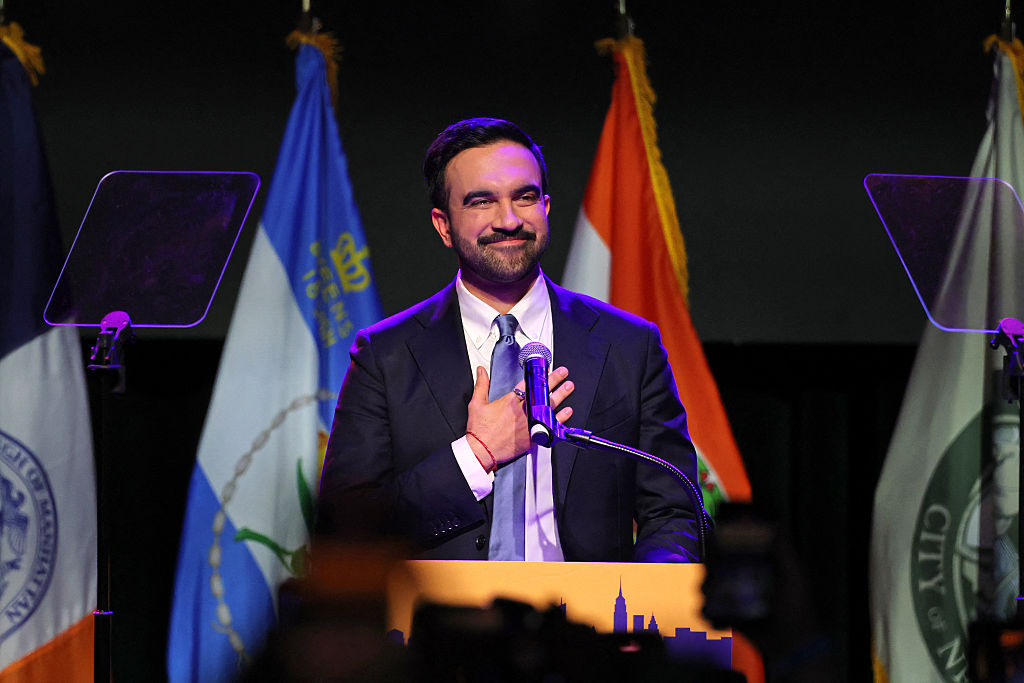
While it’s a stretch to see the fingerprints of Cuba’s dying regime on the DSA’s recent successes, it’s far easier to see a through-line from marginal organizations like the Weather Underground and BLA, through the more radical corners of America’s universities, to today’s far more mainstream socialist radicals who seek to open government grocery stores, dictate housing costs, and inhibit immigration enforcement. Indeed, it’s no exaggeration to characterize America’s recent socialist drift as a long-range triumph of Fidel’s policy of Third-Worldism.
The State Department’s recent report lays bare the uncomfortable truth that even as the Cuban state collapses in the year 2026, Fidel may be having the last laugh from beyond the grave. As the authors write of the DSA: “Today, it maintains a fierce, almost religious commitment to the cause of the Cuban regime — not because the group is controlled by Cuban agents, per se, but because that commitment is now simply the de facto policy orthodoxy on the American far left.”
It seems that Fidel and America’s other Third-Worldist enemies understood something about America. They understood that our political institutions, our free markets, and our personal freedoms are the secret weapons that make Americans wealthy and America attractive. Those were the weapons that won us the Cold War. But they also knew that under economic or social stress, it’s easy for free people to take those blessings for granted. And they knew that by playing on America’s internal insecurities and social fissures, they might convince that free people to undermine its own institutions and values. Those enemies of the United States that have understood this best — Cuba, the Nicaraguan Sandinistas, Iran, Hamas — have exercised an influence over American society that has far exceeded their financial investments.
The report may not have the bearing on current policy that its writers seem to hope. Today’s Cuba is a shell of its former self — barely capable of delivering the post, let alone systematically influencing the politics of its enemies abroad. The history of subversion in the report isn’t necessary to justify an intervention in Cuba today; the daily sufferings of the Cuban people, the island’s decades of transparent anti-Americanism, and its current intelligence and military cooperation with China, Russia, and Iran are justification enough.
But the report is a sign that the US government is finally beginning to take seriously our enemies’ exploitation of our free institutions to undermine our political order. If our leaders come to clearly understand the history of Cuba’s infiltration of the US, that will benefit not only our approach to today’s Chinese and Russian infiltration, espionage, and disinformation (on which we remain on our back foot), but also our policy toward Cuba’s Third-Worldist heirs, from Venezuela to Hamas.
The report’s domestic lessons are just as valuable. It reminds us that when we look at political movements or organizations on our own shores — when we ask whether they are merely revisionist movements intending to reform our political process, or revolutionary ones aiming to destroy it — we should listen to our enemies. If those enemies see organizations like the Black Panther Party or the Democratic Socialists of America as allies in their quest to engineer America’s defeat, perhaps we should ask ourselves why.
On a second reading, the report’s title — “Capital of 21st Century Communism” — takes on a tragicomic air. Cuba certainly was the capital of Seventies and Eighties communism; and a bitter, worthy, and threatening enemy of the United States. But not anymore. In 2026, our greatest enemy is ourselves.