









July 8 2026 - 7:00pm
On Monday, Ismail al-Thawabta, general director of Hamas’s Government Media Office, announced that the group was dissolving its government in Gaza. The Emergency Committee — the body that has administered the Strip during the war — would be disbanded, and authority would pass to a technocratic committee backed by the UN and the Trump administration. Hamas, he said, was taking “a new step” to demonstrate its commitment to Gaza’s reconstruction.
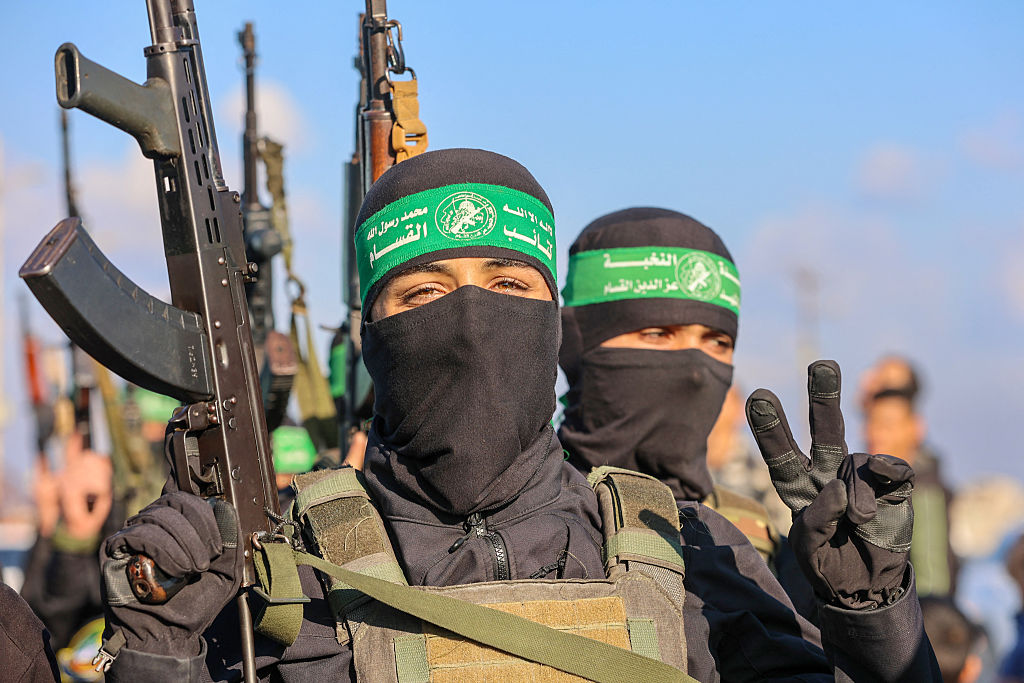
It was a good performance but, in reality, Hamas is not giving up Gaza. It is giving up the paperwork while keeping everything else that matters: the weapons, the fighters, and the ability to dominate the Strip by force. As Hamas noted, all civil servants would continue their work as usual, describing them as “state employees… prepared to work under the responsibility” of the new committee. The problem is that these state employees are Hamas loyalists, not neutral civil servants.
Crucially, the announcement said nothing about disarmament or about who controls security on the ground. Hamas has spent months resisting precisely those questions: it reportedly refused to allow access to weapons stored in tunnels as part of any demilitarization process, and rejected outright the condition that all weapons in Gaza be held by the incoming technocratic government. As Israeli officials have warned, there is already a risk that Hamas is using this interregnum to restore its military infrastructure.
The only thing that changes is the optics — and that is the whole point. Ceasefire talks have stalled over Israel’s demand for Hamas to disarm before phase two of Trump’s ceasefire plan can begin. The move allows Hamas to appear cooperative without surrendering anything that gives it real power.
Dissolving an administrative body whose members, as an Israeli official noted, “all stay in their positions” achieves exactly that. Israeli Foreign Minister Gideon Sa’ar bluntly wrote that Hamas’s apparent willingness to hand over to technocrats is “designed to prevent its own disarmament”. As long as Hamas keeps its weapons, he wrote, “any civilian government will of course operate as Hamas dictates.”
That is the logic behind the scheme. The National Committee for the Administration of Gaza — the technocratic body due to assume power — is chaired by Ali Shaath, a Gaza-born engineer based in Cairo. Its mandate covers civilian affairs: health, water, the courts and education. Yet it has been sitting outside Gaza for months, reportedly prevented from entering by Israeli objections. It has no footprint on the ground, no institutional heft and no patronage networks.
Shaath himself acknowledged on Monday that, for his committee to function, there would need to be “a single governing authority operating under one legal framework” and “a unified security apparatus accountable to that authority”. In diplomatic language, he was describing precisely what Hamas has just refused to provide. The result is a potentially dangerous administrative vacuum: an untested, largely powerless committee attempting to govern while colliding with Hamas’s entrenched authority on the ground.
Hamas is essentially adopting a Hezbollah-style model, letting others handle the visible business of government while keeping the real levers of power. It can influence every decision without being accountable for the consequences. The timing suggests Hamas wants the technocrats in, on its terms, before any weapons question is resolved.
The Board of Peace said it would judge Hamas’s move by “actions, not promises”. That is the right instinct. But until Hamas disarms and is frozen out of the financial infrastructure that keeps it going, nothing will change. As things stand, it has merely shed itself of the burden of running a devastated, blockaded territory and the grueling task of rebuilding Gaza. Outsourcing the expensive, non-military side of its budget to the UN allows Hamas to dedicate its black-market tax revenues to rearming. Calling this a concession isn’t just naive — it’s a complete misreading of Hamas’s playbook.
Dr Limor Simhony Philpott is a writer and researcher focusing on antisemitism, extremism and defence.
 limorsimhony