









July 5 2026 - 8:00am
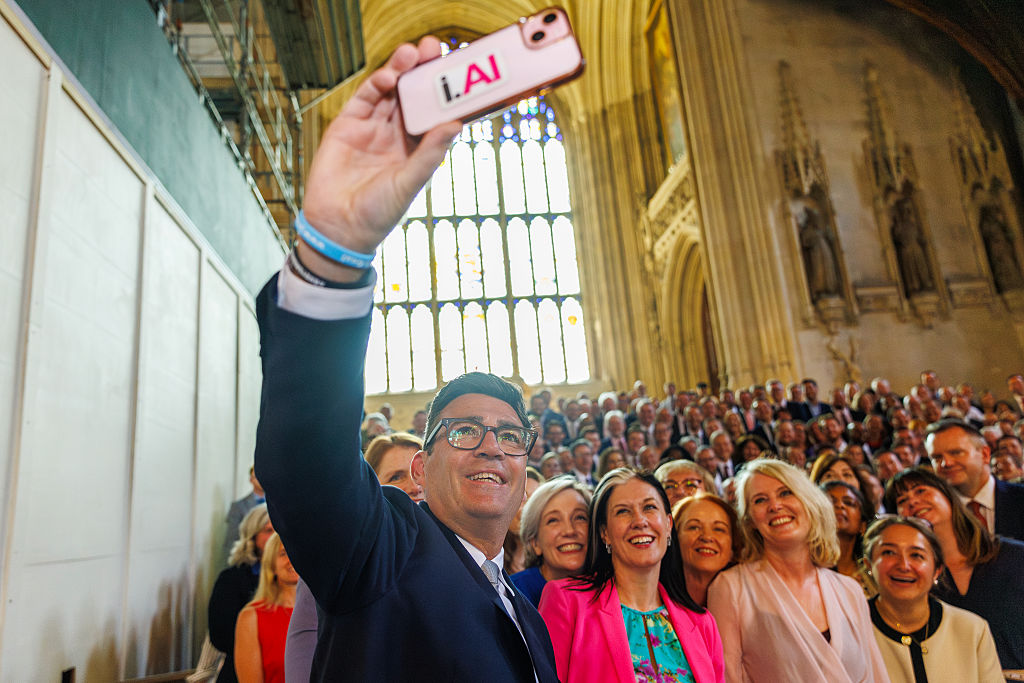
Not content with being MP for Makerfield, de facto leader of the Labour Party, and prime minister-in-waiting, Andy Burnham has added yet another job to his CV: he’s become an influencer. As part of his ongoing charm offensive, Burnham has started posting personal videos regularly on X, Instagram, and TikTok, and this week held an “Ask Me Anything” session on Reddit.
It can’t be denied that Burnham understands the importance of having a social media presence. The problem is that, like many middle-aged politicians, he doesn’t actually understand what he’s supposed to do with it.
Modern social media — namely the short-form video content found on platforms like TikTok and Instagram — rewards fast pacing, tight editing, visual engagement, and clear arguments. But Burnham’s content rarely delivers any of that.
Take his latest video, posted on 3 July. It shows Burnham wandering down a train platform and talking into his phone. “Just arriving home at Warrington after a long week,” he says. “I love London, but I love arriving home even more.” He then drones on about how “enthusiastic” everyone has been about his No. 10 North announcement before signing off. The video itself is empty. It’s more like an influencer’s post than a politician trying to talk to his constituents about important work. Not only is there no point to the video, but it’s also rambling, shabby and visually unengaging. It’s just a bloke talking about nothing in particular.
This highlights a deeper problem with Burnham’s social media presence. His Reddit AMA earlier this week showed a lack of substance in his strategy. When asked how he’d rebuild trust in politicians, Burnham replied: “More problem-solving, less point-scoring.” On uniting a divided country: “Place-first, not Party-first.”
Of course, it would be unfair to try and guess what a Burnham premiership will be like based on a Reddit AMA. But it does form part of a pattern that, across his videos, interviews and online posts, the Makerfield MP prefers platitudes to policy — broad, unobjectionable sentiments to detailed explanations.
In this sense, Burnham can be compared to domestic political figures including Zack Polanski or Zarah Sultana, who’ve built much larger followings online. All, in their way, are trying to replicate the success of New York Mayor Zohran Mamdani. Yet during his campaign, Mamdani used sharp, well-edited videos to outline his policies. In one, he spoke to a vendor, but also detailed how he would address the problems facing these street sellers. It was an effective example of how a politician can use social media to put forward substantive policy.
Burnham’s output, meanwhile, feels like content for content’s sake. Endless short videos, aimless life updates, a clip judging a poster competition: it all adds up to very little. This is important because the next election will be fought — and won — online. Most voters don’t read manifestos or watch debates; they swipe and scroll because that is where the action is. Burnham has realized this. But he hasn’t realized that social media still needs substance. It’s not enough to talk: you have to say something and tell voters how their lives will be improved. At the moment, it seems like he’s happy enough to get a couple of thousand likes and a pat on the back for knowing what TikTok is.
Young people don’t just want politicians to post more; they want them to actually stand for something. If Burnham really is Labour’s great communicator, he’d do well to remember that posting isn’t the same thing as communicating. We get it, you’re a laugh, and you have a Twitter account. Now what?