









June 19 2026 - 7:50am
Andy Burnham has decisively won the Makerfield by-election, and will return to the Commons after almost a decade away. Barring an upset on the scale of the 2017 Tory campaign, he looks set to be Britain’s next prime minister — at least until the next general election. Although he is touted by hopeful Labour MPs as the only man who can restore Labour’s fortunes, his star was already dimming before he even secured his seat: the more the public see of Burnham, the less they seem to like him.
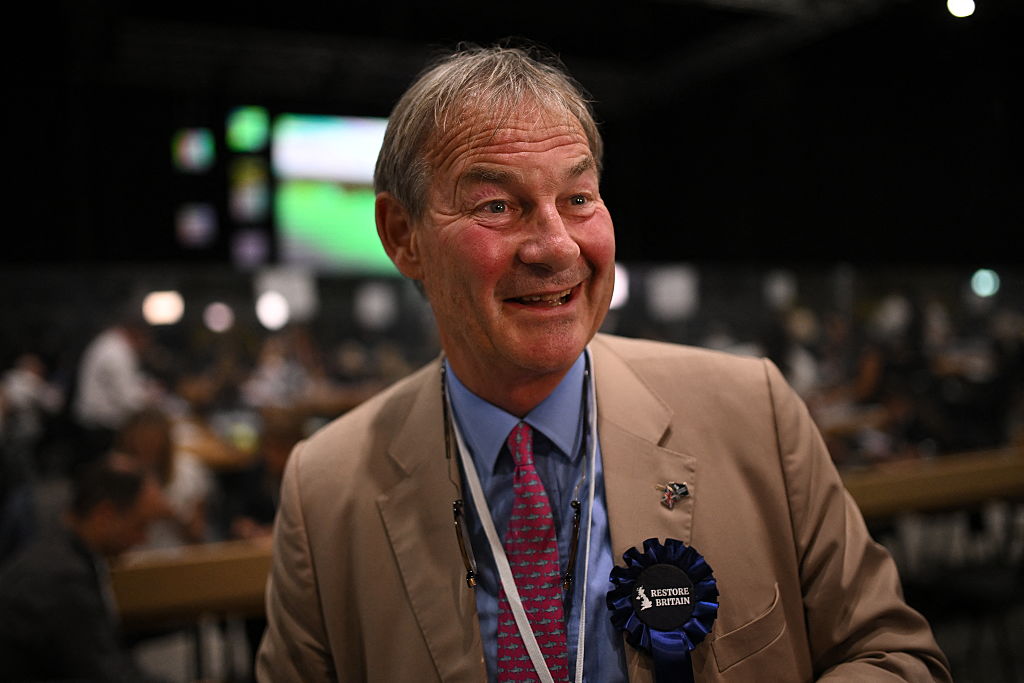
While the next general election is still Nigel Farage’s to lose, Reform UK activists in Makerfield had been worried by a new specter haunting the Right: Rupert Lowe and his Restore Britain party. Both outfits sit to the Right of the Conservatives, and their differences are rooted more in personalities and egos than fundamental policies. Restore is more hardline on immigration and more free-market on economics, but both parties are pulling in the same direction.
The logic seemed simple: by outbidding Reform, Restore would poach Right-wing voters, splitting the vote and allowing other parties to come through the middle. Lowe’s party has little realistic chance of winning any seats, so all it is doing is holding back the Right more broadly.
Ultimately, talk of Restore Britain splitting the Right-wing vote proved overblown: Burnham won with 55%, to Reform’s 35% and Restore’s 7%. While the result is no doubt a disappointment for Farage, there is a silver lining: Lowe is not the serious threat to Reform’s Right flank that many feared. Restore’s result in Makerfield shows the limits of its appeal. The party threw everything at this by-election, being the first to announce a candidate and reportedly having hundreds of activists in the seat on polling day, only to win 7% of the vote. As tactical voting becomes ever more important, Reform will use this result as a clear signal to voters: it is pointless voting for a minor party.
Although polling covering Restore is scant, some does exist. National polling carried out in April by Find Out Now — albeit commissioned by Restore Britain — put the new party on 9%, picking up support from 27% of 2024 Reform voters. Constituency polling, with smaller samples and bigger margins of error, found that around 40-50% of 2024 Makerfield Reform voters would back Restore. If this is accurate, the split could make the difference between first and second place in a handful of seats, handing victories to Left-wing parties.
Things are not quite as bad as they seem for Farage, however. First, in polls not commissioned by Restore, the party tends to get around 2-4%, meaning its absolute impact is likely to be negligible. Second, the losses Reform faces to Restore are more than made up for by the fact that Farage’s party is winning over those who did not vote in 2024, as well as a solid chunk of 2024 Conservative voters.
Besides, Makerfield was a by-election. Fighting a single seat is fundamentally different to fighting 650 separate contests, alongside the logistical organization that goes with it. It is telling, for instance, that Restore did not stand a candidate in either of the two Scottish by-elections which took place yesterday, but Reform did.
Restore still poses some threat to Farage, and if the new party survives to the next general election it could cost Reform a few seats across the country. But Lowe’s party remains a primarily online phenomenon, and Makerfield has shown that Restore’s bark is worse than its bite.
