









June 14 2026 - 4:00pm
Today, Swiss voters rejected a proposal to cap the country’s population at 10 million. Switzerland is home to around nine million people today, and the initiative — launched by the Right-wing Swiss People’s Party (SVP) — sought to curb immigration in order to keep the population below that threshold. It was defeated, but only narrowly, with support projected at around 45%.
The result is striking. While the SVP is Switzerland’s largest party, it typically wins only around 30% of the vote. The initiative, therefore, appears to have attracted significant backing beyond the party’s own base, despite opposition from every other major political party. With anti-immigration sentiment rising in Switzerland and demonstrations becoming increasingly common, it is little surprise that the opposition secured widespread support.
What sets Switzerland’s political system apart from other countries is that citizens do not merely elect their representatives but can vote directly on policy questions. This means that Switzerland is often more reactive to popular opinion, allowing it to address issues that might otherwise be ignored by politicians. The country, for example, voted on an initiative to reduce the share of foreigners as early as 1970.
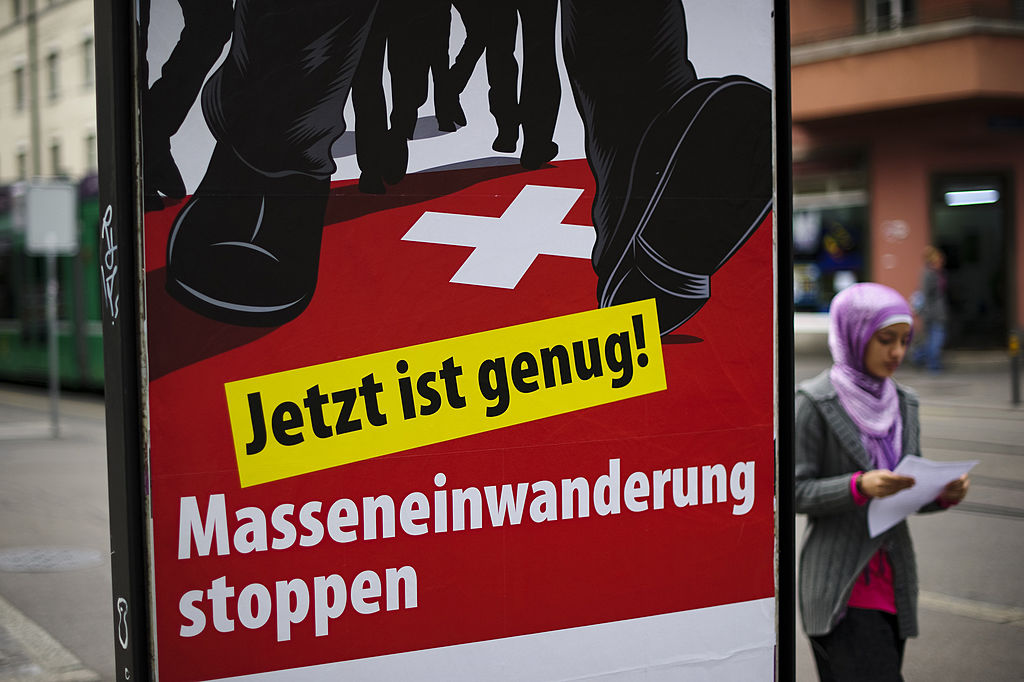
This might sound attractive in theory. But in practice, Swiss voters had already approved a similar initiative in 2014 against mass migration, which would have implemented strict immigration quotas in the country. However, there was a conflict between this proposal and Switzerland’s free movement agreement with the EU, which, ultimately, politicians were unwilling to violate. In the end, a softer version of the proposals of the referendum was signed into law, including employers in some regions giving preference when hiring for jobs to Swiss nationals, rather than migrants.
The fear of damaging Switzerland’s relationship with the EU was the central argument used by opponents of the initiative. And therein lies the problem. The proposal itself was too rigid and would likely have created a cumbersome immigration bureaucracy. But it was nevertheless an attempt to address genuine concerns. Immigration consistently ranks among the issues Swiss voters consider most important, and the level of support for the measure suggests those concerns extend well beyond the SVP’s traditional base. That the other parties did not see fit to put forward a pragmatic counter-proposal to the SVP initiative nearly backfired on them.
This exposes a wider failure of Europe’s political establishment. While Brussels has recently taken steps to tighten migration policy — including reforms aimed at speeding up returns — there remains little appetite for confronting the issue at its root. Swiss voters may have rejected the population cap, but the scale of support for it sends a clear warning. Politicians across Europe would be wise to heed that signal. If legitimate concerns continue to be dismissed, opposition will not disappear. It will simply find other outlets — whether at the ballot box, as in Switzerland, or increasingly on the streets.
