




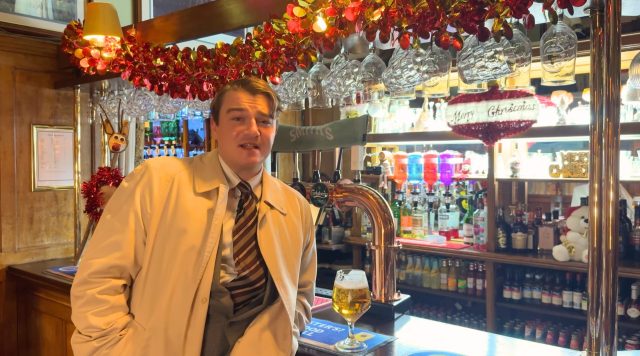
He has a high bar. (DeadPub/YouTube)





I recently visited a pub called The Camel in Bethnal Green. Tucked down a side street, its entrance was covered in chestnut tiles but the rest of the building looked as if the owner had run out of money and the tiler had downed his tools. The pub’s decor was shabby, the staff un-uniformed and chatty, and the crowd spilled out onto the street. An old local in a leather jacket, thinning hair slicked back, raced to the bar. He swayed on the home stretch, peeling off a piece of wallpaper as he grasped for balance, but crossed the line and ordered a drink. A young man looked at him and said to his friends: “This pub is so Jimmy McIntosh.”
That this clash of earthy charm and trendy crowd is now a common sight in London is thanks to the likes of Jimmy McIntosh (AKA “London Dead Pubs”). It is a combination that could have been created only by the internet. McIntosh is a “pubfluencer”, one of a host of TikTokkers introducing Gen Z to London’s historic pubs. Pubfluencers talk seductively of a prelapsarian age where there was a “proper boozer” on every street corner, without food, exposed lightbulbs, or bespoke “apps”, where everybody knew your name and could understand your job title. Their short-form videos pitch the last of the capital’s authentic drinking spots as living museums where, if you are really fortunate, you might even see a real-life Cockney.
The desire to retreat into our drinking past has never been stronger, all while our pubs face armageddon: 161 pubs closed in the first three months of 2026 (that’s about two a day), and only last week HMRC ordered officials to levy higher business rates on pubs based in “attractive locations” or “character properties”. At the same time, an £8 pint of Cruzcampo means that, in many town centers, drinking on a Tuesday can feel like everyone but you has been warned of an imminent earthquake. In London, however, that is exacerbated by a lack of true locals, with a transient population moving between expensive pubs for their weekly extravagance. Perhaps it is asking for too much to allow us to take our heritage for granted, but in London, we have done something deeply un-English to our national pastime: we have made it a treat.
Amid all the fuss, it’s no wonder that young people have started seeking out a bit of old-fashioned London character on Instagram. McIntosh boasts 100,000 followers and (in a neat example of nominative determinism) a capacious Mackintosh coat. He has earned a cult reputation for producing articulate and thoughtful videos about old haunts, aided by surreal humor. In his scrutiny of the city, he has been likened to Ian Nairn, the boozy architecture critic who railed against half-witted postwar town planners. McIntosh similarly bemoans threats to cherished venues, but the usually exasperated Nairn was fighting when all was not lost. Making social media content about the state of London’s pubs in 2026, all McIntosh can offer is nostalgia for how they used to be, and recommend a few that still carry the torch.
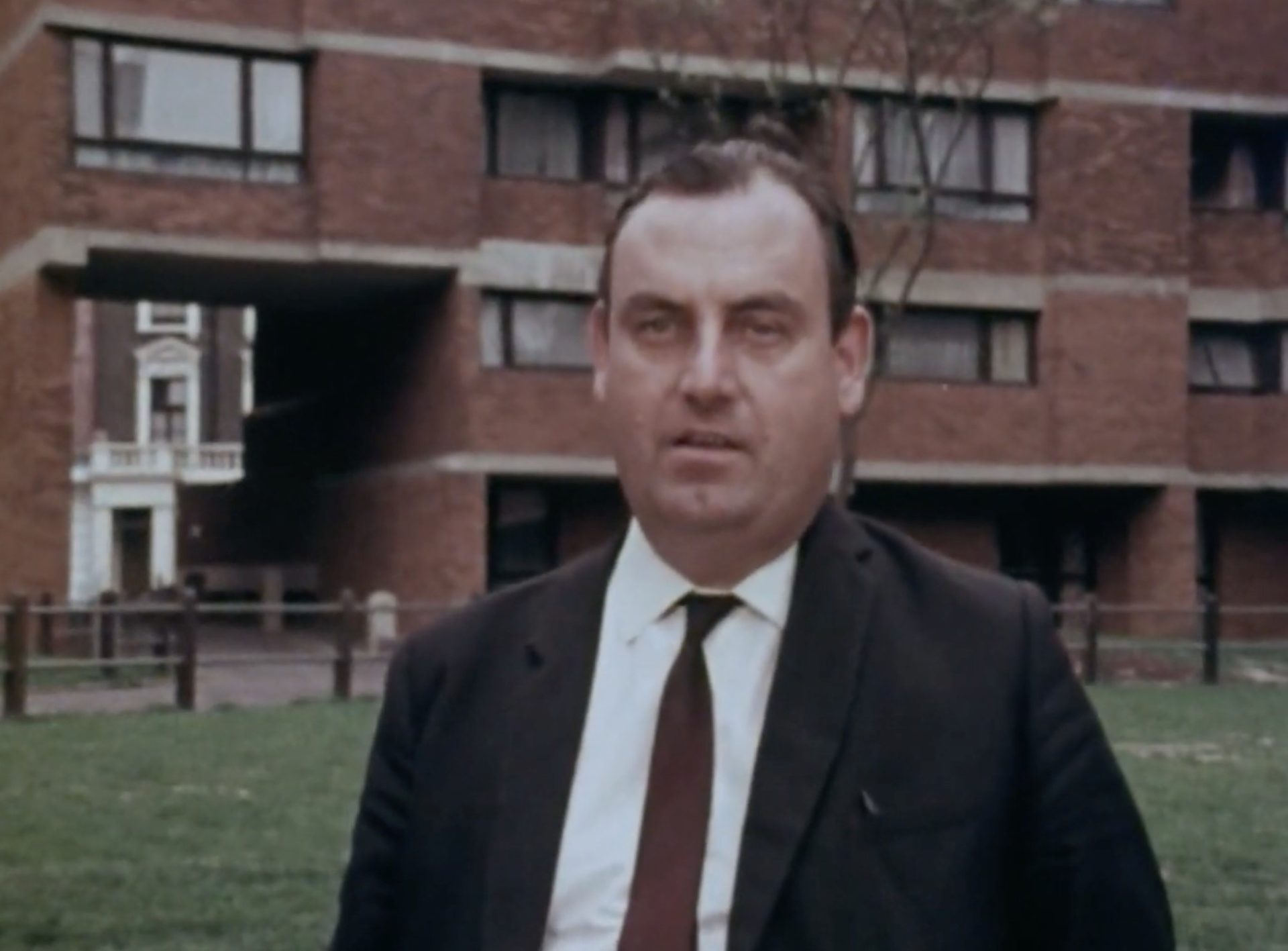
Niall Walsh, one of McIntosh’s rivals in the nostalgia game, straddles old and new just as awkwardly. An Irishman with an account called “Proper Boozers”, he celebrates the right things, even if he could be more subtle in his working-class bingo: horse racing on the box, tat on the ceiling, cheap pints at the bar. In each video, his disembodied voice judges the pub on whether it meets his threshold of authenticity with the simplicity of a Roman sparing or condemning a defeated gladiator. Turner’s Old Star in Wapping, with its scratched wooden floor and fizzing Fosters? Proper boozer. The Blackfriar on Queen Victoria Street, with its pretty murals and overwhelming food? Not a proper boozer. “Maybe that’s nostalgia,” Walsh laments of his ideal pub. “Maybe those pubs are disappearing.” If they are, they are doing so slowly enough for Walsh, who has created a handy interactive map of London’s authentic hostelries, turning previously rough dives into the Bermondsey beer mile.
Given Gen Z’s inclination to nostalgia (one recent survey said that 47% of adults aged 18-29 would rather live in the past), they were clearly ripe for the taking as an audience. Each generation covets something of the previous, of course, but Gen Z’s obsessions seemingly slip into envy. It may be because they are fed images of the past every day; without the internet, of course, previous generations could live in relative ignorance of what their parents got up to. The past should seem quaint, yet it appears increasingly normal — more normal than the present.
The pubfluencers know that, repeating the phrase “bygone era” to death, sending a shiver down the spines of those who want what they have never had. The pub slots neatly into an imagined history of simpler, slower times, with images of grizzly regulars and sticky carpets providing an antidote for our characterless age. Yet if the ceremony of past pub going clearly appeals to young people, with all its etiquette and icons, so too does its sense of opportunity, of what might happen and of whom you might meet. As Gen Z envied previous generations their music, their Saturday jobs and their houses, now they envy them their carefree nights at the pub.
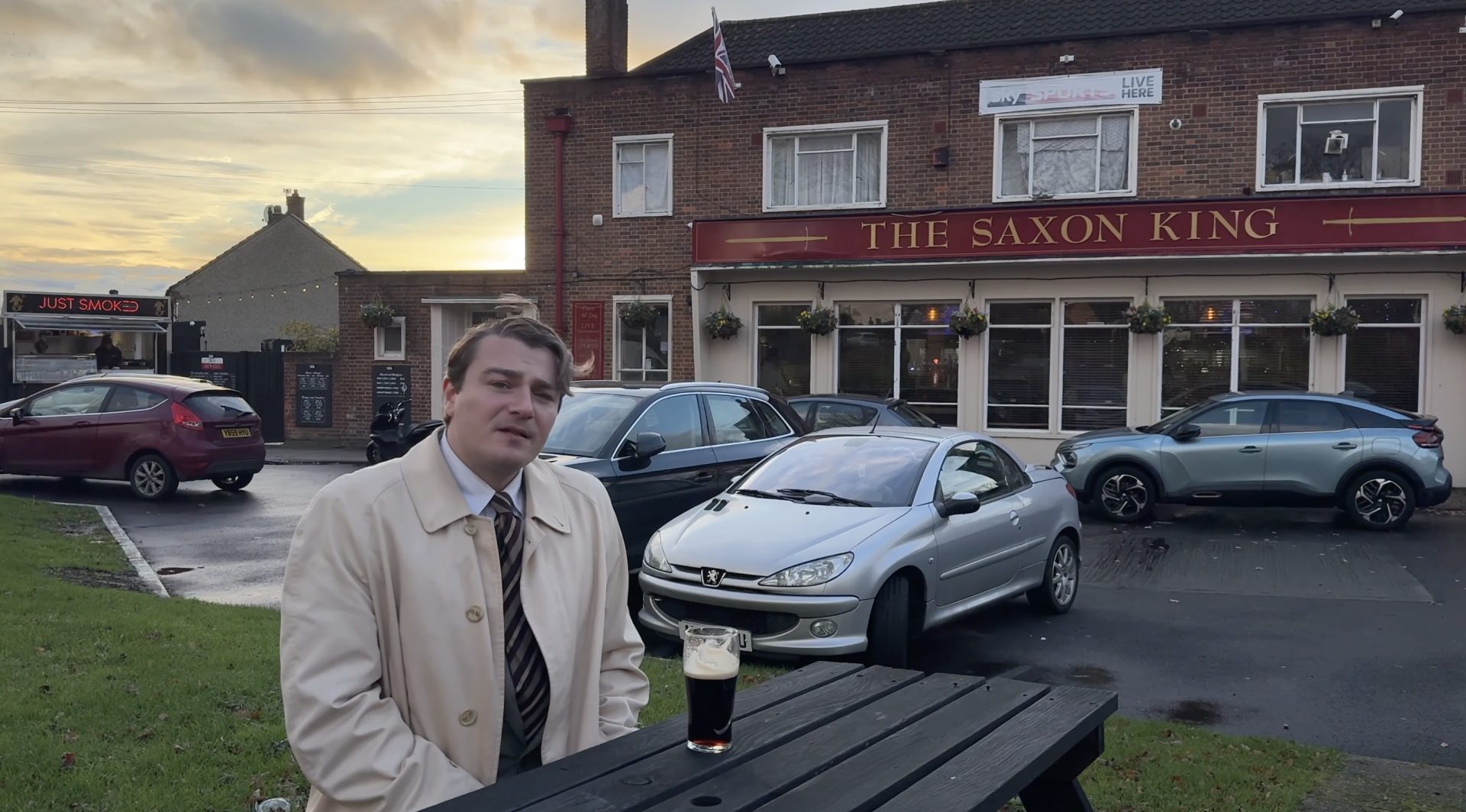
To be fair, pubs, as with all weighty traditions, have long been associated with nostalgia. In his quietly irritable essay “The Moon Under Water”, George Orwell described his ideal pub as “uncompromisingly Victorian” with the “solid, comfortable ugliness of the nineteenth century”. Tellingly, though, pubfluencers are more reluctant to put a date on when exactly a pub trip should be harking back to. That may be for a canny reason. Visiting lonely-looking pubs up the Holloway Road, McIntosh talks vaguely of a “fading way of life”, but it is up to the viewer to work out whose way of life is fading. It is useful to keep the nostalgia in the eye of the beholder, blurry and rosy at the edges, rather than show too much truth about the proper boozer.
It is now acceptable to turn up and order a pint anywhere in London. The “fading way of life” that McIntosh mourns was a socially conservative, white-working-class one, which wouldn’t always have been so eager to welcome a diverse, young crowd. Even 40 years ago, London’s proper boozers had tight clienteles who supported them day in, day out, drinking as routine in a manner now vanished. The establishments frequented by them were not places where today’s hipsters could feel comfortable saying what, or dressing how, they wanted. After all, landlords used to carry mallets. But now that the white working class has largely disappeared from London, leaving only a few of their pubs behind, those who remain will take whatever company they can.
The wistfulness, anyway, seems rather misplaced: that fact is that the “proper boozer” has never been more pleasant for outsiders. Gone are the days when a young filmmaker zooming in on a chap in high vis at the bar would be gifted a black eye to match his stout. In a bleak financial environment for pubs, he is received with open arms, and so are his followers wishing to sample the Guinness themselves.
Still, if the choice in London is between an expensive treat and a kind of false pageantry, I would rather retreat to the provinces. Nostalgia, it’s clear, can be wearisome, and there is a fine line between treasuring history and living on past glories. In middle England, a semblance of locality offers some contrast to the ills of the capital’s pubs, and it is often pleasant to drink where no TikTokker has been before you. Even if a pint is still relatively pricey, the pub will often be the only place to go for miles around, and so locals will gather as locals do. That might be at an identikit Greene King pub, but you can’t choose your local; the local chooses you, complete with a bar layered with charity collection boxes and grim-faced staff in green-and-black-check uniforms.
Jimmy McIntosh would not be caught dead filming in that kind of pub. Pre-printed chalk boards, fairy lights and, God forbid, some middle-class drinkers would be a tough sell on social media. Yet is not attitude as important as a period carpet? The Camel is a fun yet exhausting place to drink. There is a lot to look at, but it is far from authentic — it feels like TikTok with pork scratchings. Compared that to the average chain pub, a far closer match for our indistinct “bygone era”. You can still find pubs around the country that people sleepwalk into; it is only in London that we set calendar reminders and ask the landlord to see the receipt. At least in an unremarkable, suburban Greene King pub, you might notice the quiet behaviors that really make you feel like another round, where people still wile away a whole afternoon. As an added bonus, you can be sure that you won’t have someone in a large coat rehearsing a script by the jukebox.