









June 4 2026 - 7:00am
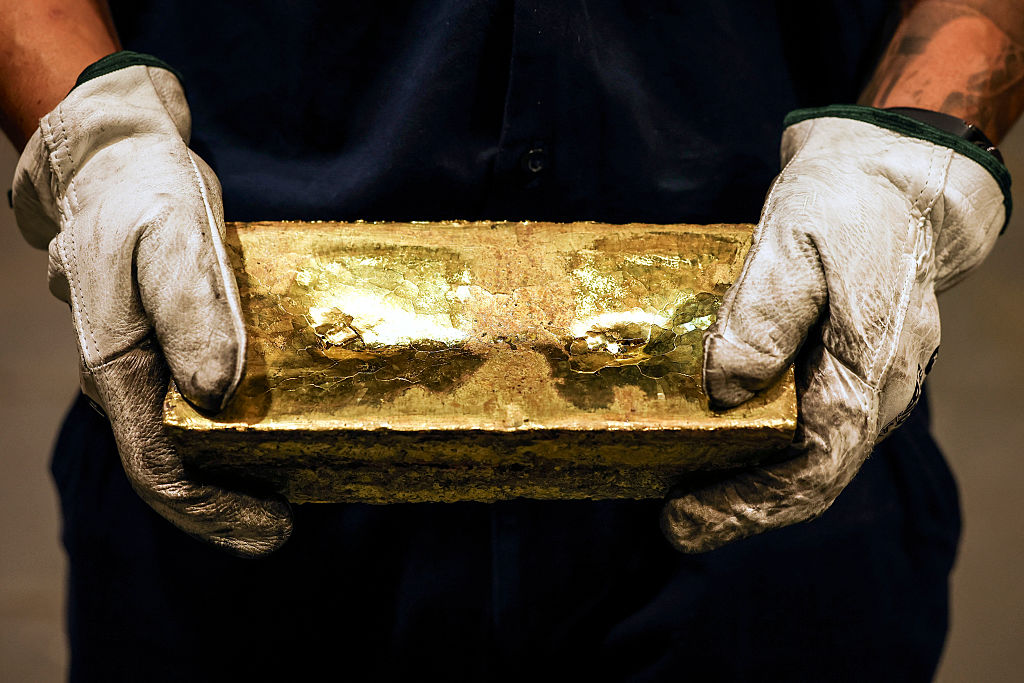
The European Central Bank this week reported that gold has overtaken US Treasury paper as the world’s principal reserve asset. The precious metal now accounts for more than a quarter of the foreign reserves held by the world’s central banks.
Significant though this development may be, we shouldn’t get too carried away with talk of a post-dollar world just yet. Once one includes private assets, the greenback remains the world’s dominant currency, accounting for nearly half of the total and being used in nearly 90% of international payment settlements. What’s more, a substantial part of the recent increase in gold’s share results from the surging price of the commodity, which has doubled in just the last two years.
All the same, this is a milestone moment. Gold has surged precisely because demand from central banks has helped drive up its price. Meanwhile, even allowing for the fact that foreigners hold ever more private-sector assets in the US, the total share of American assets in the reserve portfolios of central banks has dropped to historic levels: from over 70% at the start of this century, the figure has fallen to a little north of 40%. And while the dollar still dominates international transactions, more countries are experimenting with bilateral arrangements. China’s CIPS system for cross-border transactions is rising quickly, its share doubling in just the last three years.
Although China runs a huge trade surplus with the rest of the world, it often runs deficits with developing countries. That gives many of them an interest in trading in the Chinese currency, which they can use to pay for Chinese loans and imports, making it likely the yuan’s role as a trade currency will continue rising.
Thus, while we may not be in a post-dollar world yet, there is clearly an appetite for one. In part, the search for alternatives is driven by domestic US politics: greater policy uncertainty, soaring national debt and deficits, and increasing withdrawal from the multilateral system have added a new element of risk to dollar holdings.
But economics also plays a part. Unlike the pound sterling, the currency it replaced as the world’s principal reserve asset after the Second World War, the dollar is today founded upon an especially fragile base. If Britain in the late-19th and early-20th centuries was what Adam Tooze has called a “hard-working hegemon”, running huge trade surpluses which it then reinvested abroad, the US could fairly be described as a lazy one.
The US runs trade deficits, which it then funds by having the rest of the world invest in America. In just the last decade, the country’s net international liabilities have doubled to nearly $30 trillion. In other words, the US boom is not built atop the manufacturing prowess that once made Britain a great power, but instead on the good credit of the rest of the planet. The country’s soaring stock market has been fueled by massive global flows of money. This has made Americans rich — how many more gloating essays must we read about how Europe is poorer than America? — but it’s also made them vulnerable to a change in sentiment. If the flow of money reverses, the house collapses.
Until now, the US has benefited from a net positive income flow. However, this is changing rapidly. As interest rates rise, its net income surplus is rapidly approaching zero. It could be that the early birds are pulling their worms from their US accounts and turning them into gold. Although it would unfold over years, this could be the start of a big story.
John Rapley is an author and academic who divides his time between London, Johannesburg and Ottawa. His books include Why Empires Fall: Rome, America and the Future of the West (with Peter Heather, Penguin, 2023) and Twilight of the Money Gods: Economics as a Religion (Simon & Schuster, 2017).
 jarapley