





A couple of Victoria Secret models practice the sweet science. (Dimitrios Kambouris/Getty for Victoria's Secret)





I must admit I was skeptical walking into BoxCentric, a boxing club on a leafy street in Knightsbridge. I half expected clients in expensive Hermès boxing gloves and Lululemon yoga pants. This wasn’t the sort of place where you’d find dog-eared copies of The Ring lying about, or pictures of some long-forgotten son of the squared circle. Nor did it have that familiar smell of sweat, leather, damp canvas and hand wraps accumulated over the years, ingrained in the very woodwork of the place.
Suffice to say this was not an old spit-and-sawdust sort of gym. Yet more than its style, what makes BoxCentric truly remarkable is how unexceptional it now feels. All over London, similar boxing boutiques are sprouting up like welts on a fighter’s face. BXR, founded by Olia Sardarova and backed by Anthony Joshua, has membership fees starting in the thousands. Then there’s JAB Boxing in Victoria, which features champion boxers from Harlem Eubank to Caroline Dubois in its slick promotions. Boxing, a working-class sport, sneered at by the likes of George Orwell, has been repackaged for the affluent.

Boxing’s migration into luxury gyms is easy to mock, but harder to dismiss. These clubs are opening the sport to women, professionals and people who would never enter a traditional gym. They are also giving fighters and trainers a way to earn outside the sport. The problem is not that the rich have discovered boxing. It is that, just as boxing becomes fashionable among the wealthy, the grassroots clubs that made it socially useful are starting to decay — with ominous consequences for the sport and its future.
As a boxer myself, it’s easy to scoff at the posh hitting pads. “This isn’t real boxing,” one England prospect tells me, “it’s feel-good boxing.” In practice, that means less actual sparring and more bag work, circuits and pads, played to some trippy music. Yet it’s precisely the pressure of being punched in the face, to paraphrase Joshua Buatsi, the Ghanaian-British Olympian, that makes diamonds. And for those of us who used to pay £2 in subs, £225 a month feels like a hook in the liver. For me, then, visiting BoxCentric felt rather exclusionary, a far cry from boxing’s egalitarian motto: all are welcome, rich or poor, black or white as long as you can fight.
The economic upper cut stings in other ways too. Think again to our England prospect. He wakes up early, cycles across London to teach a class, then returns for his own training in Brixton. And for what? Life for kids like him is hard. “You spend 10-to-15 years in the amateurs and get your brains bashed in,” says Dan Morley, a pundit and former professional. “There’s no money in the gym. We make little money from it.” It’s easy, then, to resent the suit turning up in a sanitized gym, thinking that a few hits makes him Balham’s answer to Joe Frazier.
All the same, I’m not sure sneering is quite right. “Everyone,” Morley points out, “should have an opportunity to try a sport.” That’s especially true when these new spaces have opened boxing up to people who would never have walked into a traditional gym. Louie Basso, a manager at JAB, tells me that around 65% of their clients are women. This is unsurprising. I myself have seen many women wanting to enter my gym, but finding the old boxing environment intimidating.
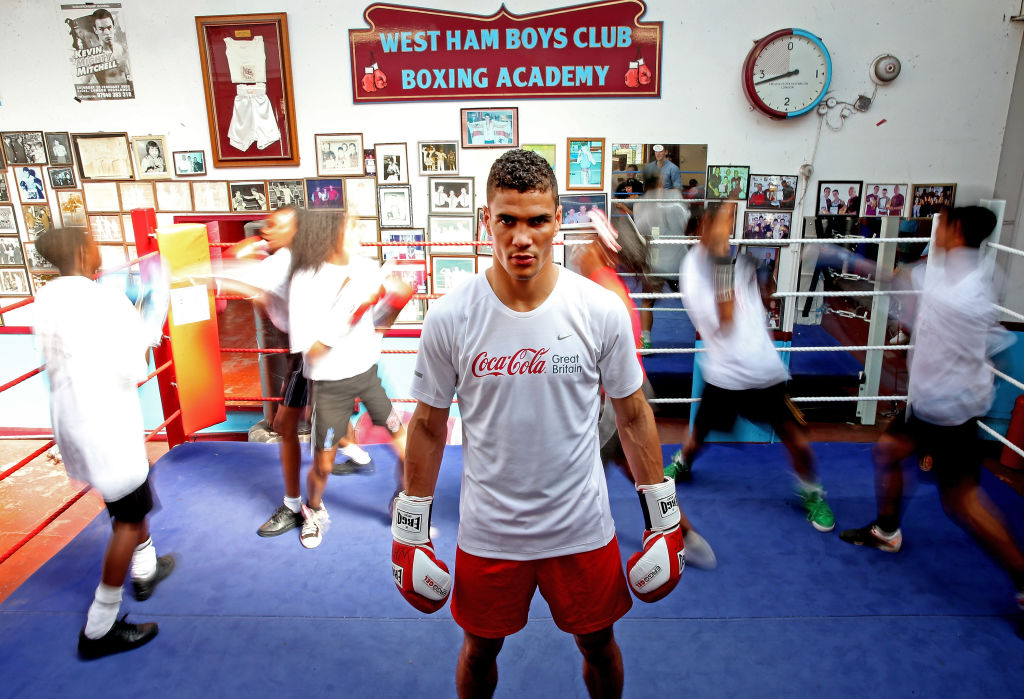
Morley makes a similar point. “It gives people who in previous eras would turn their nose up at boxing an understanding of how difficult it is — the technical aspect.” If a cleaner, safer, better-lit gym gets more men and women hitting pads, learning footwork and discovering the discipline of the sport, that’s hardly a bad thing, especially when audience numbers continue to drop.
As our England prospect’s early-morning hustle implies, meanwhile, luxury boutiques help boxers themselves. That £225 a month has to go somewhere, and fighters need all the help they can get. As Mark Turley shows in Journeymen: The Other Side of the Boxing Business, the average journeyman’s living often depends less on ability but on the fact that he’s a poor ticket seller. Few know that the fight game is stacked in favor of the ticket seller; as Morley puts it, the industry is “fucked”, controlled by promoters and with very few opportunities for outsiders. Boutique clubs offer former fighters a way to earn money outside the magic circle. Visit 12×3, a gym in the City, you can be taught by Darren Barker, a British, Commonwealth and world champion. George Veness, the founder of JAB, is another good example. A Newham boxing vet who fought for England before leaving the sport, he began training Victoria’s Secret models before replicating the idea at JAB.
There’s a broader point here too. Boxing may have been the poor man’s sport, but few boxers would begrudge men like Veness from making money. That, after all, is what prize fighting is all about. And there are other reasons to feel relaxed about boxing’s posh turn too. When the Marquess of Queensberry put his patronage behind the sport in 1867, he helped civilize it. From the brutal brawling days of old, gloves, rounds, the 10-second knockout rule were all introduced. Without the Queensberry Rules, without money, boxing may not have survived in the form we know it. Certainly, many young men would have pointlessly lost their lives.
If rich people want to pay for expertise — let them. Even if the next Mike Tyson doesn’t come from Knightsbridge, we may still reap the benefits of high-flyers becoming advocates for the sport, just like the Marquess of Queensberry himself. Like it or not, it’ll be precisely these people who become future school governors, magistrates and lawyers, and who may actually advocate for boxing as a way of solving London’s epic social problems.
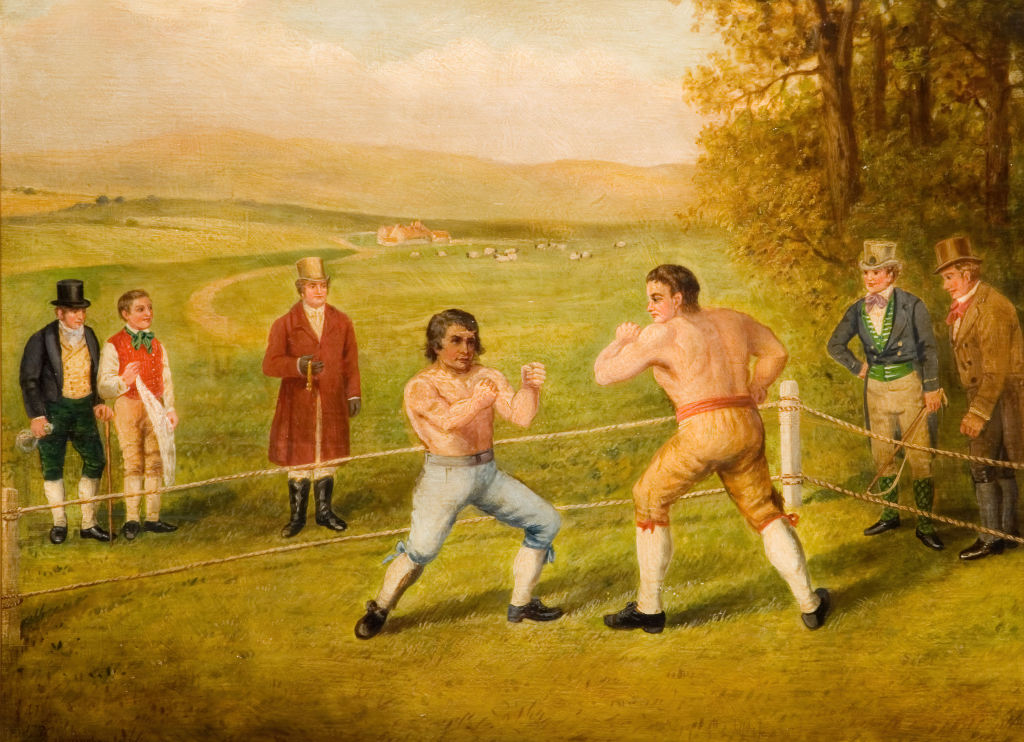
Having worked with young men involved in knife crime, I know that the first thing you teach a novice is not aggression. It’s emotional regulation. You teach balance, positioning, defense and timing. And that can only be achieved if you can stay calm, as Teddy Atlas, Mike Tyson’s old trainer, put it, “in an un-calm environment”. In sparring, the aim is not simply to hit the other man. It is to create enough distance to think and act, not merely react. To remain composed while someone is offloading on you is a beautiful thing. It gives you immense confidence in the ring, but also in life, business, conflict and personal relationships.
All that’s useful whoever you are, but especially for Londoners born on the wrong side of the tracks. Social workers and youth-offending teams in overstretched boroughs like Croydon recognize the benefits of boxing, often taking their charges to the gym. Every single kid that I myself trained up in Croydon had an absent father; what boxing gives them is not merely toughness. It gives them discipline, restraint and, believe it or not, gentleness. Little wonder that gyms often act as a mediator with law enforcement, even as some police forces have funded clubs as a preventative measure against antisocial behavior.
What a shame, then, that while places like BoxCentric thrive, their working-class cousins are struggling. Once again, money is key to this dynamic, with soaring rents a particular blight. Consider the plight of Broad Street Amateur Boxing Club. A typical East London community center, nestled between Shadwell’s council estates, it has a 138-year tradition in the sweet science. But then, in 2024, it received an annual rent increase of more than £60,000, saved only by a public campaign. Nor is this just a London problem. Stockbridge ABC in Liverpool has struggled. The late Ricky Hatton’s old club, Hyde & District Amateur Boxing Club near Manchester, is at risk too. Sudbury Boxing Club, with a 70-year pedigree, recently needed Eddie Hearn, the larger-than-life promoter, to step in and appeal for funding.
These sorts of things create resentment because property owners and councils are removing one of the things that allows for Britain’s poorest to succeed. When someone chooses to “turn over”, or become a professional boxer, it’s often because other doors are closed to him. To prevent a young man from carving out a future with the only thing he has — his fists — seems to me a grave injustice. And what councils fail to grasp is that offering to move a club elsewhere doesn’t solve the issue. I saw this myself at Sting ABC, a club I once boxed and coached at. Too many of the gym’s young boxers were lost to the streets of Croydon, despite the dedication of coach Bruce Smith, an ex-British army veteran. Only now, after years of struggle, has Sting ABC finally re-found its feet in Lewisham.
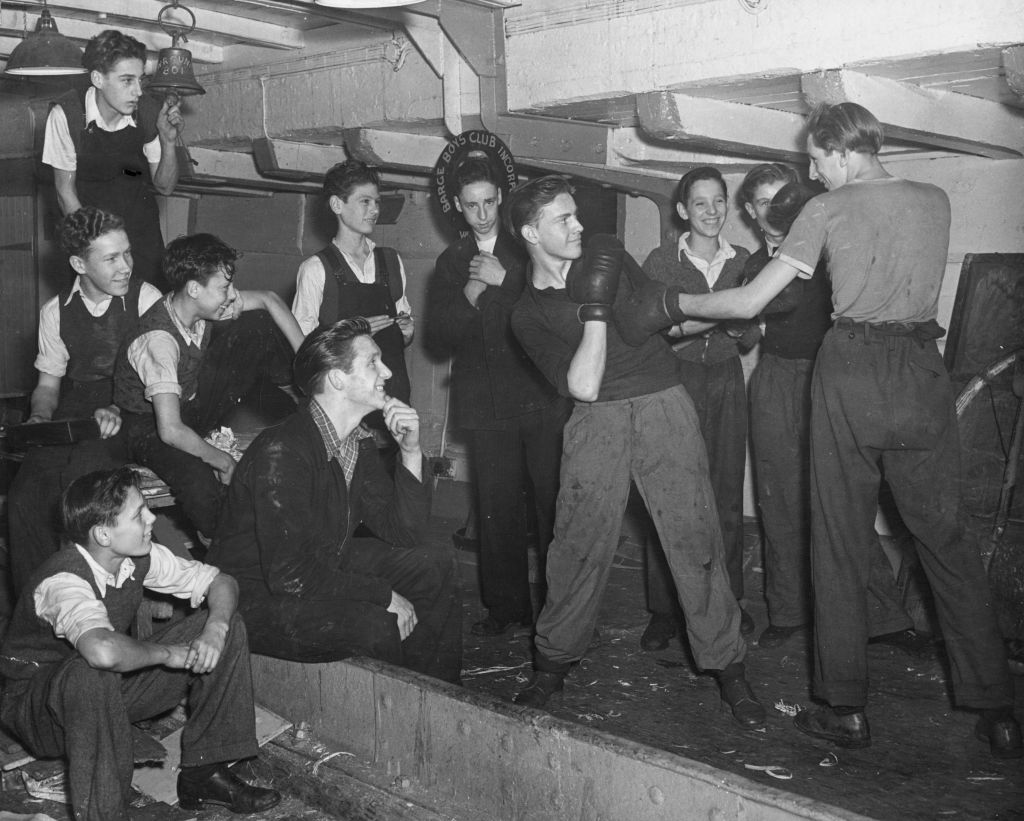
After all, the young people who frequent a club can’t move with it. A boxing gym isn’t just a room with bags. It’s a local institution and a source of pride. Each gym has its own character, whether that’s the spartan white paint of Miguel’s in Brixton, or the converted church at Ingle Boxing Gym in Sheffield. Or else go to London Military Boxing Club and watch my own teachers, Andy Haines and Del Ali, teach their boys how not to lose control, how strength without composure is useless. That’s why boxing was once taught in schools. Boxing absorbs social pressure and tensions from home and the schoolyard. It creates intergenerational authority. It gives difficult boys structure, in a way no Tube poster campaign ever could.
So yes, let the lawyers, bankers, influencers and executives box. Let women find confidence in gyms that feel safe rather than hostile. Let old fighters earn proper money holding pads for people who want to feel, for an hour at least, that they are part of the fight game, that there is no tomorrow, that they are really in a Rocky movie. Boxing and wealth need not be enemies.
But if boxing becomes only a premium lifestyle product, something has gone badly wrong. The sport’s glamor has always depended on the existence of the unglamorous rooms beneath it: the local clubs, the volunteer coaches, the kids paying a few quid to train, the veterans wrapping hands, the smell of sweat and leather, the lessons in restraint disguised as violence. Whatever happens, after all, the rich will always be able to buy the feeling of boxing. But the poor will need its function.
Tam Hussein is an award winning investigative journalist and writer. His work has been recognised by the Royal Television Society Awards.
 tamhussein