









May 30 2026 - 12:00pm
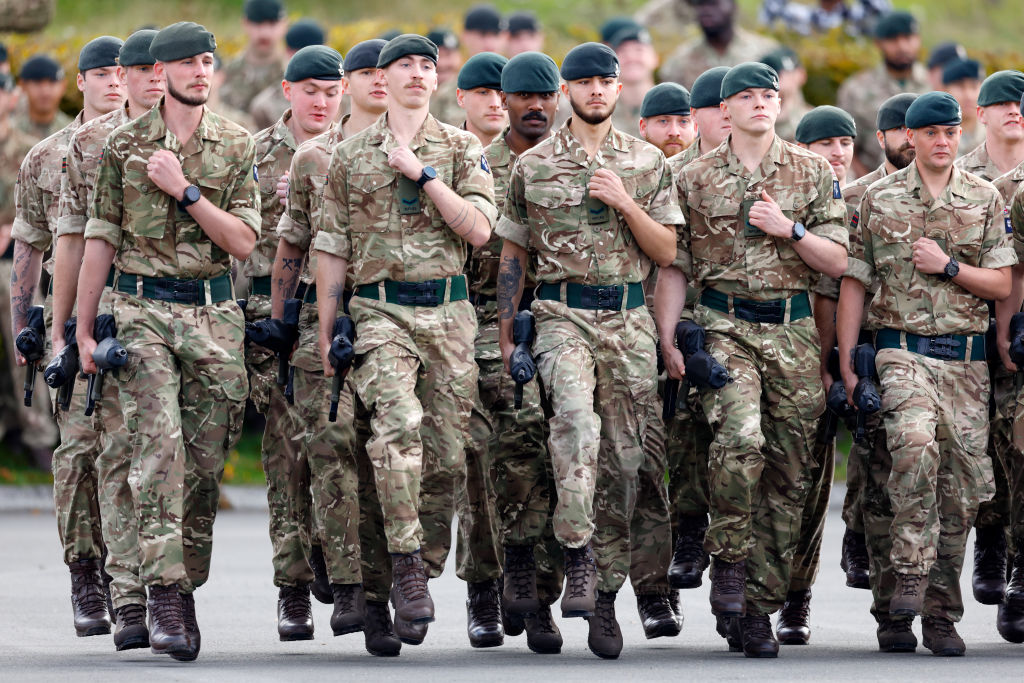
Faced with a rapid rise in youth unemployment, the Government is now urging young people to consider a career in the Armed Forces. The Department for Work and Pensions is issuing new guidance for job centers to point 16- to 24-year-olds who are struggling to find jobs or apprenticeships toward military recruitment. Meanwhile, Louise Sandher-Jones, the Minister for “Veterans and People”, has said young people should “think seriously” about joining up.
At first glance, this might seem like a sensible idea that deals with two serious problems at the same time. But, in reality, one of these is vastly greater in scale than the other, and the proposed solution suggests a lack of seriousness about the root causes of either issue.
Despite the numbers of active service personnel in Britain’s armed forces being at historical lows, the army is actually only 2,140 people short of its authorized trained strength of 73,000, while the Armed Forces as a whole are 8,590 short of their target of 136,000. The Government review that prompted this idea found that there are around a million young people in Britain not in education, employment or training (Neet) — equating to roughly the size of the entire British Army at the beginning of the Second World War.
There will be a significant number of currently aimless young people who find fulfillment, skills and direction in the Armed Forces. And the forces do need to recruit more than the current 8,590 shortfall in order to meet trained target strength in the years ahead. But it is equally clear that the military at its current size is unlikely to make a noticeable dent into the million young people who find themselves unemployed.
Morale in Britain’s armed forces is low. The Ministry of Defence’s 2025 Armed Forces Continuous Attitude Service (AFACS) found that just 42% of current personnel were satisfied with service life, while 59% considered morale across the forces to be “low” compared with just 8% who rated it as “high”. Pay satisfaction was 34% and, perhaps more tellingly, equipment satisfaction was just 30%. Outside of major wars, Britain has traditionally relied on a relatively small number of families with multi-generational traditions of service to make up the backbone of the forces — and especially of the army. Consequently, extended periods of low morale can have knock-on effects as veterans tell their children that military life isn’t worth the hassle.
Nevertheless, despite complaints from ministers and MoD mandarins about young people shirking their duty to the nation, Britain has small armed forces because it has been the policy of successive governments to have small armed forces. Including reserves, Britain has just under 182,000 total personnel, compared with 289,000 for Italy, 457,000 for France, and 1,044,000 for Germany. Those countries have maintained larger military head counts in part because they thought it was beneficial to have more young people occupied in the service of the nation as they came out of school — although that hasn’t stopped France and Italy struggling with chronic youth unemployment as well.
If the British Government is genuinely interested in addressing the causes of youth unemployment, it should reconsider the policies which have caused the figure to rise dramatically. Notably, these include the increases to the 18-20 minimum wage, the onerous changes imposed under the Employment Rights Act which make untested younger staff a riskier bet, and perhaps most importantly the lowering of the Employer NI threshold to the point that it captures many basic and part-time roles. It should also consider restricting the graduate visa which enables hundreds of thousands of foreign nationals in Britain’s universities to flood the entry-level job market every year.
Labour can improve recruitment and retention in the Armed Forces by focusing on morale. The most obvious way to do this is by improving pay, accommodation and conditions, but also by restoring the services into institutions that one might be proud to serve. In the meantime, perhaps the “Minister for People” could look at cutting out some of the patronizing corporate nonsense.
Chris Bayliss is an independent consultant who works on energy infrastructure in the Middle East.
 baylissbaghdad