




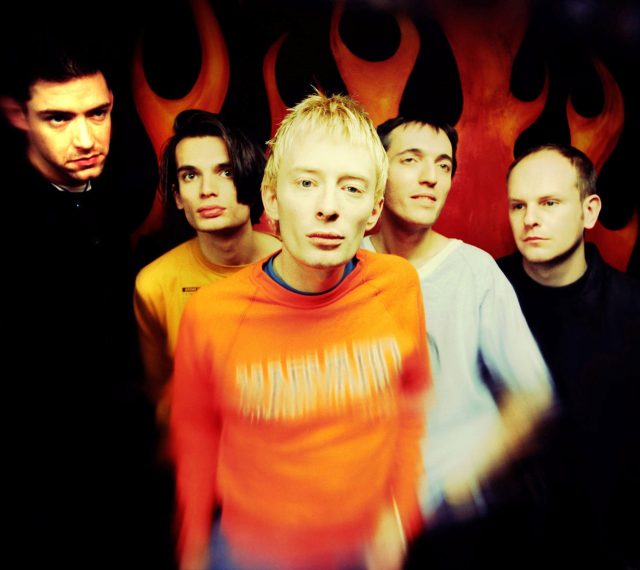
Radiohead, whose album Kid A received a rare 10.0 from Pitchfork. (Bob Berg/Getty)





In 1996, when the great American critic Susan Sontag returned to her groundbreaking collection Against Interpretation and Other Essays (1966), she had the following to say about those intervening years: “What I didn’t understand… was that seriousness itself was in the early stages of losing credibility in the culture at large, and that some of the more transgressive art I was enjoying would reinforce frivolous, merely consumerist transgressions. Thirty years later, the undermining of standards of seriousness is almost complete, with the ascendancy of a culture whose most intelligible, persuasive values are drawn from the entertainment industries. Now the very idea of the serious (and of the honorable) seems quaint, ‘unrealistic’ to most people, and when allowed — as an arbitrary decision of temperament — probably unhealthy, too.”
Though in 1996 this might have sounded like a late conservative mea culpa (Camille Paglia certainly thought so), another 30 years on, Sontag’s admission sounds positively quaint. The internet has now had about three decades to hobble print journalism, scatter established criticism to the wind, and reduce almost everything else to advertising. Most of what passes for film, literary, or music criticism these days is deathly afraid of offending what little audience it has left, while internet commentators nearly always suffer from that debilitating blogosphere tendency, to evaluate art by whether it appropriately offends the opposing side of the culture war, or else placates their own (e.g. “One Battle After Another is bad because Woke Hollywood loves it”, “Sinners has pointed racial allegories, therefore it’s a great movie”). That transgressive Boomer counterculture Sontag once championed may have devolved into a thousand marketable Gen-X subcultures by the Nineties, but since then neurotic Millennials and dissociated Zoomers have had little but identity tags, brands, and message boards around which to orient artistic taste.
Sontag wrote about everything that made her own era a period of such dramatic cultural upheaval — Pop Art, Happenings, avant-garde theater, postmodern novels, Civil Rights, world cinema. Everything, that is, except for the era’s centermost axis: the music. With the Rock Revolution came a new, upstart criticism, which aimed to take exactly those “lower” music forms — pop, rock, blues, R&B — and apply to them the same loving, discriminating attention which had previously been reserved only for High Art. Magazines like Rolling Stone, Creem, and Melody Maker made the reviewing of rock and pop records a distinct department of journalism and the magazine industries. Eventually that culture even bled into other media, with MTV, by which point, in the Eighties and Nineties, magazines like NME, Spin, and The Source had become the hipper alternatives to the old Boomer mainstays. Many of these are still around. But none of them quite managed to survive the end-of-millennium transition to the new digital ecosystem with anything like their previous cultural cachet intact. Only one fledgling publication truly managed to define itself in the ensuing digital world of the new millennium: Pitchfork.com.
While Sontag was writing those words in 1996, a young man named Ryan Schreiber was founding that website from his bedroom in Minneapolis. Within the next 10 years, Pitchfork would go on to become the internet music review site par excellence, averaging one million monthly readers, credited with making the careers of unknown artists, and even breaking those of others. In 2006, Pitchfork even managed to create its own significant music festival in Chicago (and later in Barcelona, too), while its sometimes harsh and frequently flippant snobbishness marked it as an essential center for Millennial Hipsterdom, perhaps the last time anything like an identifiable “counter-culture” existed (at least in terms of its generation’s consumption of music and culture on the internet). Just as the last 15 years or so of pop culture can be seen as an aggressive overcorrection against that stereotype, of a particular kind of obsessive snob (which the website came to embody in its reviews), Pitchfork itself has spent the last decade and a half slowly winding down into post-Web 2.0 irrelevance. In 2015, Condé Nast bought the site, and the next few years saw a considerable change in tone and editorial direction, sanding down its last edges until Anna Wintour promptly folded the company into GQ two years ago.
On 20 January 2026 — 30 years into its reign as the last bastion of genuine music criticism — Pitchfork announced it would be transferring to a subscription model, allowing its users to generate their own reviews, and aggregating them, á la Rotten Tomatoes, while putting the entirety of their archive behind a paywall, like every other media operation still limping along online. This move is a perfect symbolic death knell for music criticism in the Internet Age — the final gasp of a culture in which the popular art millions of people regularly consume might be handled with even a partial version of that “seriousness” all art forms deserve.
The idea that a group of discriminating obsessives might gather in one place to argue vociferously for good taste, and for music which would otherwise never have a chance (and, also important, to argue against music they perceive as deleterious or fake) — this vital idea seemingly has little place left on the internet. Perhaps very few people really bemoan its passing. But when the rest of the web has been winnowed down to only endless marketable content and reviews which are really just covert advertisements for said content, people will soon find themselves nostalgic for the days when the music snobs swooped in with their poison pens, to declare some unheard-of band’s new record brilliant, or some pop star’s latest project an unredeemable piece of shallow trash. If we don’t already, we’ll miss the days when critics had teeth and the gall to actually dislike things everyone else liked — not to simply acquiesce to every internet fandom’s lamest dictum: “Just let people enjoy things.”
In this way, Pitchfork’s slow descent into irrelevance really does mirror the general progression of popular music in this century: the waning subcultures of the 2000s (ending in that stereotype of the Millennial Hipster); the subsequent rise of streaming services in the 2010s and the ensuing struggles of all but the biggest artists to profit from massive changes in the industry; and, finally, the increasing hostility of massive fandoms and media outlets to any kind of unforgiving criticism. In its heyday, Pitchfork was frequently lambasted for its system of assigning points to its reviews (as one of the great Onion headlines read: “Pitchfork Gives Music 6.8” ). But even more than this, it was the site’s willingness to be harshly dismissive of certain artists, while being hyperbolically supportive of others, which made its reputation. Brent DiCrescenzo’s wild 2000 review of Radiohead’s Kid A for the site famously garnered a bit of negative, mocking attention — yet the fact that the site awarded the album its rare perfect 10.0 rating, and later named it the greatest album of the decade, played no small part in the record’s popularity and success with critics over the years. The site’s ecstatic review for Arcade Fire’s debut 2004 record Funeral had a similarly sizable impact — some people have gone so far as to say it actually made the group’s career.
But the opposite was also true. Many of their negative reviews drew considerable ire. Even today, some people point to the site’s 3.3 review of the Jacksonville indie band Black Kids’ first record — which consisted of a single picture and a frowning face emoji, along with the word “sorry”— as a major reason for the band’s failure. Perhaps the most infamous of all Pitchfork reviews was the 0.0 rating it awarded to the Australian band Jet’s 2006 record Shine On: the review consisted solely of a video of a monkey peeing into its own mouth. Though most of the time their pans were hardly so bitchy or dismissive, still the attitude was important. Schreiber and co. weren’t afraid to appear snobbish, yet neither were they afraid to be overly sincere about the music they loved. They rarely reviewed records by major pop stars and if they did, they tended to pan those, too. And when they set about in the 2000s making their own lists of the greatest albums or songs of previous decades, they were keen to canonize the music they saw as especially influential on the underground, experimental, forward-thinking indie rock, hip-hop, and electronic music they usually championed.
Over time this earned them the rather unfair reputation of being biased toward largely white, male indie rock acts — while being a tad dismissive of female musicians, or even primarily black styles of music. Cherrypicking certain reviews could possibly support this argument, but I’ve never quite bought the critique. Until the site began deliberately to combat this perception of its own chauvinism, it was if anything simply engaged in an older Gen-X-style rooting out of inauthenticity — trying to spot and designate fakes, sell-outs, or poseurs. But after the 2000s, the climate of the blogosphere was quickly growing more concerned with themes of empowerment, social justice, and a general cringey Millennial desire to stamp out all offense. The idea that popular music could be criticized for being shallow or fake was increasingly anathema to a neurotic generation which tended to seek out its own self-esteem and identity via the unthinking worship of pop stars and enormous movie franchises, while conflating all criticism of cultural products as criticism of the kind of people who liked it.
Selling out to Condé Nast in 2015 only pushed Pitchfork further along this line. Schreiber himself left in 2018, replaced by Puja Patel, who served as general editor until 2024. In 2019, the site began issuing extremely positive reviews of old Taylor Swift albums, which it had never bothered to review in the first place, nakedly framed as an apology for all that erstwhile snobbishness and failure to be properly deferential to mega-pop fans. Two years later, it offered an editorial — maybe the lowest point in the site’s entire history — entitled “Pitchfork Reviews: Rescored” in which the editors offered about twenty re-dos of old reviews, rescinding their pans of a few records and demoting others they’d praised highly. The funniest of these being the much lower adjusted score for Grimes’ record Miss Anthropocene, released only a year earlier — reflecting widespread distaste for the pop star’s ridiculous and very public relationship with Elon Musk. As it shifted further toward music news, away from committed editorials, Pitchfork also started to re-do several of its “Greatest Songs” lists, ostensibly to reflect a newfound commitment to pop music. In 2002, the site had declared the great cult band Pavement’s yearning slacker classic “Gold Soundz” the best song of the Nineties: in 2022, it was now Mariah Carey’s “Fantasy” — and not even the original but, inexplicably, the even duller, inferior Remix version. Between the tops of these two lists lies the whole silly history of music criticism in the 21st century so far.
As of this January, to go back and actually read any of this history now requires a $5 subscription. What was once important enough to share with everyone has been conveniently priced at the equivalent of your average cappuccino. And what was once the last true outsider voice — the last reliable alternative to the crush of endlessly proliferating online content — has been rendered definitively toothless and irrelevant. Is there any hope that another site could spring up to take its place? There are certainly endless blogs and magazines which still run music reviews, gather industry news, and attempt to break new artists. Places like The Quietus and Gorilla Vs. Bear have had their own excellent writing from time to time; many old behemoths like Rolling Stone itself still soldier on, trying desperately to keep up with a culture that is only growing more and more fragmented, cheap, and difficult to parse. But none of these places have anything insightful to offer, and all are far too deferential to the whims of the markets. Is there any place left for the kind of criticism that might actually tease out a cultural narrative from the music of our time, or defend some sort of standard of artistic “seriousness”, or champion the tiny unsuccessful artists too obscure to break through to bigger audiences?
I would be lying if I said the chances weren’t low. And yet, anytime a cultural vacuum opens up, it tends to reveal the need people previously took for granted. Surely there are still hundreds of thousands — millions, even — of passionate music obsessives out there, in the world and online, dissatisfied with only the streaming catalogs, genuinely interested in encountering something new, something innovative, something that feels as if it’s pulling the culture forward, not merely trafficking in cliches which even the best popular music can never truly avoid. One of the sad facts that most defines our current period is the obvious lack in it of any viable artistic counterculture. But this is a state of affairs which can only go on so long, before “serious” music lovers begin to itch for an actual alternative to gather around. Whatever form that takes — counterculture or no — will be what fills that same vacuum, offering up an actual challenge to the current generation. Hopefully, it will take the demise of Pitchfork as its example, and learn its lessons: 1) That a critic should always trust their own obsessions over any identity, brand, market demand, or audiences; and 2) That “snob” isn’t such a bad thing to be called, if the people saying it happen to be philistines.
Sam Jennings is an American writer and musician living in London. More of his writing can be found at his Substack, Vita Contemplativa.
 samueljennings9