









May 8 2026 - 10:45am
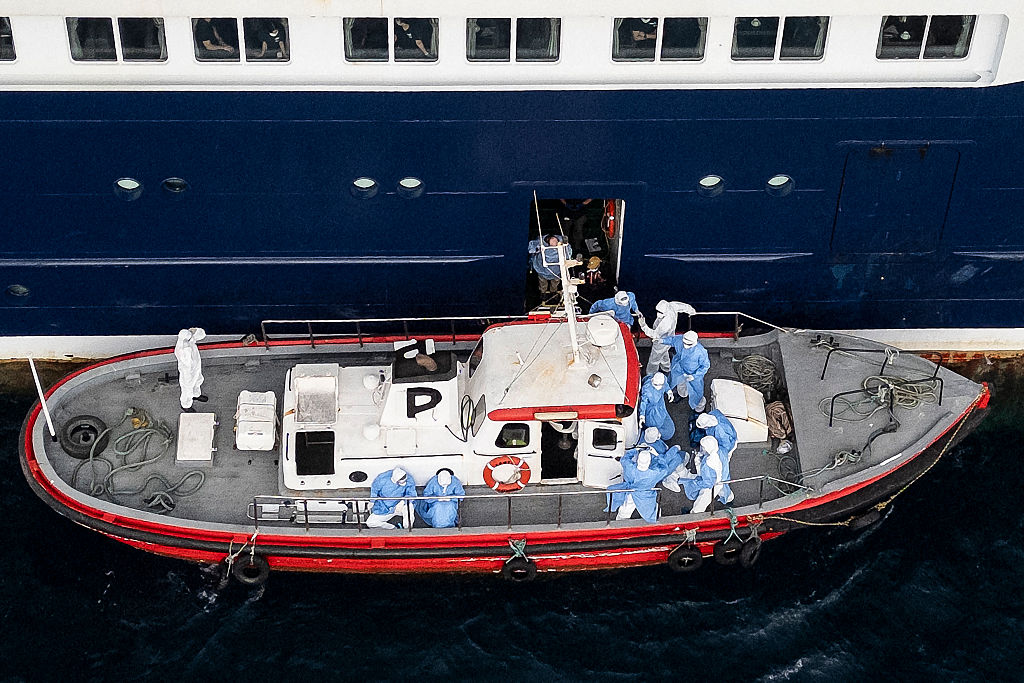
Recent news of an hantavirus outbreak on a cruise ship has brought back eerie memories of the early days of Covid. In early April, MV Hondius set sail from Argentina to Spain. Two passengers fell ill with the virus and died later that month. Last week, the European Center for Disease Control was notified of a potential outbreak, leading to a flurry of headlines and online hysteria.
The death toll has now risen to three passengers, while a further four have been medically evacuated from the ship. Fears have grown in recent days that authorities have not been able to track down all those infected with hantavirus, and that it could spread out of control. Yesterday, EU officials met to plan a response to the outbreak, outlining quarantine protocols for containing the virus. So, is there an imminent risk that we may have to go into lockdown to prevent the spread?
While news of a new virus is always alarming, especially in the wake of the Covid pandemic, the threat posed by a hantavirus is limited. There have been calls on social media to bring about lockdown measures, but healthcare officials across the world, including the at the World Health Organization, have urged calm.
From early indications, we can see that hantavirus does not currently have the capacity to spiral into a pandemic. The virus does not spread in the same way as either Covid or influenza. Rather, it is a group of viruses that live in rodents such as mice and rats. It transmits through inhalation of viral particles or rodent excretory products, and sometimes animal bites. Human-to-human transmission is exceedingly rare, and current evidence isolates this to a single strain, the Andes virus. This strain requires prolonged contact between household members or partners, unlike the common cold or Covid. It is likely that even on a luxury ship, the close confined spaces potentially created an environment which allowed the virus to spread.
However, this is where we start to see why the virus may not pose a threat to the wider public. Human-to-human transmission has only ever been found in a handful of cases. Measures have also been taken on the ship, including limits on close contact as well as the use of sanitization and masks to prevent further spread. The WHO has sent experts to the ship and supplied 2500 testing kits to five countries to increase testing capacity if needed. It is unlikely that a virus which requires these specific conditions to spread will warrant lockdown measures.
This is not to say it is not a serious illness. In humans, it presents like many viral illnesses with fever, malaise, nausea and vomiting, with a rare manifestation of the disease causing severe respiratory symptoms, filling the lungs with fluid. There is also the risk that we don’t know how far the virus has spread at the moment. Some 19 Britons were listed as passengers on the ship, two of whom left before the outbreak was detected, and they are not currently experiencing any symptoms.
At the moment, the wider medical establishment appears to be calm. Professor Robin May, the chief scientific officer at the UK Health Security Agency, has advised that the risk for the wider public is “negligible”. Thus, passengers who will be returned to the UK have been advised rather than instructed to self-isolate for 45 days, while authorities will have contact tracing in place for them.
The hantavirus is not something that healthcare officials should take a blasé approach to, but it is not a brewing pandemic. Despite worried headlines and online panic, measures that were implemented for the Covid pandemic are not currently warranted. Those seeking to whip up a frenzy among the public should take a moment to consider the evidence we have in front of us.
