









April 10 2026 - 7:00am
President Donald Trump’s ceasefire with Iran has been in serious trouble since it was first announced on Tuesday. One major sticking point is Israel’s continued bombing of Hezbollah positions in Lebanon. While Iran insists that Lebanon is covered by the ceasefire, the United States and Israel maintain that it is excluded. On Wednesday, Israel launched heavy strikes on Hezbollah positions in Beirut, killing numerous fighters and, almost certainly, dozens of civilians. The strikes continued on Thursday night. This display of force was, in part, intended to provoke Iran and complicate the ceasefire.
Even so, it now appears likely that Trump has intervened directly, urging Benjamin Netanyahu to hold fire. Yesterday, Israel announced that it has accepted a request from the Lebanese government to begin talks. To be clear, these talks are unlikely to go anywhere. The Lebanese government remains deeply skeptical of any decisive military confrontation with Hezbollah that might trigger a bloody second civil war. The Lebanese Armed Forces are similarly skeptical. Israel knows this, Hezbollah knows this, and the United States knows this.
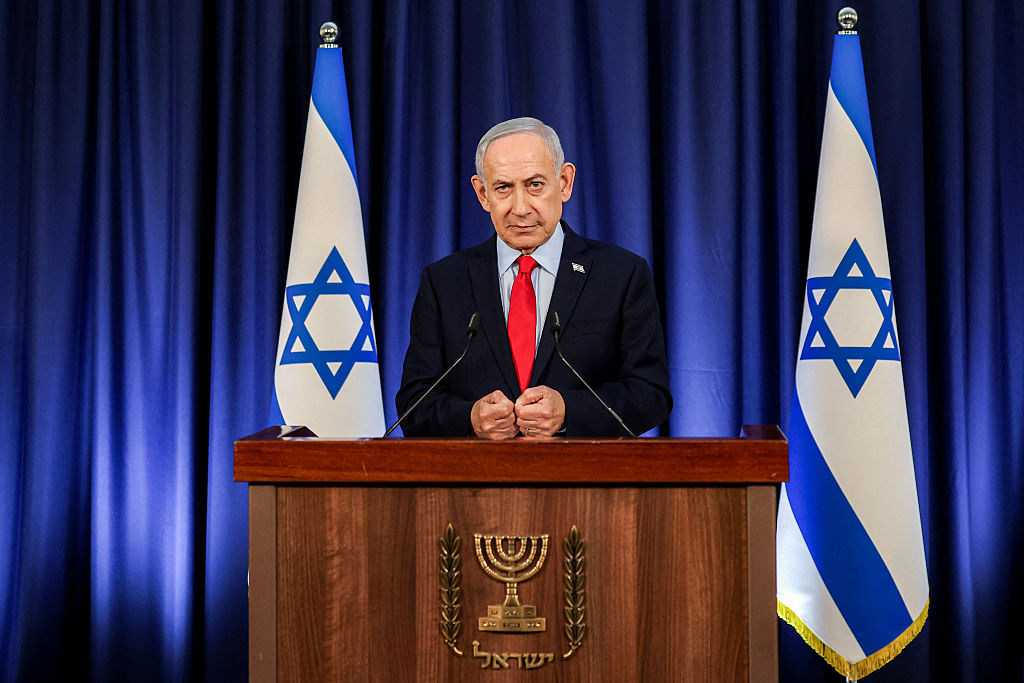
These talks are therefore far more likely to serve as political cover than as a credible pathway to disarming Hezbollah. By framing the process as a response to a Lebanese request that Israel has accepted, Benjamin Netanyahu creates space to halt further strikes without appearing overly submissive to Donald Trump’s demands. In much the same way, Trump preserves his own position by insisting that Lebanon falls outside the ceasefire, even as he pressures Israel to refrain from continuing its attacks there.
But even if this solves one ceasefire complication, numerous others remain. Most notably, Iran has continued to keep the Strait of Hormuz effectively closed. Contrary to Donald Trump’s claims that the main points of a more durable peace agreement have already been established, Iranian officials continue to resist any restrictions on this war’s key point of contention: their uranium enrichment and nuclear program. Trump remains caught between deciding whether to restart military operations or yield to Iranian pressure to secure an agreement on a highly concessionary peace. Meanwhile, the US and Israel are not aligned on what they want from a final status deal.
Trump seeks an end to the war as soon as possible, likely even if any eventual deal imposes restrictions only on Iran’s nuclear program and allows the reopening of the Hormuz Strait. By contrast, Benjamin Netanyahu wants military action sustained until the Iranian regime collapses or Iran descends into state collapse or civil war. Such outcomes would complicate Iran’s ability to reconstitute its nuclear and ballistic missile programs, Israel’s paramount concern. Yet Israel also knows that the United States would have to bear the disproportionate cost of managing any Iranian state collapse.
The US national security community, understandably, remains deeply skeptical of that course. It recognizes that such an outcome would require sustained US military engagement, a heavy expenditure of resources, and likely the eventual deployment of ground forces to support anti-regime Iranian fighters in any civil conflict. US intelligence and military officials also recognize that an Iranian state collapse would trigger a humanitarian crisis, with a significant portion of Iran’s 93 million-strong population likely fleeing towards Europe. The collapse would also carry a major counterterrorism risk, far greater than that posed by Isis between 2014 and 2017, as fanatical subnational groups exploited the chaos to establish safe havens. Meanwhile, the Hormuz question could remain unresolved for many months. This is intolerable from a US interest perspective.
Equally intolerable is Iran’s insistence on charging tolls for international cargo tankers transiting the chokepoint. Trump should clarify that, while he hopes to reach a durable peace agreement within the next two weeks, he will not be played for a fool. Iran can’t block the Strait and expect a ceasefire to hold. Trump has the leverage to make them comply.
