




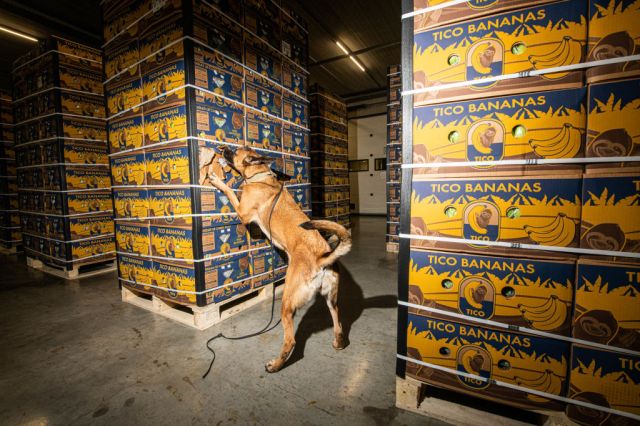
A sniffer dog inspects crates. (Jonas Roosens/Belga/AFP/Getty Images)





In October 2016, a wedding scandalized Antwerp. A bride and her groom, the scion of a prominent Belgian-Moroccan family, celebrated with a parade through Borgerhout, a shabby neighborhood a few hundred meters from the city’s cathedral-like main station. Nothing strange there — but this wasn’t any old parade. For this was a gangster wedding, with the husband a member of the infamous “Turtle Clan” of cocaine smugglers, where flaunting wealth and power was far more important than love.
So there the tough guys went, jamming Borgerhout’s narrow lanes in their sports cars, showing off their watches and their jewelry and going viral on social media. Stuffy Flanders was appalled. After all, Belgian authorities had watched the Turtle Clan rise from small-time dealers to apex traffickers practically overnight. “Our little asshole drug dealers had made the big time,” one prosecutor wryly tells UnHerd. Belatedly, politicians demanded investigations into money laundering and cocaine smuggling. Journalists, reveling in the drama, dubbed Borgerhout “Borgerokko” — the “capital of cocaine”.
A decade on from the Borgerhout wedding and Europe has overtaken the US as the world’s largest cocaine market. An internationally diverse blend of traffickers — old-school Dutch thugs and the Moroccan clans from Borgerhout rub shoulders with Italian mobsters and well-oiled Balkan gangs — have been drawn like moths to the bright lights of Antwerp and its port. Belgium and the Netherlands, home to Europe’s other giant harbor at Rotterdam, have faced the brunt of the gangsterism that followed.
Last October, after spending four months in a safe house due to a threat to her life, an anonymous federal judge from Antwerp shocked Belgium with an open letter. In it she claimed that “extensive mafia structures have taken hold, becoming a parallel force that challenges not only the police, but also the judiciary”, arguing that “bribery is permeating our institutions from the ground up”. She even suggested that Belgium was on the path to becoming a “narco-state” — a warning repeated by another judge only last month.
These claims are clearly worth exploring, as is the way drug trafficking gangs have been able to burrow so deep into Belgian society. And even if Belgium ultimately isn’t a narco-state, this criminal explosion is now seeping far beyond its borders. In the last decade, after all, countries from Sweden to Britain have been outmaneuvered by the rapid rise of the cocaine mafias, already plump from successes in Albania, Spain and Italy. The real question now is: can they ever be stopped?
***
Borgerhout today doesn’t look like a hotspot for cocaine trafficking. Last year, Time Out dubbed it the coolest neighborhood in Europe, praising its “DIY spirit”, leafy terraces and lively streets, where Moroccan grocery stores squat alongside vegan coffee shops. But before the hipsters started arriving a decade ago, Borgerhout was better known for its Moroccan clans, mostly hailing from the rugged Rif Mountains, first arriving as guest workers in the Sixties. Experts in smuggling Moroccan hashish by boat into Spain, some of their number were well-positioned to enter Europe’s already-vibrant cocaine trade.
The criminal clans could hardly have chosen a better base. Alongside Rotterdam, Antwerp is one of Europe’s undisputed shipping centers, receiving over half the continent’s maritime goods. But even figures like that don’t do the port’s scale justice. With containers as far as the eye can see, across 160 kilometers of quays, its size is hard to grasp without a drone. Amid this deluge of cargo, and with port officials in Antwerp only checking around 2% of arrivals, it was easy to smuggle in literally tons of cocaine. For three straight years, Antwerp, confiscating so much blow that police incinerators couldn’t destroy it fast enough, set annual records for drug seizures. Rotterdam, for its part, was close behind.
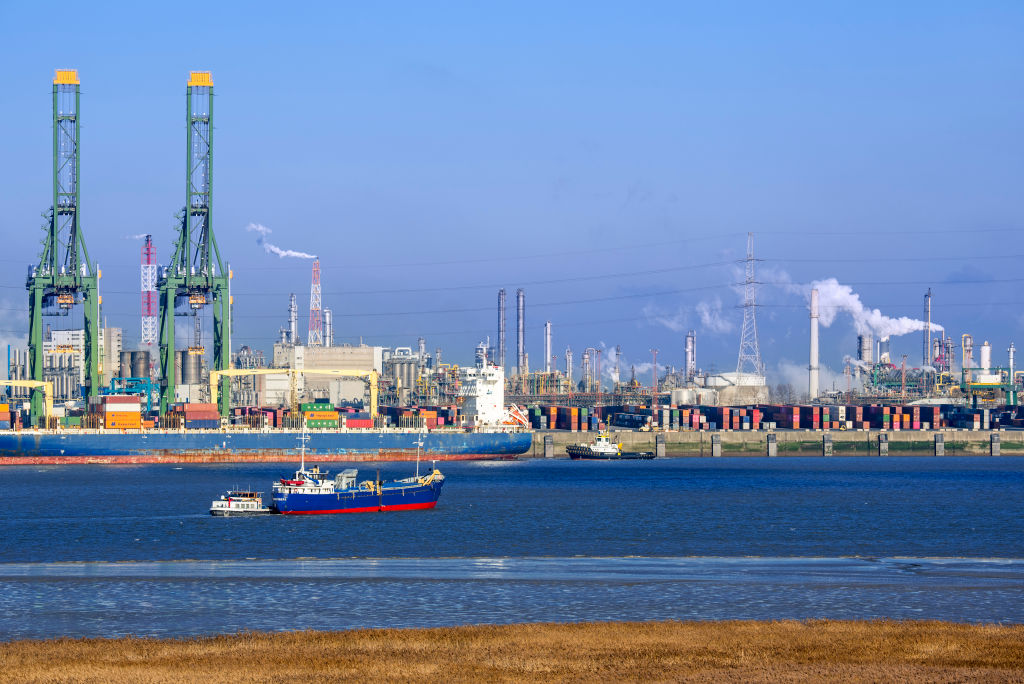
The Borgerhout smugglers, alongside Moroccan relatives in the Netherlands, swiftly became among the most prolific coke traffickers in Europe. Within a few generations, these family groups rose from rural hash farming to being among the most powerful players in Europe’s billion-dollar cocaine trade, operating transnational drug-trafficking operations stretching from South America across Europe to Dubai.
All this has turned Belgium into a magnet for violence and corruption. An hour south of Antwerp in Brussels, the infamously boring capital of the European Union, there have been several murders linked to the cocaine trade. Since the 2012 shooting of Dutch trafficker Najib Bouhbouh in Antwerp, meanwhile, killings related to the port’s drug trade have rocketed across the country, as well as in Netherlands and Spain. Last September, Brussels residents woke up to find an alleged Albanian drug trafficker hanging from a street sign.
Civilians have sometimes been dragged into the mayhem too, including a port worker shot and wounded after speaking about cocaine smuggling in a TV report. In 2022, a botched hit on Othman el-Ballouti, a member of the Turtle Clan, led to the death of his 11-year-old cousin. A wave of bombings followed.
And on the cocaine comes. From the port, some cocaine-laden containers are waved through by corrupt port staff, while others are sent in the hope they’re not subject to random searches. Then the drugs, sometimes sent in batches of multiple tons, are surreptitiously removed from containers by specialized “extractor crews”: often teenagers who’ll only face juvenile charges if caught. They then either load up a legitimate vehicle or jump a fence to get the drugs past the physical border of the Schengen Zone a few hundred meters away.
Once the cocaine does cross the Schengen line, the possibilities are basically endless — and almost entirely risk-free. Broken down into smaller packages and distributed to wholesalers, a metric ton of cocaine can end up supplying nightlife in 10 cities across five countries, from Berlin and Milan to Manchester and Athens. These drugs are sometimes shipped directly to the UK or other European ports, though foreign distributors also come to Belgium to buy cocaine from local high-level traffickers.
As for the smugglers themselves, that complex journey from Antwerp to nightclub bathroom offers plenty of scope for promotion. One excellent example is al-Ballouti, who alongside his fellow Turtle Clan associate Nordin “Dikke” (“Fat”) al-Hajjoui got into the game after earning money as lookouts for extractor gangs. Within a decade, they were moving cocaine by the ton, and ended up commanding their operations from the safety of Dubai — until a new treaty between Belgium and the UAE allowed their extradition.
Though both men now face decades in prison, leaders are quickly replaced, something equally true further down the command chain. Typical here is Dani. Speaking to UnHerd using a pseudonym, he’s one of many young Albanians who treat working in the Northern European coke trade like a gap year. We meet in Tirana, where he now bartends and waits at a café. Before that, though, he spent some of his twenties in a Belgian prison: after being caught “trying to work” at a port near Antwerp.
Albanians have long migrated to the EU and Britain for legal work, but like Dani some instead head to the Low Countries and its coke trade. “The big players live in Dubai and need people to work the ports for them,” Dani says, “so lots of boys take that chance, instead of going to Germany to work in a warehouse or drive a truck.” In the end, Dani came unstuck. But the point, again, is that with so much money to be made — every tonne of cocaine arriving in Europe has a potential street value of €100 million — there’ll always be young men willing to try their luck.
***
In 2016, the same year as the Borgerout wedding, Colombia’s peace deal with the FARC transformed the global cocaine trade. The far-Left paramilitaries, alongside other armed groups in Colombia, relinquished their control over the world’s biggest coca crop, and a new generation of traffickers decided to open the floodgates to Europe. European gangs started sourcing and shipping their own coke direct from South and Central America — and profits duly skyrocketed.
That’s been shadowed by other changes. Traditionally, gangs from different countries played different roles: the Moroccans specialized in getting drugs out of the port; the Albanians in transport and logistics inside the EU; the ‘Ndrangheta from Calabria in brokering and insuring shipments, and providing the connections to growers in South America. Soon enough, though, gangs began working together, sharing routes and huge multi-ton shipments. This is why you frequently see stamps on kilos of cocaine: it’s not marketing, but rather signals which cartel gets what.
The authorities, for their part, are struggling to contain the chaos. “Antwerp is the epicenter of a cocaine flood,” says one former police detective in Antwerp, “and it’s up to what’s basically the size of a local police force to manage it. The cartels feeding cocaine to the EU that are backed by billions of euros in revenue aren’t facing the coordinated police resources of all the nations of the European Union: they’re facing the customs and police of a single city.”
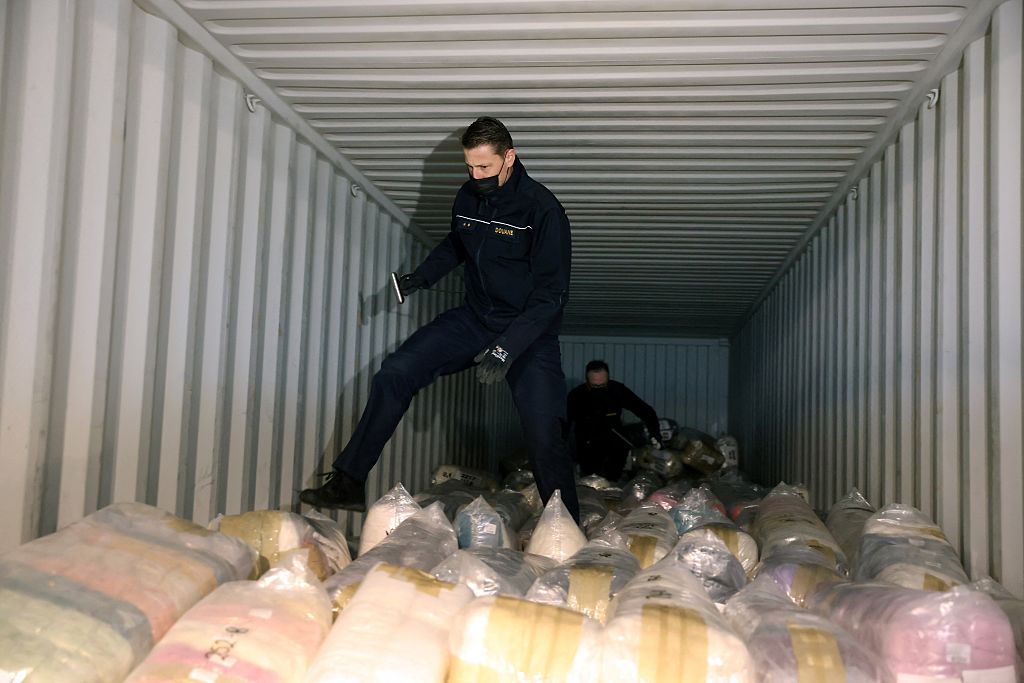
Belgium’s dysfunctional politics hardly helps. The country’s French and Flemish halves are often reluctant to cooperate. Each has a powerful regional government, as does Brussels itself, overlapping with a federal bureaucracy often paralyzed by political and economic rivalries. Ironically, this fecklessness is reflected in the fact that the cocaine mafia has rarely been caught corrupting senior Belgian officials: they’re too incompetent to be useful. Rather, explains the detective, the cartels focus on lower-level workers, the dockers, clerks and police officers they need to smooth the coke’s passage. This conveyor belt of graft is quickly killing trust in society, especially when the trade’s epic profits are sometimes so visible on the streets of Borgerhout, and by gangs flaunting their wealth on social media.
That leads to another question: whatever the judges might claim, is Belgium really a narco-state? Anna Sergi, an expert in organized crime, isn’t convinced. Yes, there are genuine and rising fears. But actual narco-states — Guinea Bissau and Belize, or parts of Mexico and Bolivia — are places where the government has lost its monopoly on violence to the drug gangs. And as Sergi stresses: “We don’t have that in Belgium.”
Joris van der Aa, who has covered the crime beat in Antwerp for a decade, makes a similar point. Clearly, threats against judges and politicians must be taken seriously. Yet as the journalist continues, many such plots are little more than bravado. “In Belgium,” he says, “we see much less violence, threats and brutality compared to South America or even other parts of Europe.” For their part, Belgian clans are reluctant to kill each other, let alone top officials or cops, because “nobody is trying to physically control territory — they just want to make lots of money”.
That’s a stark contrast to Europe’s premier drug supermarket: Amsterdam. A short train ride from Antwerp, the city faces a far more powerful and entrenched version of organized thuggery. It may not yet be a narco-state in the Mexican style, yet the city’s streets and canals have witnessed the murder of journalists, lawyers and witnesses. In 2021, to give one example, a high-profile reporter was shot and killed after leaving an Amsterdam TV studio. His killers? Associates of Ridouan Taghi, a Dutch-Moroccan kingpin.
***
The authorities aren’t blind to these challenges. Since 2022, the Dutch have devoted €524 million to anti-smuggling security at their ports. There have been other clampdowns, too, notably when European police forces gained access to the encrypted phone networks used by criminals. Yet the drugs keep coming — with European coke reaching record purity levels even as prices stay low.
That’s unsurprising. As soon as police clamp down, drug gangs simply tweak their tactics. One example is dissolving drugs in plastic, making them harder to spot. All the while, traffickers are on the lookout for new ports to conquer. Norway and Greece are two popular options, with police in Thessaloniki seizing 270 kilograms of cocaine in a major bust last summer.
Whether you use the term “narco-state” or not, then, Europe’s drug problem isn’t going away — even as more countries are being infected by cocaine gangsterism. So it’s a pity that a genuinely pan-European response remains absent. That’s arguably by design. Yes, the EU has a single market and free travel. Yet it also has 27 different police forces reporting to 27 different governments, all with their own distinct politics. As for the traffickers, all they have to do is get their coke beyond a port’s boundary fence. From there, 450 million consumers await.
For Sergi, the solution is for European nations to band together, and focus more on the gangs than the drugs they’re pushing. “We need to have a coordinated effort and make a choice,” she says. “Either we interdict drugs wherever they arrive — which is a waste of time and resources, and you can never win — or you create a task force and you follow the criminal groups.”
For the moment, though, the expansion of the global cocaine trade will continue. And how could it be otherwise when it’s so wrapped up, literally, in globalization? Hidden amid a tsunami of commerce, the magnified profits of prohibition have made cocaine too lucrative for the gangs to ignore. As they continue to gnaw away at democracy, both in Belgium and across Europe, the rise of cocaine gangsterism has created yet another existential threat for the continent — one it can no longer afford to ignore.