









March 20 2026 - 7:00am
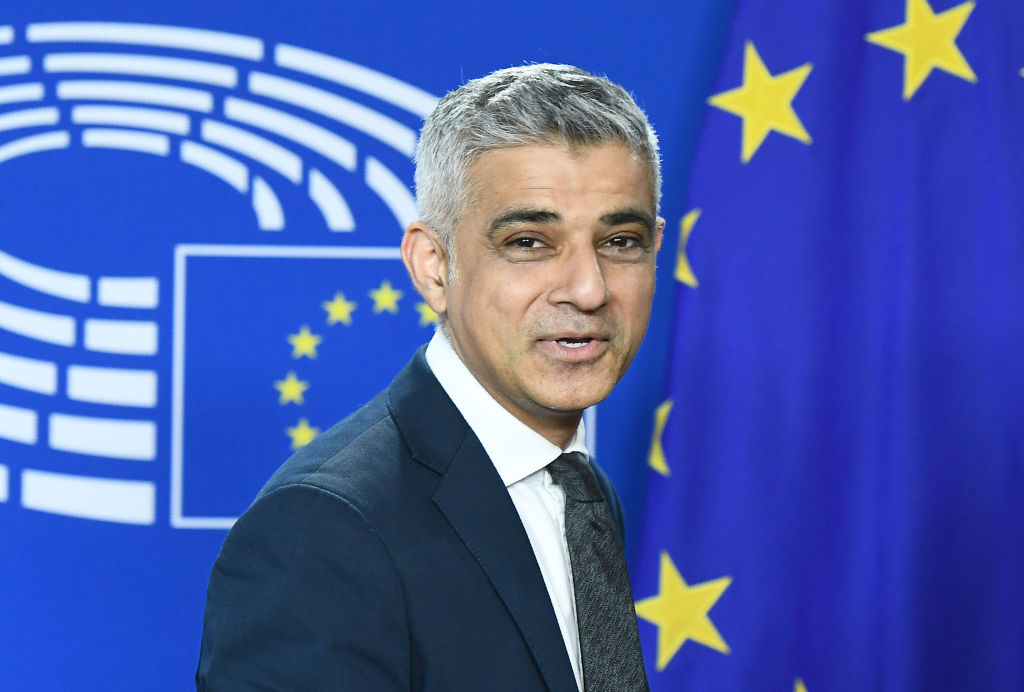
Mayor of London Sadiq Khan has said that at the next election his party should make it clear that “a vote for Labour” is “a vote to rejoin the European Union”. His suggestion comes after the Chancellor Rachel Reeves has broken a previous vow of silence on the costs of Brexit — a political omertà that was designed to keep Labour’s shaky electoral coalition together, divided by its Leave-Remain axis.
It might seem strange that Labour figures like Khan are yearning to rejoin the bloc. In recent years, the continent has become home to a growing Right-populist insurgency defined by Viktor Orbán, Giorgia Meloni and other leaders. This does not seem to bother Khan, since Labour’s new European turn is being framed in the language of geopolitics. World events now revolve around MAGA’s new interventionism, the fraying transatlantic alliance, and the rise of a hostile Russo-Chinese authoritarian bloc. All are being deployed in the battle of ideas over Britain’s post-Brexit place in the world. For the Europhile, the referendum cast us adrift in an unstable world, left limp, without allies or partners. This argument has been strengthened now that the relationship with Washington can no longer be relied upon to compensate for our estrangement from Brussels.
And yet, the precarious position of Keir Starmer’s government is sure to have an impact on how vocal MPs are about this shift back to the EU. The best predictor of where a Labour MP stands on the issue is simple: are they threatened on their home turf by the Green Party or Reform UK? Natalie Fleet, the MP for Bolsover, a former Derbyshire coalfield country, was quick to try and shut down the Mayor’s proposal. Her seat had voted 70% Leave a decade ago, and looks ripe for the taking by the Faragists.
At root, this is a symptom of a wider predicament that the governing party has spent years grappling with: who is Labour for? Labour could remain steadfastly attached to its former, working-class, non-graduate base in post-industrial heartlands. Or it could call it quits, accepting the inevitable divorce between older proletarians and a party now dominated by liberal middle-managers from the third sector.
The latter would, inevitably, mean leaning heavily into the new demographic of the downwardly mobile graduates, the professionals, the increasingly precarious public sector workers, and severing ties between the party and blue-collar Britain forever. Given the dynamics of Keir Starmer’s party, this is likely.
Since the Gorton by-election, all the momentum is with the soft Left, with Ed Miliband becoming increasingly powerful. Meanwhile, Starmer is left unmoored without the anchor of Morgan McSweeney tying him to his insincere Blue Labour project. Without his former chief of staff, No.10 will lurch from one failed strategy to the next. This time, he may find the siren calls of Europe too hard to resist.
The true future of the party, if there is any, is in reconciling the two poles. That would require a cogent, charismatic leadership clique that can articulate a politics reuniting the old Labour tribes that were torn asunder by Brexit. But there is little sign of life on the Labour benches, certainly not of the quality and aptitude that can pull off such a historic task in a fragmentary, unforgiving era. Sadiq Khan may well get his wish.
Jonny Ball is a Contributing Editor at UnHerd. He formerly wrote under the name Despotic Inroad.
 DespoticInroad