









January 28 2026 - 7:00pm
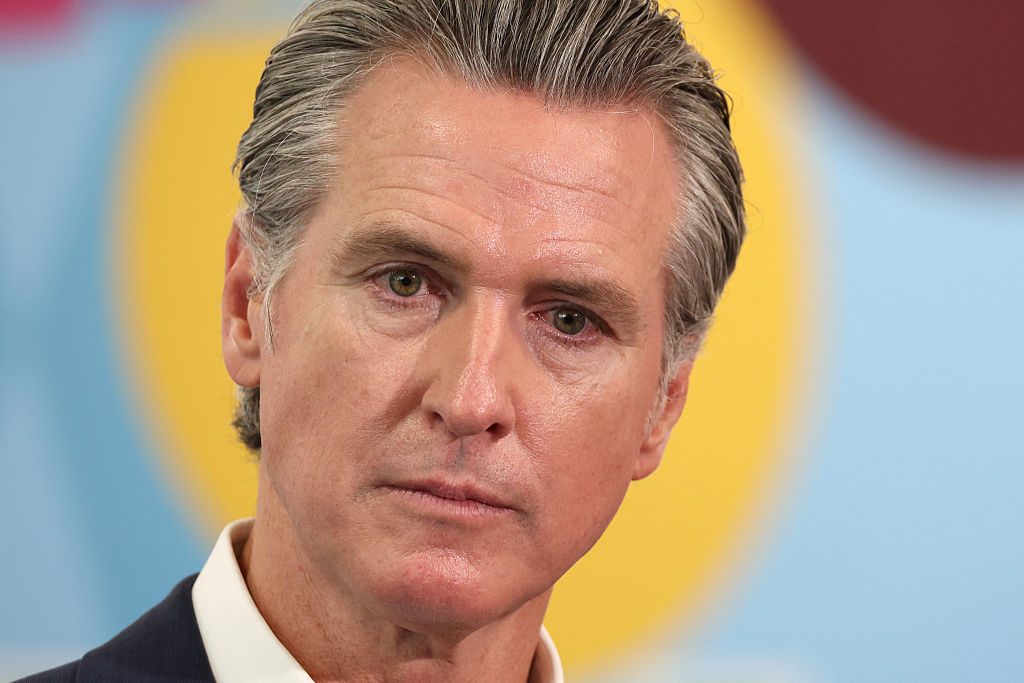
Is TikTok censoring content under its new ownership, as California Governor Gavin Newsom has claimed? The honest answer is probably not, but that’s a far weaker reassurance than it sounds. Take the viral reports that “Jeffrey Epstein” is now being censored on the platform. I tested this myself and found it wasn’t true. You can search his name, find videos discussing the case, and scroll through conspiracy content without issue.
Then there’s the claim that the platform is now censoring videos critical of US Immigration and Customs Enforcement (ICE). Here, the story becomes slightly more complicated. These videos are there, searchable, and still show up on the For You Page. Yet the view counts on some of the videos do seem depressed compared to what would be expected from politically charged material in a news cycle this intense — even from large accounts such as media company Zeteo.
TikTok claims this is a technical issue, a cascading failure from a data center power outage during the ownership transition. That’s possible, but why does it seem to disproportionately impact political content? The app certainly feels different, serving up videos from weeks ago rather than the urgent, reactive content which usually dominates during a major news event.
While it’s plausible that this is just a bumpy transition, it’s also plausible that the new ownership structure — which includes Oracle’s Larry Ellison, a prominent Trump ally — creates conditions where political interference becomes possible, even if it isn’t happening yet. That’s why Newsom has launched an investigation, alleging that TikTok is “violating state law by censoring Trump-critical content”.
This may be difficult to prove, but as Jacob Ward noted in a PBS interview this week, TikTok was built with sophisticated content moderation tools designed for the Chinese market. The capability for precise, real-time censorship on the platform already exists; the question is whether anyone will use it.
We post on platforms owned by private companies that can change the rules whenever they want. Elon Musk demonstrated this with X, just as Jack Dorsey demonstrated it with Twitter. The TikTok sale, whatever its immediate effects, represents another step in the consolidation of digital speech under the control of a small group of politically-connected owners. And this is to say nothing of the ongoing policy initiatives that come under the banner of “think of the children!”
So, what’s next for the internet? UpScrolled, a TikTok rival, recently cracked the top 10 in Apple’s App Store. RedNote had its moment during the TikTok ban scare. But these alternatives rarely stick, and this time is unlikely to be different. UpScrolled, in its current state, is too haphazardly designed to hold anyone’s attention for long; RedNote was a protest gesture, not a migration.
Ultimately, censorship is not what’s going to kill social media. Users have left X not because they’ve been silenced, but because the content became unbearable, with their timelines flooded with rage bait, snuff, and algorithmic slop. The same happened with Facebook before it. Platforms die when the experience degrades, not when the politics become uncomfortable. In other words, censorship isn’t the problem.
Instead of a mass exodus, a more likely outcome is a quieter accommodation. We’ll learn, consciously or unconsciously, to avoid the words that might trigger reduced reach. We’ll self-censor not because someone is explicitly silencing us, but because the algorithmic incentives push us toward safer, blander content.
TikTok itself was a paradigm change: the move from text and images to short-form video, from social graphs to algorithmic recommendation. Whatever comes next will be equally disruptive and equally unpredictable. Until then, we’re stuck with what we have: platforms that may or may not be censoring us, owned by people who may or may not have our interests at heart, running on algorithms we can’t see and don’t control.
Katherine Dee is a writer. To read more of her work, visit defaultfriend.substack.com.
 default_friend