









January 13 2026 - 5:00pm
Before 2019, it was impossible to buy a Barbie doll with a disability. Nowadays, it’s a very different story: there are blind Barbies, as well as dolls in wheelchairs, with Down syndrome, prosthetic limbs, vitiligo and hearing aids.
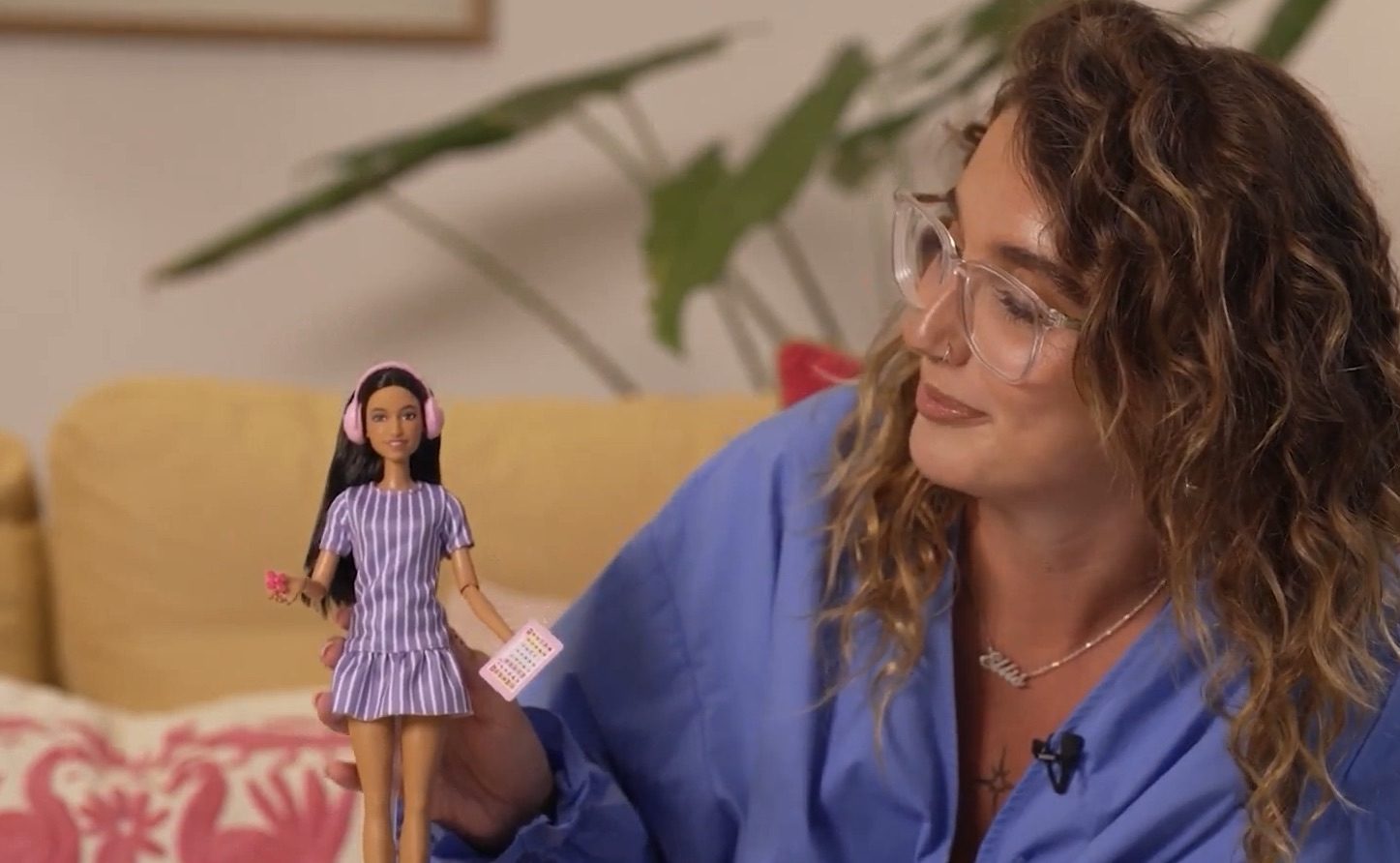
As part of its ongoing commitment to diversity and inclusion (as well as attempting to salvage a brand associated with giving children unrealistic body standards), this week Mattel launched its first “autistic Barbie”. The doll comes with various accessories to support neurodiversity and sensory overload, such as a fidget spinner, noise-canceling headphones and an augmentative and alternative communication tablet (all in pink, of course).
Autistic Barbie also has fully bendable elbows and wrists, which allow for repetitive movements or “stimming”, an averted gaze to show how some autistic people avoid eye contact, and a flowing dress to minimize fabric-to-skin contact.
Representation is important, but Mattel has given itself an impossible job here. Autism is not always a visible disability, and it certainly doesn’t have a “look”. Yet the only way a doll can be sold as “autistic” is through appearance, and Mattel has given this doll a very palatable appearance. This seems like more of a celebration of superficiality than difference: autistic Barbie still has supermodel-skinny, exposed legs; long, glossy hair; and perfectly done make-up. Where is the Barbie in loose-fitting tracksuit bottoms and a chunky jumper, wearing glasses with a book under her arm?
The broadness of the autistic spectrum is an obvious challenge: no one doll can be a Platonic ideal capturing “all autistic people”. Any attempt to simplify autism into a single doll will inevitably fail and offend those who don’t fit the Mattel-defined mold.
Including conspicuous signifiers like noise-canceling headphones also risk reducing the condition to certain — more socially acceptable — stereotypes, or encouraging people to make potentially misleading associations. An increasing number of children use such headphones and might therefore wrongly diagnose themselves as autistic.
There is also an argument that any existing Barbie doll could already be played with as “autistic” — toys should be about imagination rather than labels. Can astronaut Barbie not have autism, or doctor Barbie not have ADHD? Are they also going to make a Tourette’s Barbie, or anxiety or depression Barbie? And if so, how do you pinpoint what they are going to look like?
An alternative strategy could have been to sell an “autism accessory pack”, which would have arguably been more representative and inclusive because it would suggest that autism and any of Barbie’s many career choices are not mutually exclusive.
However, this would have perhaps not been as profitable as a new doll range and so ultimately this is a reminder that inclusion is not so much a marketing choice as a commercial necessity for Mattel. Its slump in sales over recent years means that it is trying to play catch-up with consumers, and it clearly thinks an overt commitment to diversity will win back fans. Yet the reductive outcome of autistic Barbie proves that diversity-washing for corporate profit is always obvious, and as awkward as autistic Barbie’s gaze.
