









December 23 2025 - 6:30pm
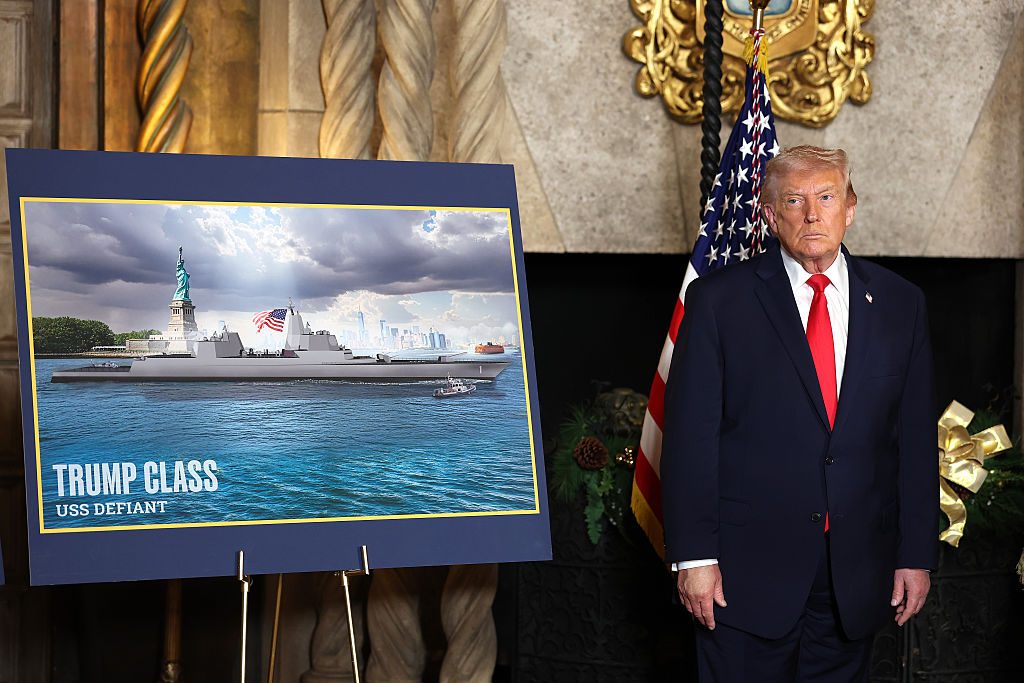
The White House’s master of merchandising is making sure his name adorns public properties, institutions and policies of all kinds. Last week, Washington DC’s Kennedy Center was renamed the Trump-Kennedy Center; earlier in the month, the US Institute of Peace became the Donald J. Trump Institute of Peace. And let’s not forget the tax-favored Trump Accounts for all American children, or the Trump Gold Card for high-net-worth foreign nationals resident in the US, and, as of this week, the “Trump Class” of warships in America’s “Golden Fleet”.
Yet the Trump label lost its bipartisan appeal when he ran for president in 2016 and his consumer base shrank to MAGA conservatives. As the end of his second term moves closer into sight, his use of raw government power as a tool of personal branding increasingly resembles a sign of weakness rather than strength.
Long before he was elected president, Trump had undergone a metamorphosis from a successful New York realtor into a commercial brand. Early efforts included three casinos in Atlantic City, all of which were out of business by 2014. His foray into the commuter airline business, the Trump Shuttle, took off in 1989, crashed that same year, and had vanished by 1992. Later came Trump University, a non-accredited institution purporting to teach entrepreneurship. It operated from 2005 until 2011, when it closed its doors following student complaints and government investigations.
Many initiatives quickly folded, such as Trump Mortgage, which closed down a year and a half after being founded in 2006. GoTrump.com, a luxury travel booking service launched in 2006, lasted only a year; Trump Steaks, which failed to survive beyond a couple of months in 2007, was lampooned on Saturday Night Live.
Trump’s bid for the Republican nomination and win in 2016 alienated many Americans for whom he had previously been an apolitical celebrity, while Macy’s and Univision severed ties with him. One response was to market “Make American Great Again” swag, targeted at the sort of Fox viewers who would purchase Ronald Reagan collectible medallions. Meanwhile, Trump and his family have sought to cash in on a sequence of investment fashions, including NFTs and Bitcoin, which have helped him attract the support of pro-crypto donors.
Yet this cult of personality is failing to prevent his MAGA followers from splitting on issues ranging from Israel to the Epstein files to the President’s softened attitudes toward China and immigrant guest workers. Meanwhile, the likely Democratic recapture of the House next year would weaken Trump even as attention swings from him to potential Republican nominees.
The ticking of the clock, then, may explain the urgency with which Trump is crassly having public institutions named after himself, in violation of the norm that politicians must be dead or at least retired before receiving such commemorations. Various MAGA disciples have proved to be trusty enablers, with Rep. Anna Paulina Luna of Florida introducing a bill to put Trump’s face on Mount Rushmore. Another sycophant, Texas Rep. Brandon Gil, has introduced the Golden Age Act which would put Trump’s face on the $100 bill beginning in 2028.
As Trump observed when he toured George Washington’s Virginia home, Mount Vernon: “If he was smart, he would’ve put his name on it. You’ve got to put your name on stuff or no one remembers you.” As his legacy appears increasingly less secure, the 47th president is wasting no time in doing just that.