









December 19 2025 - 5:00pm
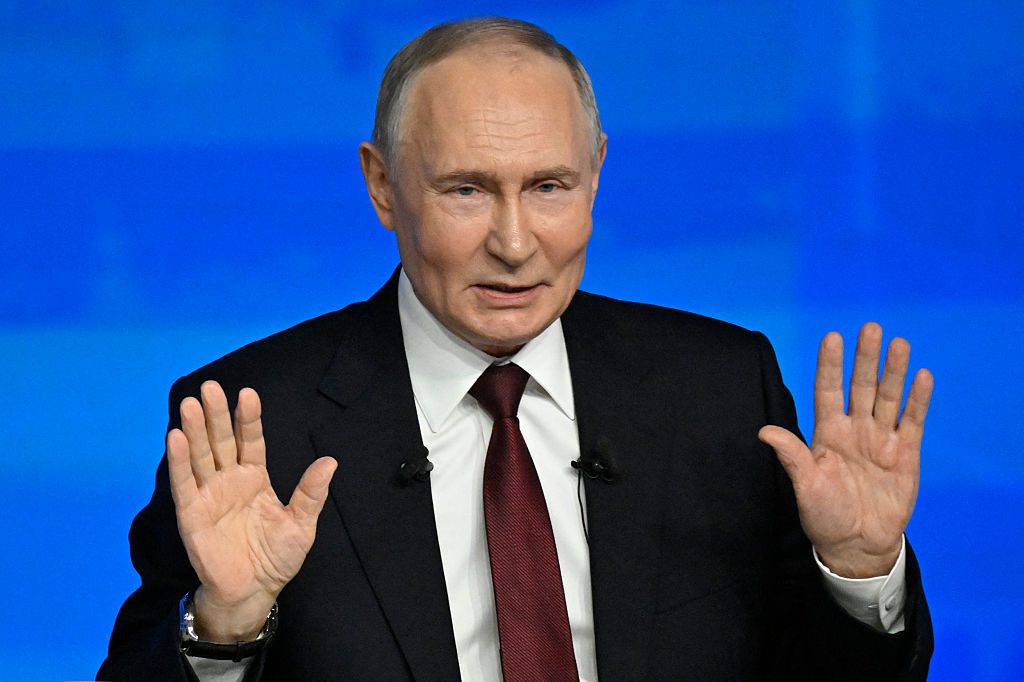
Of more than 2.6 million questions submitted, one had already been answered before Vladimir Putin even began his marathon “Results of the Year” press conference earlier today. Behind him once again loomed a map of Russia that incorporated Crimea and the territories of Luhansk, Donetsk, Kherson and Zaporizhzhia in their entirety. It was a clear sign that Russia’s President has no intention of backing down on his demands for international recognition of Moscow’s occupation of Crimea, or for Kyiv to relinquish the parts of the Donbas it still controls.
The map was not an isolated display of Putin’s confidence about the war. He claimed variously that Ukraine is “on the retreat”, that his own forces “are advancing across the entire frontline”, and that Kyiv has been sending “certain signals” that “they are ready to engage in some kind of dialog.” Such was his bullishness, he even threatened fresh special military operations if European nations do not respect Moscow’s interests.
Putin has every reason to be feeling comfortable right now. With impeccable timing, European leaders set the stage for his speech by failing to reach consensus on the use of frozen Russian assets yesterday, a neat illustration of the fissures that divide the continent.
Then there are all Putin’s other reasons to be cheerful, such as his Ukrainian counterpart Volodymyr Zelensky’s willingness to ditch Nato aspirations, US President Donald Trump castigating his European “allies” as weak, and Ukraine potentially heading to elections soon. Putin capitalized upon the last of those in today’s press conference. In an unexpected bout of respect for the democratic process, he vowed to halt attacks on election day, not least so that up to 10 million Ukrainians — a useful number of ballots to sway a result — based in Russia would be allowed to cast “their” vote.
That is not to say everything went entirely to plan: text messages from the public criticized the event as “not a direct line but a circus”, asked when to start drinking, and rallied against the cost of living, internet outages and the block on Western communications apps. There were even signs of discomfort from Putin himself. This round-up serves to dampen domestic dissatisfaction over corruption, the inefficient delivery of public services and poor living standards, while distancing the President from any responsibility for those failures.
Instead, he is cast as a benevolent tsar who sweeps in to resolve problems created by inept subordinates. It is therefore notable how many of the carefully selected questions concerned payments to veterans and their families. Clearly, Putin is eager to reassure his population that support for his war will be recompensed, and has some awareness of the unrest that could follow if it is not.
Yet he did receive one sharp retort. Ukraine stole his thunder in spectacular fashion by choosing today to launch its first attack on a Russian “shadow fleet” oil tanker in neutral waters. Much like Zelensky’s demand this week for more weaponry in the event of the Kremlin rejecting a peace deal, it was an indication that Ukraine knows Putin has no real interest in ending this conflict, and so fighting will continue. The attack constituted a promise that, despite its frontline manpower issues, Kyiv will seek to leverage the capacities it does have to damage Russia where it can and cripple the financing for this war.
Of all the questions Putin answered today, the most consequential came from Ukraine’s leadership, eager to demonstrate its ability to fight on if required. And the question it posed was a simple one: “Is that enough of a signal for you, Vladimir Vladimirovich?”
