









Nov 8 2026 - 1:00pm
The shots that rang out on Saturday in Kraków’s Market Square, the largest medieval town square in the world, marked the end of an era for Poland.
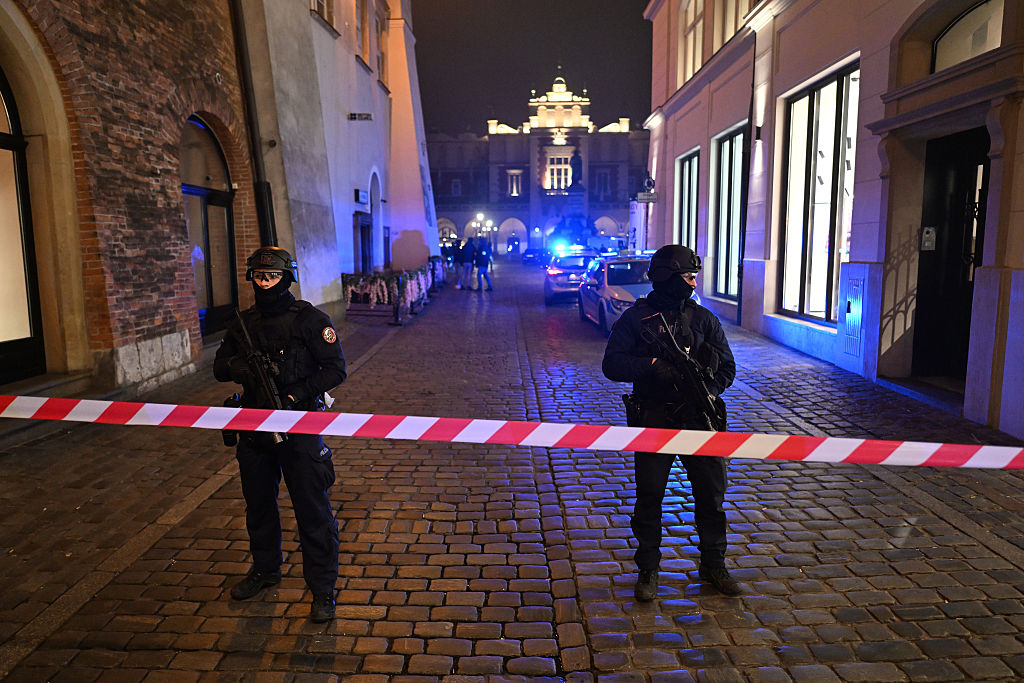
A lone gunman dressed in military fatigues and armed with an assault rifle shot into crowds of tourists in the square before being chased down and shot by police minutes later. At least six people were killed, including one Briton; with dozens more injured, some critically, the death toll is likely to rise.
While a scene like this might not be entirely alien for major cities in Western Europe, it is unheard of in Poland, which had long been considered one of the safest countries on the continent. But despite initial knee-jerk reactions from online influencers trying to fit the attack into familiar narratives about European migration, the facts have since made it clear that the shooting had a distinctly homegrown Polish character to it. This is partly what made it so shocking for Poles across the political spectrum.
The precise motive for the attack remains elusive. What we know so far is that the shooter was a Polish man in his 20s identified by authorities as Michał O., who upon investigation was found to have murdered both of his parents and his sister in his hometown northwest of Kraków before embarking on the public killing spree. Poland’s interior minister Marcin Kierwiński stated on Saturday that the man had been “fascinated by extreme-Right ideologies”, and even suggested that the annual Independence Day March in Warsaw on 11 November, organised by Right-wing groups, may be placed “under review”.
It seems then that, after years of apprehension about the threat from Russia and its allies, Poland’s veil of security has finally been breached not by hostile external forces, but by the increasingly polarized and volatile social fabric inside the country itself. In an increasingly divided Europe, the events in Kraków show that the continent is far from immune to the kind of political violence that has gripped America. Poland will continue to be one of the central theaters of this new confrontation, with polarization becoming more deeply entrenched and more existential there than perhaps anywhere else in the European Union.
The attack could not have come at a worse moment for Poland. Just a week earlier, a crisis had erupted in Warsaw when judges backed by Prime Minister Donald Tusk and the Polish parliament suspended the Constitutional Tribunal’s president, who himself was backed by the populist conservative PiS party. The Polish Right responded by accusing Tusk of staging a “coup”, threatened a vote of no confidence against the government, and warned that the ensuing political discord was a “powder keg” waiting to explode.
That powder keg has now become even more volatile. Right-wingers in Poland have reacted angrily to the government’s characterization of the shooter, with one prominent politician calling Kierwiński a “vile hyena”. Regardless of how closely the Kraków shooter’s ideology aligns with that of the broader Polish Right, what should have been a unifying national tragedy is already being twisted into a political lightning rod.
With both sides of Poland’s political divide viewing the future in zero-sum terms, a new era of political violence looms over the country for the first time in nearly half a century. And with the chaos increasingly taking on continental dimensions as populist voices link the Polish government’s statements on Saturday to supposed marching orders from Brussels, the shooting is likely to animate Right-wing discontent far beyond Poland’s borders, much like the judicial crisis in Warsaw did before it.
“Let’s be together in these moments,” Poland’s defence minister Władysław Kosiniak-Kamysz wrote on X hours after the shooting. But before the shock of the images from Kraków and their implications had a chance to sink in for people across the country, his words had already fallen on deaf ears.
 Michal_Kranz