









Nov 5 2026 - 10:00am
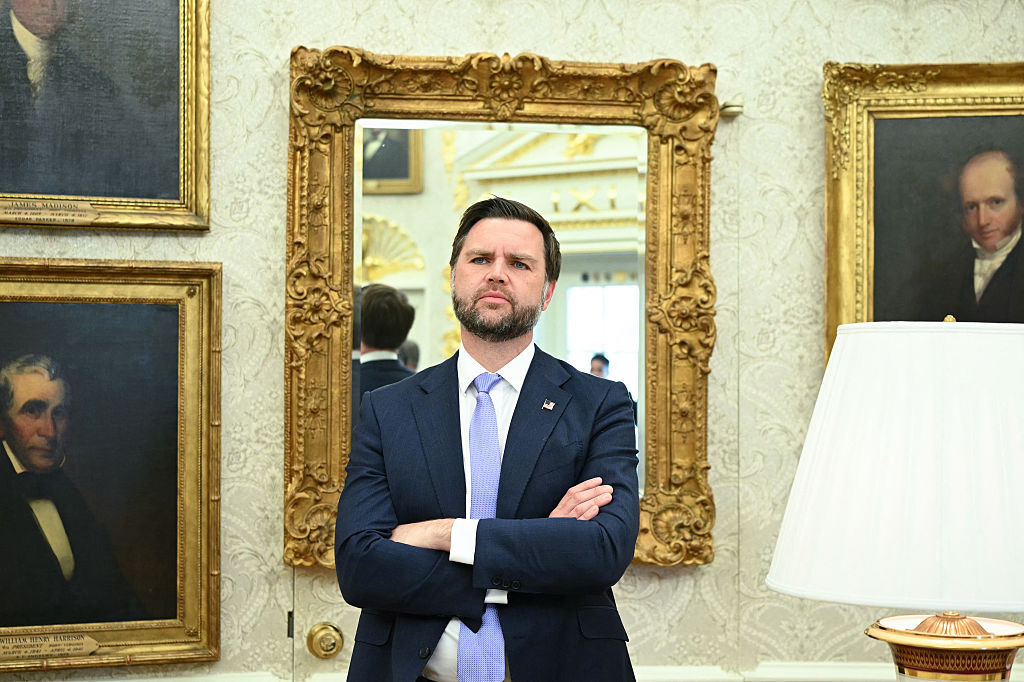
As MAGA scrambled to make sense of its crushing midterms defeat, Vice President JD Vance offered a blunt assessment, pointing squarely to the Iran war. “Everyone knows why we lost,” he wrote in a lengthy X post. “And any honest conversation about where we go from here must start there.”
Vance’s diagnosis is largely correct. Poll after poll reinforces his point about the political damage inflicted by the Iran war and its impact on the cost of living. Inflation and gas prices spiked as a direct consequence of the conflict, and the famously anti-interventionist Vance is wise to point this out.
But there are other lessons for Republicans, too. For instance, exit polls suggest corruption was high on voters’ list of concerns. They also point to a backlash against maximalist positions on data centers and artificial intelligence, both of which the Trump administration has embraced enthusiastically. A Republican in 2028 will likely need to carve out a path between the GOP establishment and Donald Trump’s version of MAGA, now that it appears his coalition is fractured and his personal brand is unpopular at best and toxic at worst.
This helps explain why Florida Governor Ron DeSantis moved to distance himself from the Trump administration ahead of election day, taking aim at its positions on the war, Big Tech and corruption. Having quietly carved out a critical position on several of these issues over recent months, DeSantis took the gamble of going public with a series of scathing criticisms. The timing was deliberate. In a victory lap on Wednesday, he slammed Republicans for voting against the release of the Epstein files and failing to ban congressional stock trading.
DeSantis is reading the tea leaves correctly. But the danger is that establishment Republicans will interpret the defeat as a mandate to resurrect the pre-Trump party, whose own brand of politics had become deeply unpopular. Former presidential candidate Nikki Haley was already making precisely this argument on NBC News as the results came in. “The biggest lesson is that when Republicans stay close to our policies of economic freedom, lower taxes, and smaller government, we win,” she argued. “We need to return to that, stop the distractions, and get back to work for the American people.”
That may sound appealing to establishment conservatives, but it’s obviously code for giving up on tariffs — which had stabilized ahead of the Iran war — and comes from someone with deep ties to the crony capitalist military-industrial complex who supports more intervention abroad. That’s not the way, either.
After 10 years of Trump, most analysts understand that Haley and her ilk are not on track to recapture the imagination of Republican voters. On the other hand, Vance and other members of the administration will inevitably be saddled with the baggage of MAGA — not just the war, but also the corruption. GOP hopefuls should be thinking hard about anti-monopoly policies and rhetoric that Democrats used to their success. They should draw a clear red line on anti-human, oligarchic AI accelerationism. They should be talking about immigration as a labor issue and culture-war questions as class questions, to the extent they even devote oxygen to “woke” issues in a bad economy at all.
Unfortunately, Trump has spent his second term saddling MAGA’s once-potent “drain the swamp” brand with some spectacularly swampy behavior of its own. In the process, he has set fire to the very coalition that made his political project so successful. The challenge for the next generation of Republicans is to find a path between the party establishment and MAGA without inheriting the latter’s political baggage. That will be easier said than done. MAGA remains the dominant strain of Republican populism, making it difficult for anyone closely associated with the movement to escape its liabilities. That includes the Vice President.
