




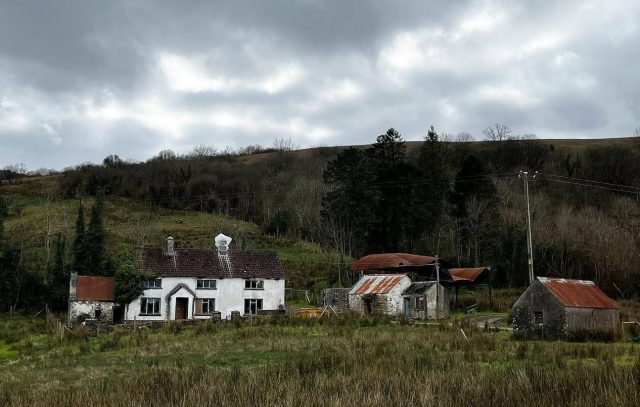
“The farmhouse had been derelict for some decades” (Aris Roussinos)





Do you believe in ghosts? It is, statistically, a reasonable question. According to the National Folklore Society’s survey last year, just over a third of people in England and Wales do, a figure that rises to 43% in a survey about haunted houses for the furniture company Hammonds. The British Isles, certainly, display a greater predilection for such beliefs than our Continental neighbors, perhaps a vestige of the belief of our Celtic ancestors in the Otherworld, and the obscuring veil between it and our world that waxes and wanes with the changing seasons.
In modern Ireland, as the writer Alexander Poots notes, what is most remarkable to English eyes is “chiefly the matter-of-fact way in which the supernatural is discussed”, a diminution of the spectral realm to that of minor inconvenience. At one family party, for example, I was told the story of an otherwise no-nonsense in-law bothered by a ghost that kept pulling the bedcovers off in the early hours of the morning. His eventual response, shouting out “Will ye piss away off ye wee ghostie, I’m trying to get some sleep here”, was apparently successful in quietening the unquiet dead. What made the story worth sharing was the Ulster-Scots-tinged homeliness of his Antrim dialect, amusing to Belfast ears: the role of the ghost itself was assumed as an unexceptional domestic irritant.
But do I believe in ghosts? It would be difficult to maintain the pose of a dispassionate and level-headed observer of human foibles and say yes. But even still, I have my own story I can and do bring out when the wind and rain lashes against the windows in the dark winter, and the conversation around the fireside turns, as it inevitably does, to such unknowable matters.
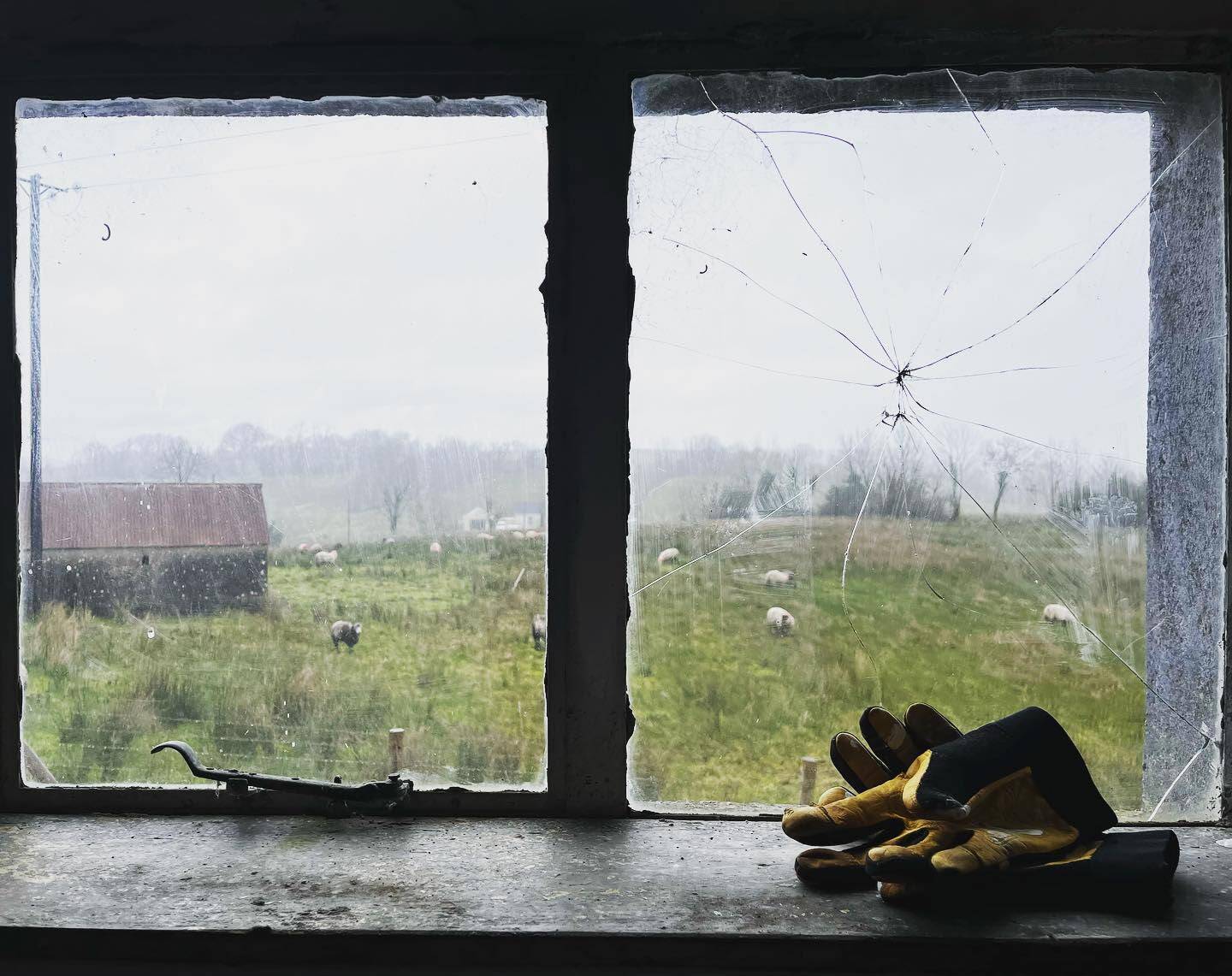
A few years ago, through a combination of impulses both romantic about a simpler way of life and pessimistic about the future course of world events, I removed my family from the coastal Kent townhouse where they were happy to an isolated farm in deep rural Ulster, where they were less so. The farm itself, all 80 acres of bog and woodland and mountain, was surprisingly large for the listing price. The farmhouse, too, though it had been derelict for some decades, was unusually spacious for such poor and marginal land. It had been built, records showed, by a prosperous Protestant tenant farmer in the early 1800s. The stone barns clustered around had been mean cottages once, as part of an older clachan — a communal living and farming arrangement for closely interrelated families that survived from at least medieval Gaelic society until the rationalization and consolidation of unproductive smallholdings into larger parcels, held by tenants who could pay more rent.
Such was the case, I assumed, with my own holding: within the surrounding boggy meadowland was another, ruined clachan, from whose limestone rubble gnarled hawthorn trees grew and a gushing spring ran forth. The very ground beneath our feet was uncertain. You quickly learned to memorize paths across the fields that would not leave you stuck up to your calves and sinking deeper. Seemingly deep and dark pools of water would suddenly appear in the meadows, and then vanish when you next looked for them.
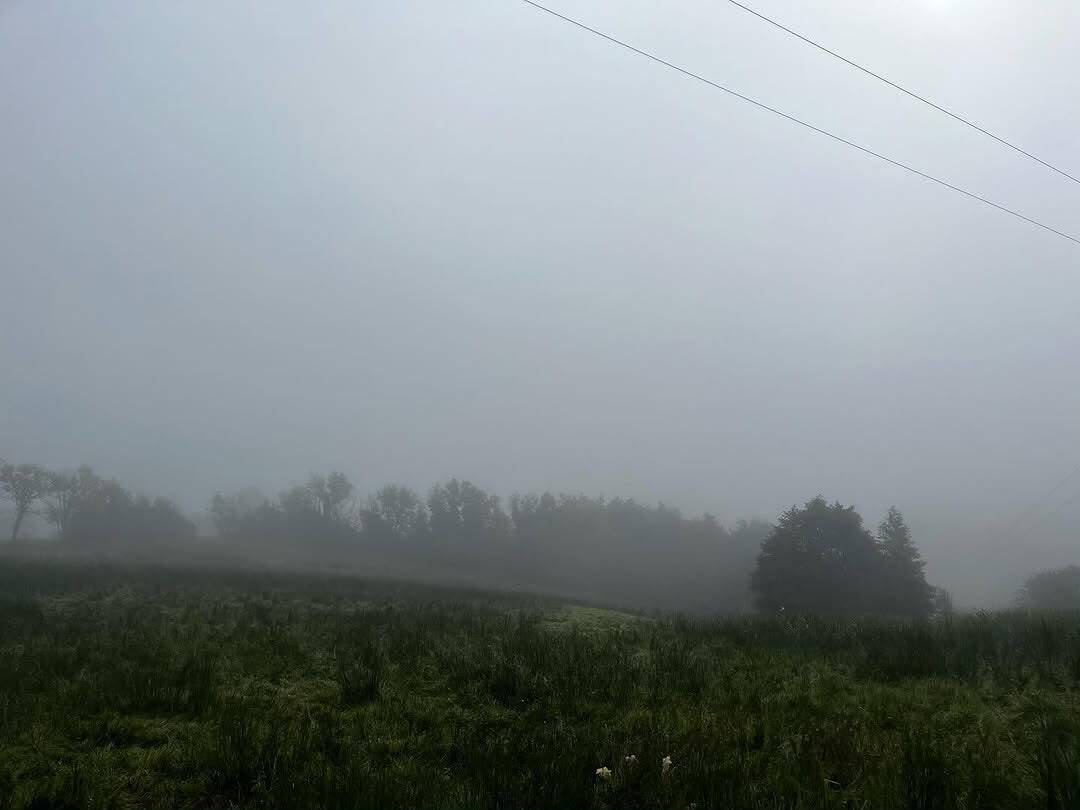
Archaeological evidence indicates the ancient Celts felt obliged to sacrifice their wealth in watery places and turbid pools, for mysterious reasons of their own: friends and family warned I had fallen victim to a similar compulsion. In the wettest county of a country not celebrated for its clement weather, when it rained, which was often, both the farm and the house seemed more composed of water than land. At the foot of a steep and rocky escarpment, constantly shrouded in mist, and much of which belonged to me, the setting was beautiful, if you happen to like bleak and inhospitable isolation. Unfortunately, not everyone does. Tradesmen, displaying the practical unsentimentality of rural Ulster, uniformly advised me to tear it down and start again. The only note of appreciation came from the local removals man who delivered my furniture from storage, whistling expressively before saying “there’ll be rare ghosts in here”.
There is a danger, when writing as an outsider about rural Ireland, of exoticizing or fetishizing the local ways, in a manner that rolls the eyes of the sophisticates of Belfast or Dublin. It was the 2020s after all, in what is at least tenuously part of the UK, with all its retail parks and chain stores and gastropubs and garden centers. But it is the simple truth nevertheless, and a valuable cultural resource of the farm’s immediate area, that folk customs still survive locally from, no doubt, very ancient sources. Even in the county town, a handsome Plantation settlement laid out like an English market town deposited on alien soil, the local Facebook buy-and-sell group is filled with requests for “cures” — either folk remedies, or the services of an otherwise ordinary man or woman, gifted since birth with the magical ability to cure a specific ailment.
The nearest churchyard to our farm contained the grave of a parish priest, venerated locally for his saintliness in life, from which a teaspoon of his grave soil, it is widely believed, will cure most ills. Rationalists will be reassured to learn that, according to medical science, this may well be true. Either way, so widespread is this belief still that a laminated notice next to the grave provides clear instructions in warning capitals: “ONLY A SPOONFUL OF SOIL SHOULD BE REMOVED AND MUST BE RETURNED TO FR MCGIRR’S GRAVE ON THE FOURTH DAY”, with dire if unspecified consequences for those who fail to heed the stern advice.
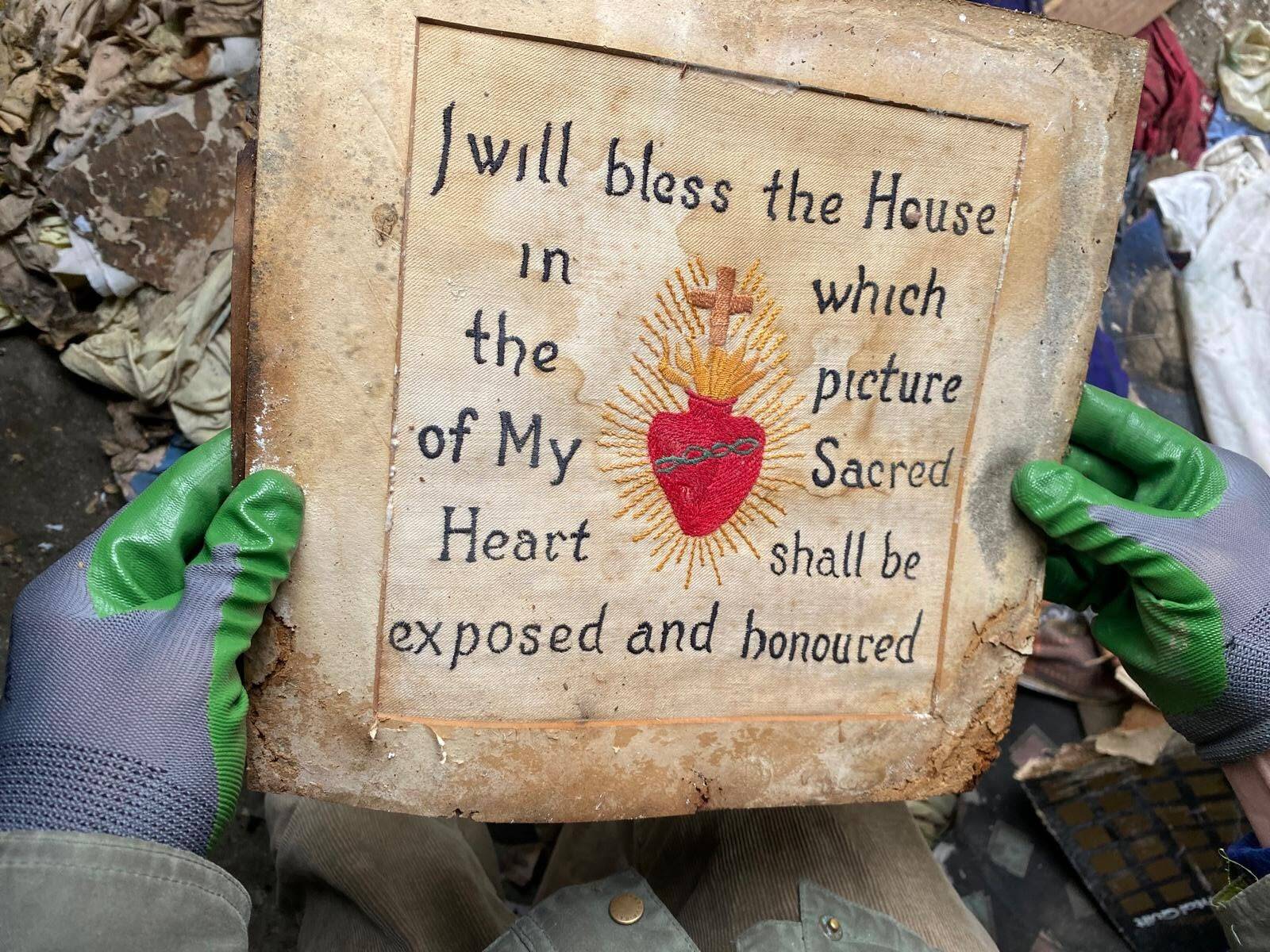
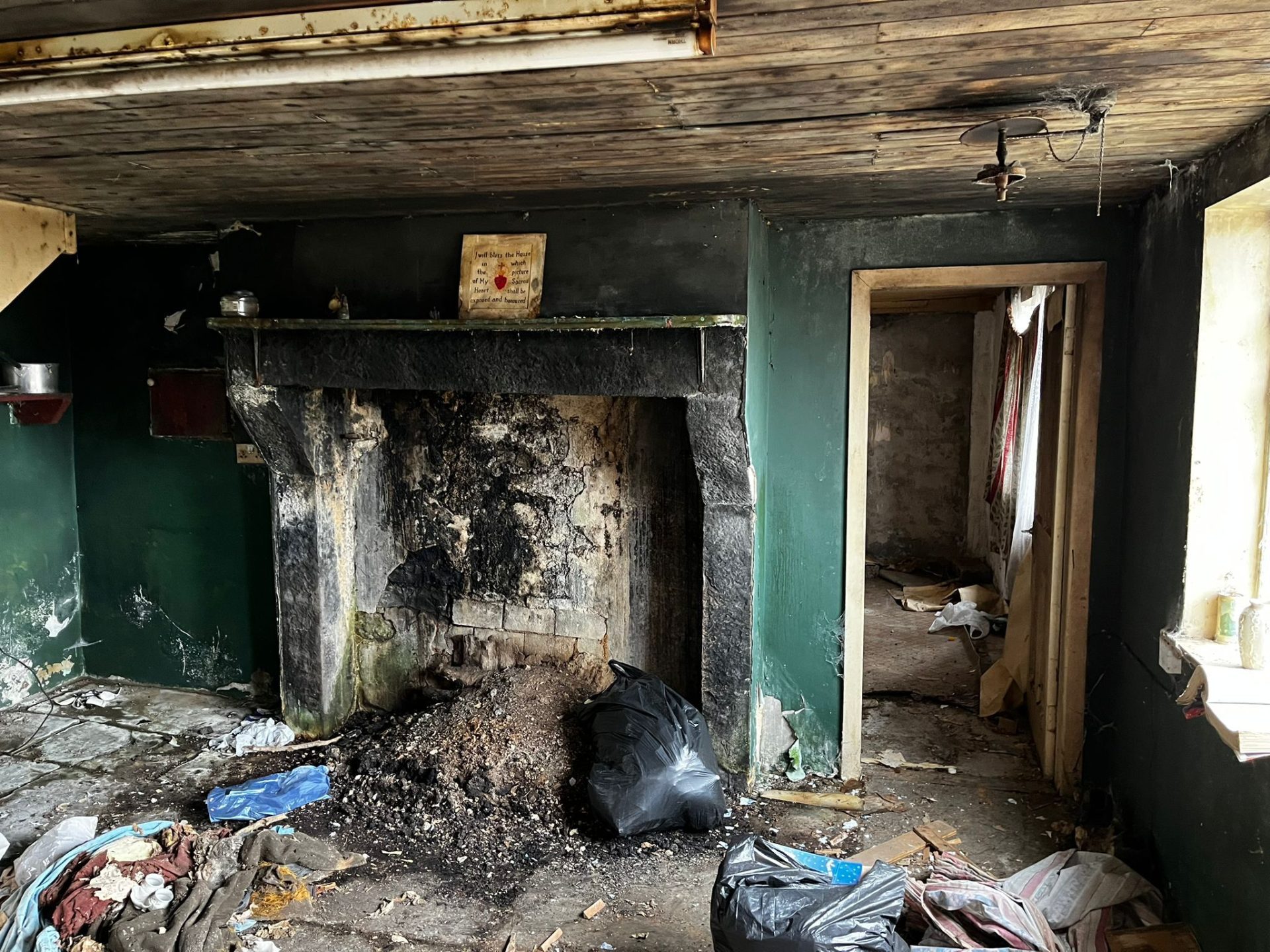
The farmhouse itself had been empty for decades, having been abandoned at the death of the elderly bachelor farmer who had owned it. Yellowed newspapers, agricultural calendars and farm subsidy paperwork lay scattered around, along with stacks of turf for fuel in an outhouse, and a broken Child of Prague statuette to summon forth good weather for haymaking. So much soil had been washed down, over the years, from the hill behind us that the back of the house seemed half-underground, the windows opening directly onto a disconcertingly vertical wall of grass. The great stone slabs that made up the floor had been laid directly on the soil, and a musty, earthy smell rose up from them. So did, at times, a sudden strong whiff of pipe smoke, a sharp and fresh vestigial memory of earlier occupants dislodged, no doubt, from deep within the house’s fabric by my DIY renovations.
The house had been built according to the ancient, formalized pattern of Irish cottages, with rambling outbuildings and three large rooms on the ground floor, extended upwards by an extra floor at some point in the 20th century. The central downstairs room was dominated by the giant stone hearth, blackened with two centuries of turf smoke, around which, traditionally, the family would have lived and worked and cooked and slept. The room to the east became my office. I chose the “West Room” — the traditional formal room, warmed by the hearth wall, and preserved for honored guests, or in older times, family elders approaching death — for the kitchen. As a reserved, formal space, filled with furniture not to be touched, and crockery not to be used, the idea of the West Room still, just, lives on among older Irish people as the “good room”. But as the anthropologist Conrad Arensberg observed, well into the 20th century the traditional cottage west room “had still another association, of a supernatural cast”, being a room treated “with respect and perhaps a little fear”, for “traditionally the west is the land of the dead”.
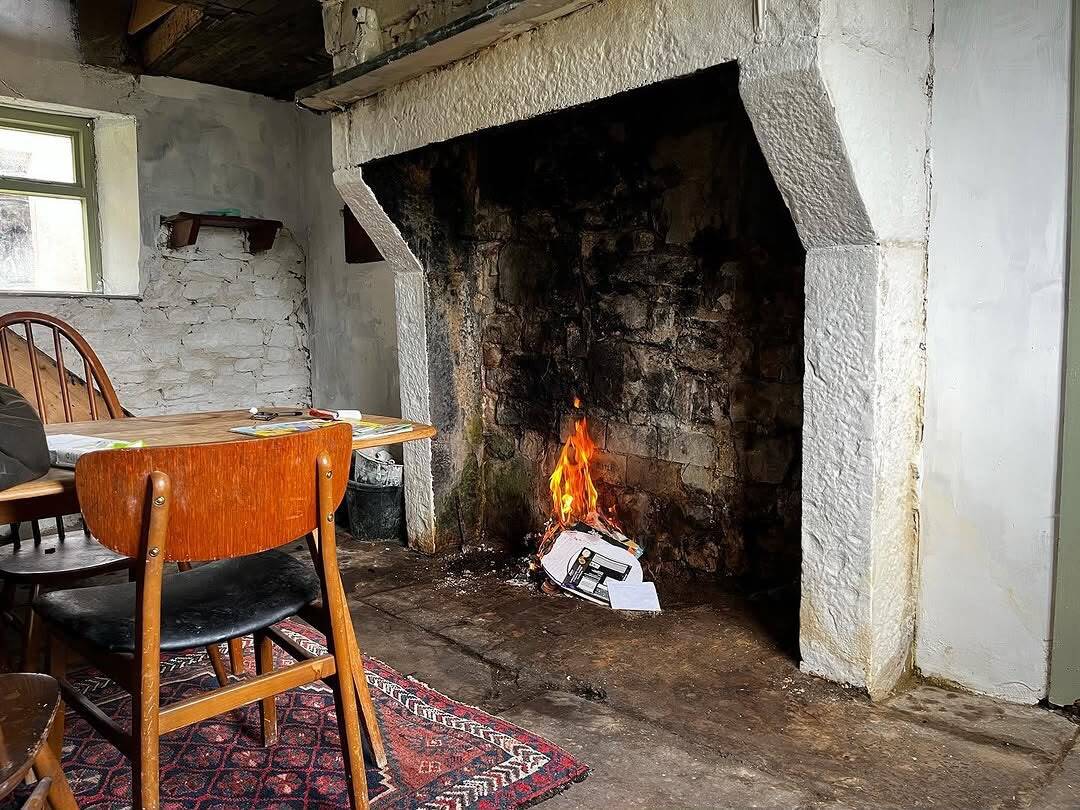
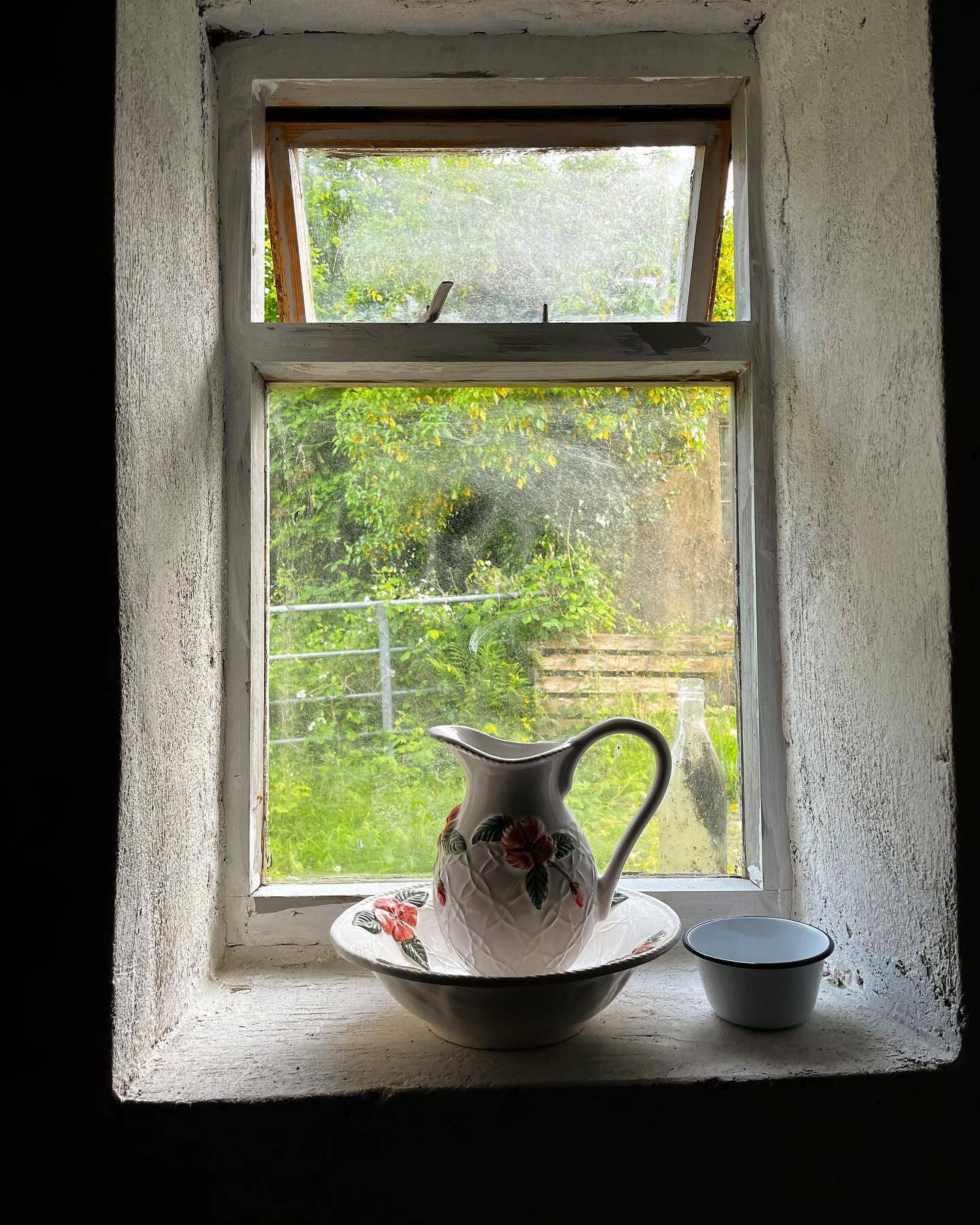
As a kitchen, certainly, my wife found it both wanting in domestic comforts and an unpleasant space in which to spend time. But for me, the entire package was perfect: it was exactly the kind of place my grandparents had fled at the first opportunity. Moving in before the rest of my family, to make it habitable, I had the electricity reconnected for the first time in decades, and running water installed for the first time ever. Until then, I collected and filtered drinking water from the spring, precariously hauled back over the quivering bog in steel buckets. I used my outhouse composting toilet with smug satisfaction and washed myself with ice cold water in a ewer and bowl: here, I told myself, I would find the peace and isolation to write my Great Book.
The concept of the book — I still regret that it will never now appear — was that through the history of the land I now owned, its tenants and landlords, I would be able to tell the history of the county, Ulster’s wildest and least populated, and the only part of Northern Ireland that could reasonably claim to be part of Ireland’s remote and underdeveloped West. The overarching theme was that the English conquest of this part of Ulster, where isolated colonial settlements hacked out farmland from the wilderness, fearful of raids from the deep, surrounding forest, and the tribal warriors lurking in it, both presaged and explained the course of colonialism in America, where many of the first settlers promptly moved on to more forgiving land.
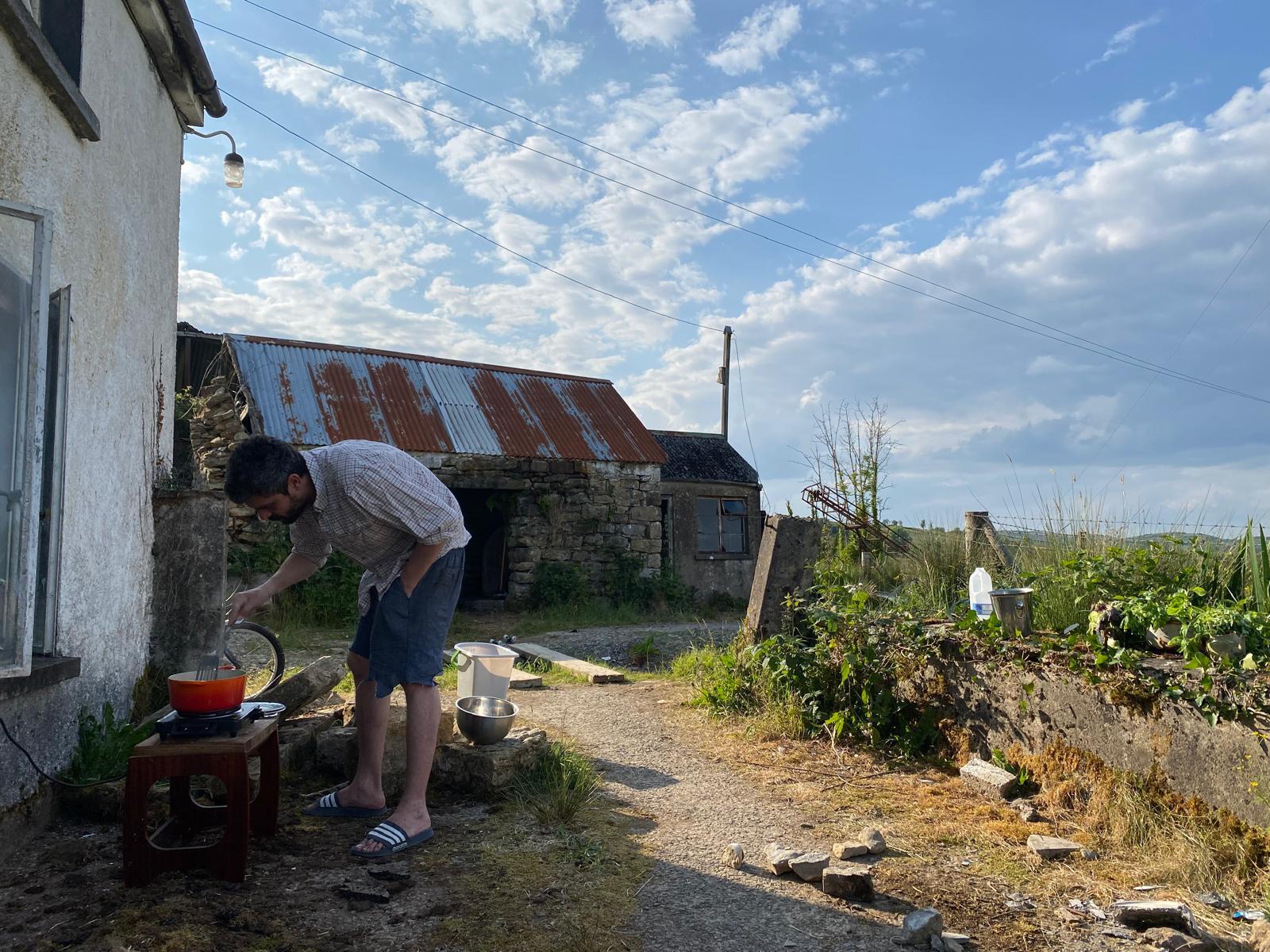
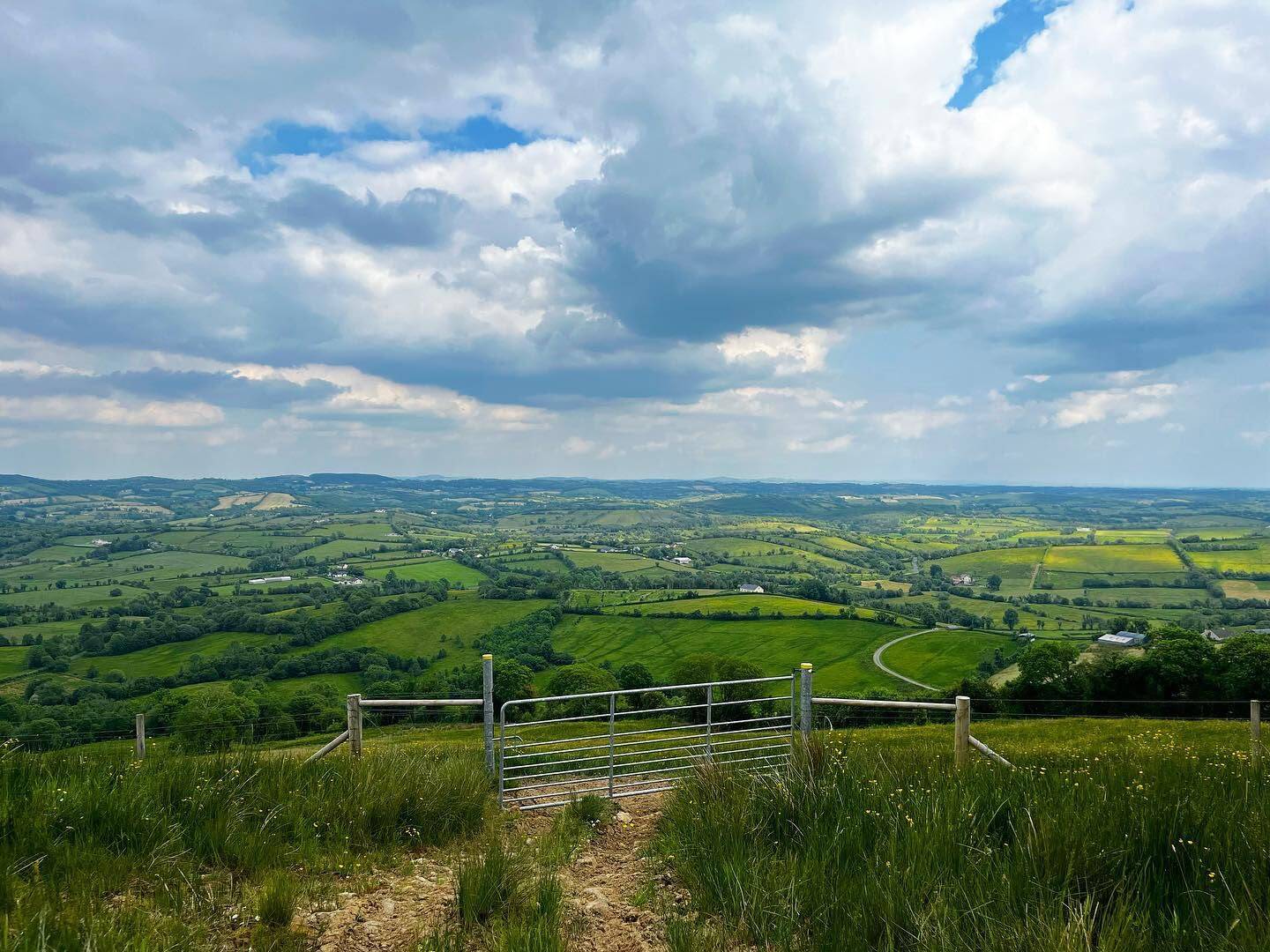
There was no shortage of local color for the book, regarding either rural drama or the patterns of agrarian resistance and rebellion that so excited my imagination. An early 20th-century predecessor, a widow, had been poisoned by her nephew, I was informed by a farmer neighbor, who grazed his cows on my pastures according to the age-old conacre letting arrangement, still legally beginning on Bealtaine and ending the first morning after Samhain, or Halloween. “I never thought we’d see another family in here,” he added. A nearby cavern — the limestone crags around, including what was then my own sliver of mountain, are pitted with the deepest cave shafts in these isles — is known as Noone’s Hole, commemorating an informer against the Ribbonmen, the secret society of Catholic agrarian rebels, who was waylaid from a cottage dance and thrown into the abyss. There is a 19th-century novel on the murder, drawing on local traditions, and written by the “Bard of Knockmore”, Peter Magennis, teacher at the old National School directly opposite my farmhouse. In the novel, the peasant wedding party from which he was abducted took place in a cottage directly opposite the National School. There being no other houses for some distance, the coincidence certainly piqued my interest.
May and June saw a rare heatwave, family barbecues and frenetic renovation. That July — the wettest ever recorded in Northern Ireland — we learned that we were unexpectedly expecting our third child. The prospect of giving birth or caring for a newborn in a house slowly being dragged into the 20th century did not appeal to my wife, a more sensible character than me. The house’s isolation, though romantic enough, admittedly lacked certain practicalities. The only phone signal — which came with a WELCOME TO IRELAND text, so close was the house to the border — could be attained at the foot of our boreen, a long walk in the rain that swiftly palled when authenticating bank transactions or making work calls. If you left the place for a week or two, you would come back to find the wooden furniture, and books and leather items covered in a thin film of bright green mold.
The pregnancy was not an easy one for my wife, who suffered terribly from hyperemesis. When not in hospital, she was confined to her bed by nausea, watching the lashing rain against the window and the fire in the grate, far from friends and family and with sufficient time to reflect on the drawbacks of a rural isolation she had not been enthusiastic about in the first place. Over the early course of the pregnancy, she became convinced that the house was imbued with the presence of a woman, who had suffered great sadness, and that this presence had now become intolerable. Certainly, when you were alone in the house, you never actually felt alone. The instinctive sense the consciousness has that another person is present, waiting in the room next door, or sometimes moving between rooms, could not be shifted. Sometimes, you would find yourself looking up sharply towards the door to greet an arrival who was not there.
But there were of course rational explanations, as I repeatedly suggested. My wife was gravely ill, the change of lifestyle was dramatic and abrupt, and the living conditions represented a sharp downgrade in comfort and familiarity. Of course, I suggested, she was projecting unhappiness with her circumstances onto the fabric of the house itself. This was perfectly natural and understandable, and would resolve itself once the baby had been born and the house was finished and the weather improved. Perhaps, as science suggested, it was the presence of mold in a damp and until recently derelict house causing us to imagine things that were simply not there. Maybe, as a rather dubious theory claims, the stone walls were themselves imprinted with some kind of emotional memory, palpable but neither sentient nor supernatural. No doubt the freakishly horrible weather was instilling some form of cabin fever in us. These discussions, when the children were asleep, went back and forth. When one morning our elder son asked who the woman who sat in his room at night was, that was the end of the debate. My family removed themselves to sunny and ghostless Greece while I was instructed to prepare the farm, rather unwillingly, for sale.
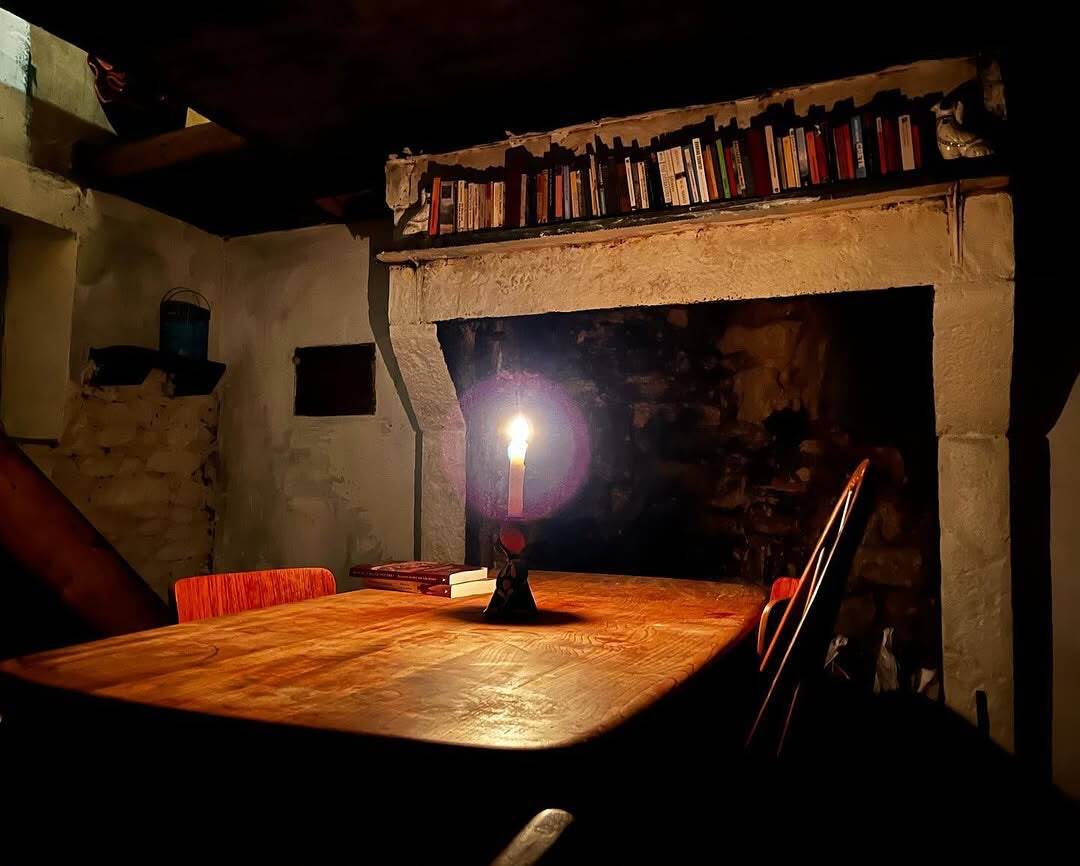
At least, writing my essays, staging the property for any similarly romantic or reckless buyers, I didn’t feel alone in the house. If there were a presence there, a question on which I still have no firm answer, I did not find it objectionable. Indeed, perhaps over-confident of my personal charm, I sometimes told myself I would win it over. “Oh, it’s you,” I would say to myself as I got a sudden whiff of pipe smoke, looking up briefly from whatever essay I was engaged in. When, the morning after my only Halloween in the house, I woke up to find the front door I was certain I had locked wide open, the only possible response was “Sure, why not?”. I was ambivalent then, as I am now, about the existence or otherwise of ghosts, though insofar as I could blame them for giving up my beloved farm, they had become more than a minor inconvenience. There is only one single occurrence that, whenever I am asked if I have experienced a ghost, causes me to pause for a second, weighing up how my interlocutor will receive the answer, and reply “Maybe”.
Alone in the house one wet November night, the wind howling off the mountain, I was drifting off to sleep, wrapped up in bed in front of a coal fire, when I heard a woman weeping in the bedroom across the landing. In my half-sleep I assumed it was my wife, suffering the turbulent emotions of a difficult pregnancy, and got out of bed to comfort her. But why is she in this room, I wondered to myself as I approached the door, before remembering that she was not, and that she was in Greece. I stood at the threshold, not opening the door, and the weeping continued. I went back to my bed, and the weeping still continued, for some, rather unsettling time. All the rational explanations I gave my wife apply to me too, of course: it was a strange and emotionally draining time, in an unfamiliar and seemingly luckless environment: whatever pride I may feel in my cold rationality, my sense of perception is not infallible.
Eventually, I sold the house and farm at auction, and when the movers returned, on the long drive together to our new house in Belfast, they asked, after a polite period of discretion, why our sojourn there had been so short. I made an offhanded laugh and said my wife thought it was haunted. “Oh, she’s right there,” they said. They had hated the job, they told me, and hated being in the kitchen most of all. “It’s quare haunted, that place,” the burlier of the two men told me, the both of them saying that as soon as they left the grounds, both the first time and then, they felt they had been freed from a dark and oppressive presence. “Even just now, I couldn’t wait to get out, sure it would make your blood run cold staying in that house.”
The two of them regaled me, laughing at the memories, with tales of other haunted houses in the locality they had worked in, of which there were apparently many. The driver’s assistant, a large and otherwise phlegmatic working-class Protestant, told me that he rented a house in a nearby village, built on a Famine mass grave, whose spectral residents kept turning on his Sky TV and toaster whenever his girlfriend came round, to the point she now refused to stay over. The stories themselves were less remarkable than the matter-of-fact way in which they told them. My wife’s course of action was sensible, they agreed, my own pose of indifference unnatural and rather irresponsible. We’d bought a house that turned out to be haunted, it’s annoying, but sure it could it happen to anyone, and often does, they reasoned, before asking me which football team I supported.
So do I believe in ghosts? No, I’d say. Well, perhaps. The house was a strange place, certainly, but then it was a strange time. There are rational explanations for everything recounted above, no doubt more plausible than the spectral presence of unhappy women, or long-dead farmers, or renegade Ribbonmen. Blaming my failure on ghosts is, perhaps, an easier answer for all involved than the alternatives. Years on, far away from it all, in a fully-equipped and comfortably ghost-free house in a leafy part of Belfast, an unsettling year in the countryside has faded into a strange anecdote, one not unusual in itself in a society that takes pleasure in retelling such stories with a display of matter-of-fact indifference, real or performed.
If Ireland has a gothic sensibility at the best of times, that of Ulster is even more so — a notable strength of modern Northern Irish writing. As Reggie Chamberlain-King, editor of Black Dreams, a collection of “Strange Stories from Northern Ireland”, observes, “if the weird intrudes on the post-conflict writing of Anna Burns or Jan Carson, that is because the weird was there at the time of writing.”
The Donegal historian Breandán Mac Suibhne suggests the purported 19th-century haunting of a farmhouse in windswept, isolated Fanad is attributable to the shifting political balance of the era, the ghostly presence being an outward projection of Protestant fears. As he writes, “while the story of the ghost, in its first telling, can be read as concerning the overcoming of a colonial past and embracing of a republican future”, it is also “a parable about the need for vigilance given an omnipresent threat to the status quo”. Change, particularly unwanted change to a previously secure and comfortable existence, is by its nature unsettling, and can manifest itself in strange psychological projections. Britain’s uneasy politics, haunted by an ancient past, real or imagined, and an uncertain and threatening future, is surely proof of that. If there is any meaning to any of it, perhaps the acceptance of uncertainty, and of the shifting ground threatening suddenly to open up deep beneath your feet, is the very point.
But at Halloween — the one festival of the Gaelic calendar, and of the ancient beliefs behind it, to have imposed itself on the English cultural consciousness — it is customary, when the nights draw in, and the wind rises, and the veil between the seasons reaches its thinnest point, to share such stories, and to shiver at the difference between the chill outside and the warmth within, and at the risk of the firewall between them being, if only for one night, removed. Did it happen, and to me? Maybe. But then, sure, couldn’t it happen to anyone?
