




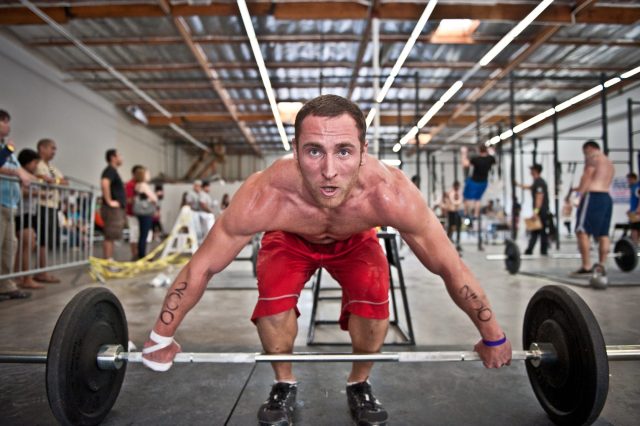
Men will die for points. (Eric Nelson/Getty)





It was not unusual to walk into Gold’s Gym in sunny Santa Cruz back in the late Nineties to find Greg Glassman “screaming in the face” of one of his wealthy clients. He was training them in his own new methodology, what would come to be called CrossFit — a high-intensity workout combining weightlifting, gymnastics and cardio that honed bodies for a broad range of physical challenges rather than, say, a single sport. “You’re a fucking idiot!” Glassman would yell, face flushed, until his target did as they were told, according to the writer Calum Marsh in The Glass Box, his definitive account of the rise and fall of CrossFit. How’s that for customer service?
Despite — or perhaps because of — his unorthodox approach to client relations, Glassman’s methods exploded over the ensuing decades. At its peak in the late 2010s, there were more than 15,000 CrossFit-franchised gyms, known as “boxes”, across the world; when it was sold in 2020, it went for a reported $200 million. The brand answered a call for the return to machismo, offering regular dudes beyond Muscle Beach the chance to get swole. Today, grunting over kettlebells is standard fare in any old provincial PureGym, while competitive metrics — logging public runs on Strava, tracking cardio loads and recovery rates on sport watches — are integral to fitness culture (if you’ve left your Garmin at home, did the jog really happen?). In both respects, CrossFit got there first.

Witnessing the physical transformation of your body, with scoreboards to prove it, is motivating enough. Throw in a charismatic leader with a penchant for larping as a drill sergeant and you’re really cooking on gas. Glassman, an outspoken patriot, was deeply inspired by the war in the Middle East; his lieutenant Dave Castro (who would ultimately replace him) was a former Navy Seal. From its early days, CrossFit had a big military and police client base, a fact which shouldn’t be overlooked: for men in particular, it must have been freeing to belong to a “fitness community” which shrugged off the distinctly effeminate vibe of Olivia Newton-John and Jane Fonda honing perky buttcheeks in fuzzy legwarmers. This was not about looking your best as much as being the best, embodying muscular American prowess. Now get down and give me 20 you fat fuck!
For those who struggle to see the appeal of an expensive fitness club whose owner hurls insults at you until you throw up in a specially appointed bin in the corner of the room, CrossFit was all about winning. Workouts were timed and turned into races; everything was marked on the leaderboards. Every year a CrossFit Games event would bring together global champions to find the “fittest [athlete] on Earth”. Its leaders, Glassman included, became exercise evangelists, transplanting secular Californians’ religious inclinations into a new temple of the body.
Glassman’s unhinged managerial style was all part of the program. Marsh frames this very Noughties CEO as a sort of muscle-head Charles Manson — a magnetic leader with a “twitchy, slightly manic brio”. His then wife and business partner Lauren Jenai put it more forcefully: “This guy is either the biggest fucking con man in history, or he’s on to something pretty fucking spectacular.” (Jenai was not far off the mark on either count, it turned out: Glassman was found to have hemorrhaged money to fund ridiculous extravagances for he and his apostles, while overseeing less than fastidious bookkeeping, according to Marsh.) His “spectacular” discovery, as it turned out, was that “men will die for points”. Pushing paying clients to the limits of endurance would keep them coming back, wads of cash in hand.
The bellowing, the aching, the vomiting — it bonded bros together. “Everyone was so freaking passionate,” says one attendee of the 2010 Games. “They were drinking the Kool-Aid at every level,” they added, in a hopefully inadvertent nod to Jonestown. Not unlike Jonestown, CrossFit promised a sort of immortality. Jenai said CrossFit’s founders “felt like we had the cure for cancer”. The results were remarkable: like any guru worth his salt, Glassman claimed to have cured his clients of maladies, vanquishing high cholesterol and diabetes like a new Jim Jones come to heal the broken legs of his congregants. Like all the best prophets, Glassman had mastered miracles. Here was a man fighting the good fight against the evils of Fat America (Glassman constantly berated Coca-Cola and Pepsi, whose corporate partners he denigrated as “soda whores”).
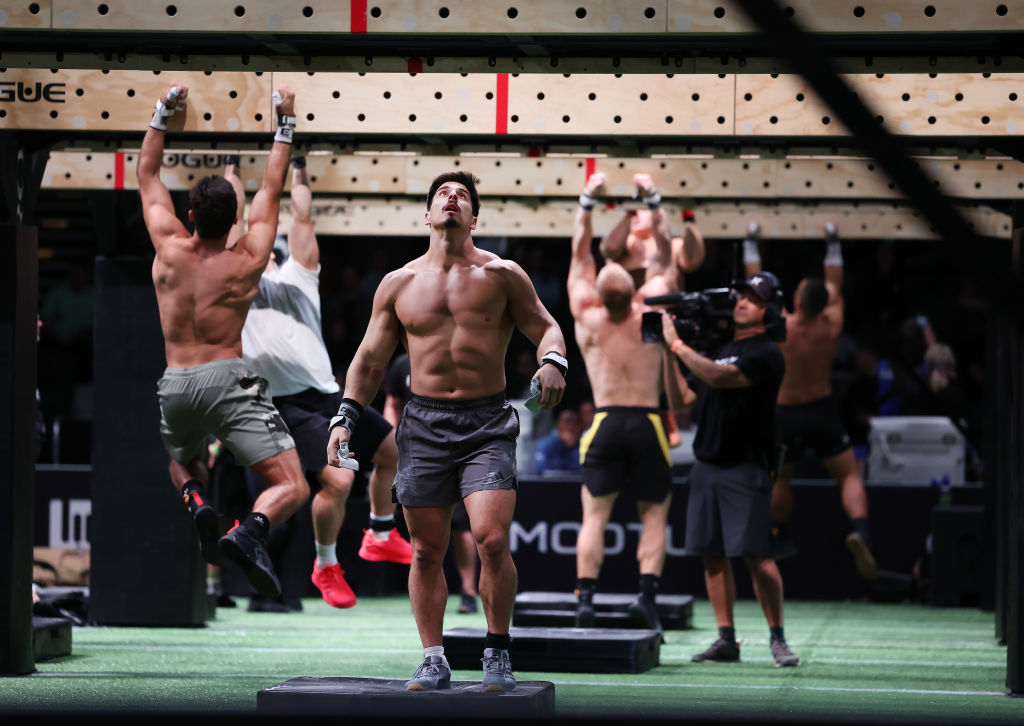
As in every cult, there were reprisals for stepping out of line. Belief in the project was ruthlessly enforced. CrossFitters were derided — including by the glorious leader — as “incredibly weak” or “morbidly obese”. During one of the annual Games, two pudgy volunteers were hustled out of view: “Get those fat people out of here,” said a disgruntled exec.
In the ignoble traditions of Bikram yoga, NXIVM, Osho and more, the CrossFit cult enriched its high priests. The C-suite, stocked with Glassman’s yes-men acolytes, enjoyed Four Seasons stays, cocaine binges, lavish dinners and “rampant adultery”, from the top dog down, according to Marsh. Glassman became megalomaniacal, insisting on $5,000 detours in his prop plane to get Chick-fil-A. The flock was disciplined; its shepherds enjoyed the perks.
As might be expected from a band of bruhs, locker-room chat was rampant. Marsh reports that the gym’s WiFi password was “wet pussy”. Understandably, any whisperings about the noxious vibes at head office were viciously countered. As CrossFit’s star rose, true believers took the crusade online. Marsh describes Glassman’s PR heavies, “two guys on a company laptop”, deploying “dozens of fake Facebook profiles” to slap down critics and create the impression of an army of defenders ready to body-slam those who said, for example, that CrossFit encouraged poor lifting form. Sometimes, animosity turned inwards, with beef between the CEO and his right-hand man, the irritatingly well-liked Dave Castro, who hogged Glassman’s “Jesus”-like spotlight by turning the Games into a mainstream TV success.
The darkest expression of Glassman’s philosophy — “men will die for points” — came in 2024. Four years after Glassman was forced out over heretical comments about George Floyd, the new evangelist-in-chief Castro presided over the summer Games in Fort Worth, Texas. The event was held in a sweltering August — during the swimming event, the lake was warm. Conditions were, in other words, extremely dangerous. An uber-fit Serbian athlete called Lazar Dukic, whom many had expected to win, drowned. At the suggestion that the event should be canceled to respect Dukic’s memory, some CrossFitters questioned what the “big deal” was; “people die every day”. Here was the central contradiction: a movement devoted to perfecting the body had become disturbingly casual about its destruction.
CrossFit still exists today, but has a dwindling cultural footprint since Dukic’s death raised concerns about the method’s safety compliance and reporting around its toxic corporate culture. Its natural successor is Hyrox, another hellish indoor fitness competition combining runs with workout stations; I know this all too well, frequently being woken on a Sunday morning by the maddening whoops and hell yeahs of jockish acolytes from my neighborhood gym. I recently heard the brand used as a slur (“Oh you mean his new Hyrox girlfriend? Good luck…”).
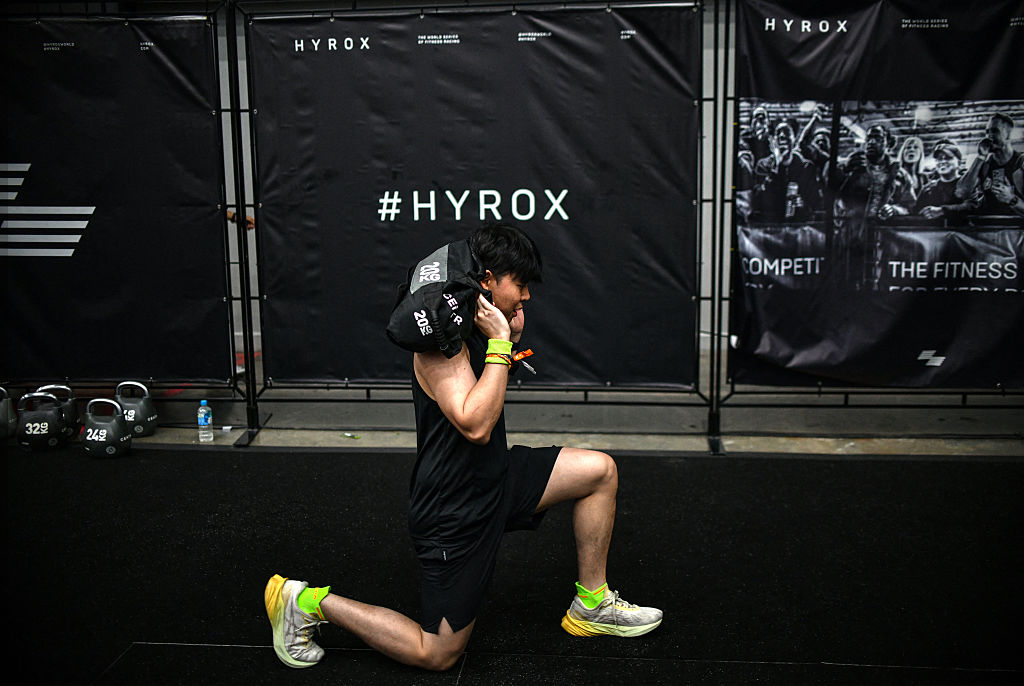
Like CrossFit, Hyrox elevates suffering and abasement as noble and purifying rites. Much purification was needed last month when Joanna Wietrzyk, an Australian champion, got the runs during a Beijing competition and inexplicably carried on. “A win is a win,” she declared after contaminating the course and claiming the crown. Her unhygienic heroics went uber-viral; the outrage it prompted eclipsed that which followed Dukic’s death in 2024. Of course, it tracks — the story was spectacularly gross — but something else unsettled the untoned masses. Why had finishing seemed more important than stopping? It was difficult to escape the sense that this otherwise normal woman was in the grip of indoctrination, just like the vomiting votaries of CrossFit’s heyday.
Extreme fitness offers benediction in the secular age. Shared ordeals bind. Injury, collapse and even death are offerings. The official purpose of fitness culture is about health and well-being; when gymgoing becomes a jihad it shifts to something else — sacralized suffering, control of the self and, at the very top, others. Like most religions, extreme fitness touts its doctrine as unfalsifiable: a rockin’ bod is proof of concept, while physical or psychological damage is proof you didn’t believe hard enough. For some searchers in the post-modern world, salvation is always just one more rep away. Glassman’s vision may by now seem an ancient cult thoroughly displaced by more glamorous upstarts, but all of today’s die-hard gym bros have CrossFit to thank for the spread of extreme faith in fitness.
