




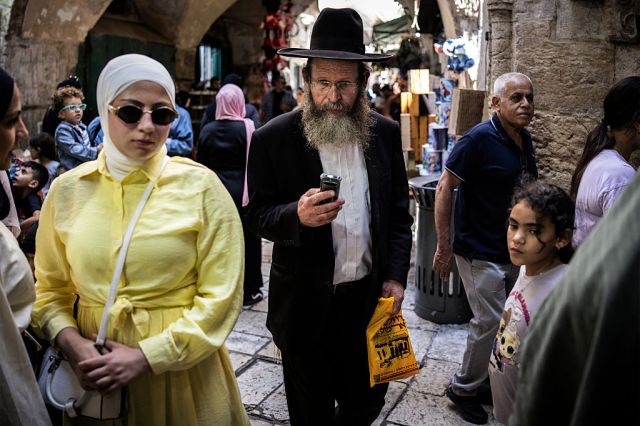
Will Arab voters help bring down Netanyahu? (John Wessels/AFP/Getty)





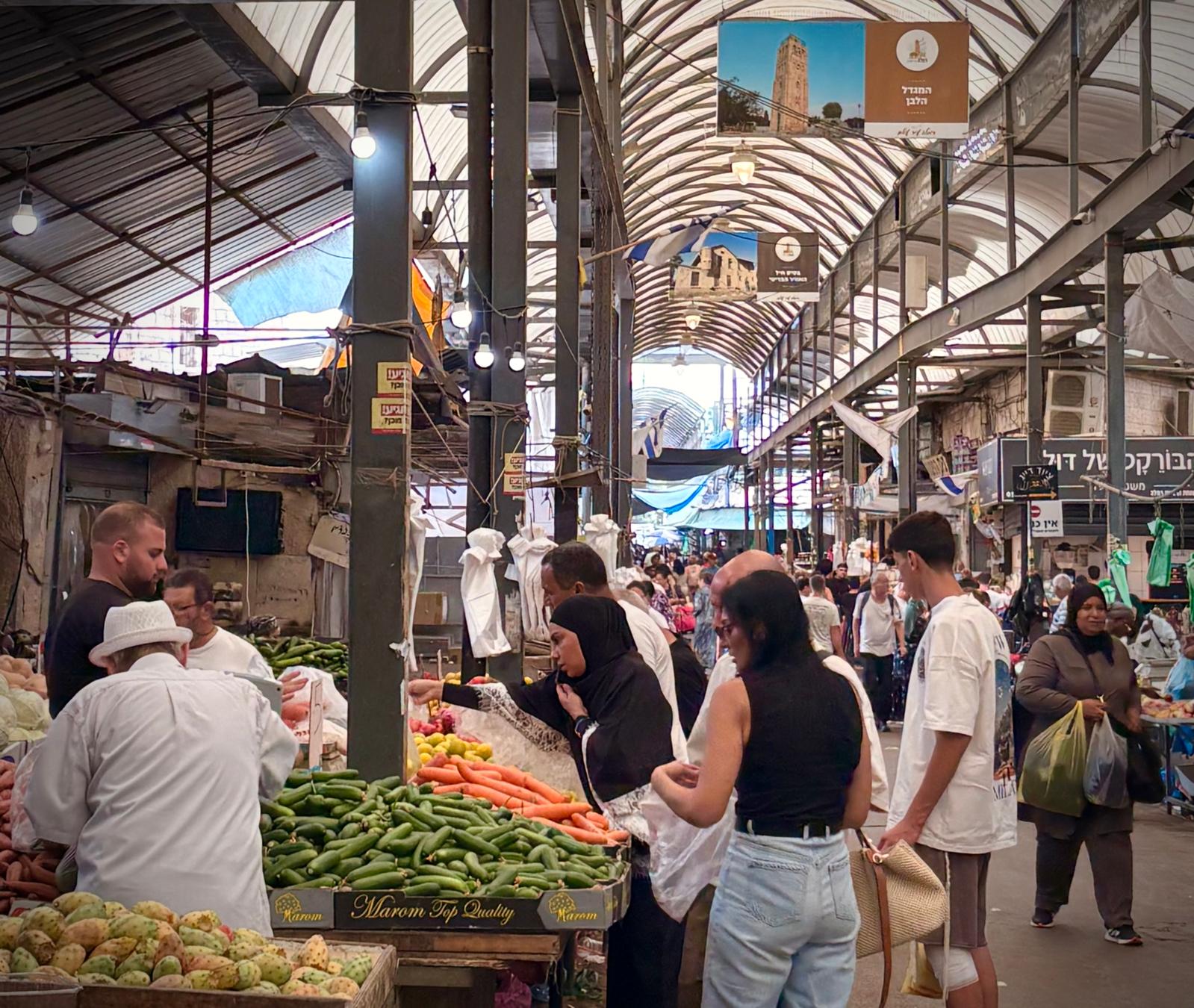
Ramla’s market is a mosaic of Arabs and Jews. Israeli flags hang limply, while buyers and vendors alike switch between Hebrew and Arabic, chatting over piles of aromatic herbs and blushing red pomegranates. Beyond the religious dress of the shoppers — a hijab here, a kippah there — an outsider would struggle to distinguish who was who. Between the stalls, Yusuf rests on a bench, his daughter Abir by his side. The 75-year-old teases me about my frail Arabic, before launching into an immaculate Hebrew. And like around 60% of Arab Israelis, Yusuf plans to vote in tomorrow’s election. “I mainly care about the economy and peace,” he says, absentmindedly stroking his walking stick. “We are one people, the Israelis. Most of us are worried about the same things.”
As so often in Israel, the shouty foreign fixation on the Israeli-Palestinian conflict seems to fade into the persistent rhythm of daily life in places like Ramla. This is clear across the town itself, a ramshackle place in Israel’s fertile center. Scarred by a history of conquests and earthquakes, only a handful of ancient buildings survive. Yet they serve as a reminder that in the 8th century, the Umayyad Caliphate founded Ramla as the flourishing capital of its province of Palestine. Over a millennium on, its population remains mixed. Jews form the majority, while roughly a quarter of its residents are Arabs, around 5% of whom are Christian. This reality is casually vivid: just across the street from the market stands the town’s Great Mosque, once a crusader church. On its metal fence hangs an old bilingual sign from Ramla’s Jewish mayor, wishing Muslim residents a happy Eid.
Many Israelis regard the upcoming election as critical, perhaps the most consequential in the country’s history. Arab voters, whose theoretical electoral weight exceeds 20 seats in the 120-member Knesset, largely share the goal of the Jewish opposition’s so-called “change bloc”: to unseat Prime Minister Benjamin Netanyahu and bring down the most Right-wing government in Israel’s history. With the polls suggesting a closely fought election, Arab voters could emerge as the Jewish State’s ultimate kingmakers — with consequences that could transform not just the Knesset, but Israeli society as a whole.
The prospect of such political cooperation is more remarkable given the deep divisions exposed in the dramatic events of 2021, described by some as the “Unity Intifada”. That May, in mixed cities across the country, thousands of Arab citizens took part in violent riots, arson attacks and even attempted lynchings, while from Gaza, Hamas actively encouraged both Arab Israeli citizens and Palestinians in the West Bank “to rise up”. The people of Ramla experienced this unrest for themselves. During the riots, Jews and their property were attacked, while Jewish far-Right activists, encouraged by supremacist politicians like Itamar Ben-Gvir, spread chaos in their turn.
When I visited Israel a month after the unrest, an atmosphere of distrust between Arabs and Jews still lingered. Though Ramla managed to contain much of the violence through decisive cooperation between the municipality, the police and local Arab community and religious leaders, these tensions have not totally disappeared. Even now, Yehuda, an aging Jewish vegetable seller in the Ramla market, tells me that “the bond between Arabs and Jews is growing weaker”.
These sentiments have deep historical roots. For the first 18 years of Israel’s existence, most Arab citizens lived under military rule, facing curfews and restrictions on their movement, justified on security grounds following the existential 1948 war. The darkest episode of these years came in 1956, when the Israeli Border Police massacred 49 Arab civilians at Kafr Qasim; most of them were returning from work and unaware that a curfew had just been imposed on their village.
Today, Arabs make up just over 20% of Israel’s population. The majority, about 85%, are Muslim, while the remainder is divided roughly equally between Christians and Druze. Most Arab citizens are descendants of those left in Israel proper following the 1948 war, but also Palestinians in East Jerusalem and Druze in the Golan Heights, both occupied by Israel in 1967. Many Golan Druze have since acquired Israeli citizenship, but for Palestinians in East Jerusalem, the process has long been hampered by bureaucratic hurdles, including lengthy application procedures and rejections on security grounds. Even for Arabs living within Israel’s legally recognized borders, inequalities with Jews remain, particularly around access to building permits and services like policing. Though Arab citizens enjoy equal rights, meanwhile, many felt further alienated by the 2018 Nation-State Law, which reserved national self-determination exclusively for Jews.
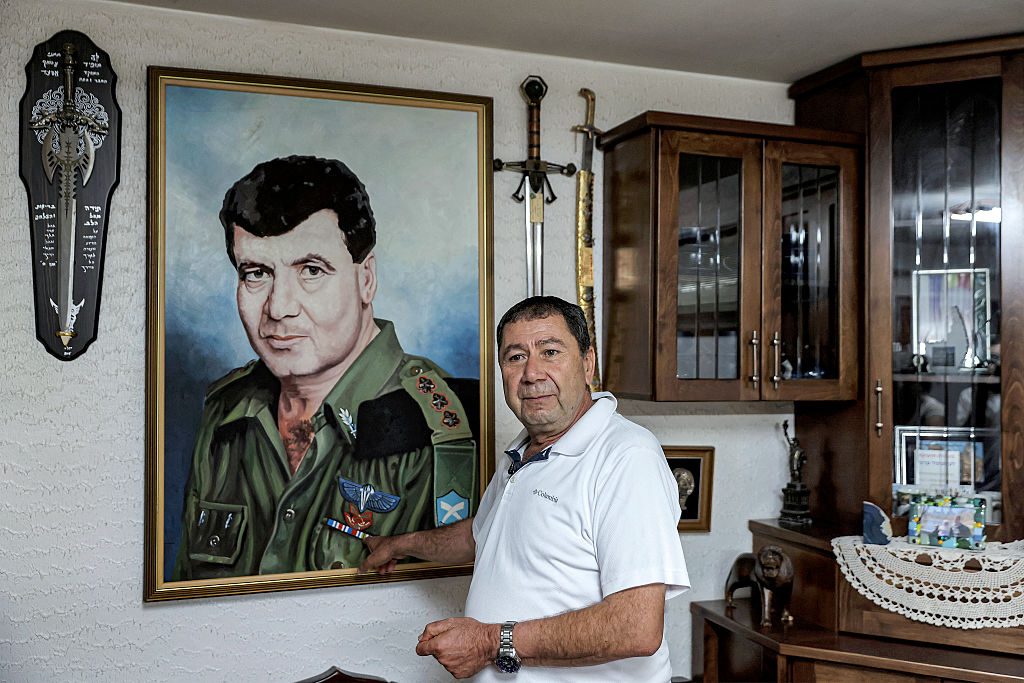
Yet this is only part of the picture. Despite inequalities and political tensions, Arab citizens have also experienced significant economic and social integration. As Dr Arik Rudnitzky, an expert on Arab society in Israel at the Israel Democracy Institute, points out, we should “distinguish between political rhetoric and what actually happens in terms of government policy”. Whatever their inflammatory statements against Arab Israelis and their politicians during election campaigns, both Netanyahu and, later, Prime Minister Naftali Bennett, approved major investment plans for Arab communities, helping to reduce economic disparities. All the while, you can now find Arab Israelis represented in almost every realm of public life — from Druze senior army commanders, to Christian Supreme Court judges, to Muslim news anchors on mainstream channels.
October 7 and its aftermath are key here. Hamas and its late leader Yahya Sinwar hoped the attack would presage a broader rupture between Jewish and Arab Israelis. It wasn’t to be. Though most Arab Israelis are exempt from serving in the IDF, they kept employment numbers up when their Jewish compatriots went off to fight. Arab contributions to the healthcare system were vital too, with around a quarter of Israeli doctors either Christian, Muslim or Druze. Add to that Hamas’s targeting of Arab citizens during their rampage — terrorists killed 26 that day in 2023, including a baby shot in her mother’s womb — and no wonder four-in-five Arab Israelis have condemned the October 7 atrocity. That reflects a broader shift, with a May 2026 survey finding that over a quarter of Arab Israelis now see their citizenship as the main pillar of their identity, though ethnicity and religion remain important too.
Rudnitzky describes all this as “a fragmentation of identity”, shaped by more than seven decades in Israel. Divisions within the Palestinian leadership; the uncertain prospects for Palestinian statehood; and the Arab world’s gradual normalization with Israel — all these have reinforced a pragmatic recognition that Arab citizens must build their future within the Jewish state. “Israeli citizenship, despite its shortcomings, provides opportunities and a degree of security,” Rudnitzky says, even if solidarity with Palestinians in Gaza and the West Bank endures.
This survival-driven pragmatism is clearest in politics, with the rise of Ra’am the most striking example. Ra’am grew out of Israel’s Islamic Movement, whose founder was involved in a militant group in the late Seventies, and which hoped to establish an Islamic state in Palestine. Parts of the movement gradually softened, embracing participation in Israel’s politics; by 2021, Ra’am’s current leader Mansour Abbas had taken the historic step of joining an anti-Netanyahu coalition alongside Jewish parties. Another taboo also fell recently: when Abbas placed Yoav Segalovitz, a Jewish Zionist and former police commander, in second place on Ra’am’s electoral list. Segalovitz is also a former deputy minister of public security, and led a successful initiative to combat organized crime and blood feuds in Arab communities, a particularly pressing concern among voters.
This is not the first time that Arab parties were part of a broader coalition. Arab citizens have participated in Israeli elections since 1949, and their early political representation was largely channeled through satellite parties of Mapai, the Left-wing outfit that dominated Israeli politics in the years after independence. Later, after these satellite parties disappeared, independent Arab parties typically preferred the backbenches, largely due to their anti-Zionist agendas. Ra’am’s decision to join the 2021 coalition — especially as a conservative, religious Arab party — therefore shook the political system. It’s worth adding, here, that even Netanyahu invited Ra’am to join his coalition in 2021; the only reason the gambit failed was because of opposition from the far-Right politician Bezalel Smotrich. Ben Gvir, whatever his rhetoric today, wasn’t against it either.
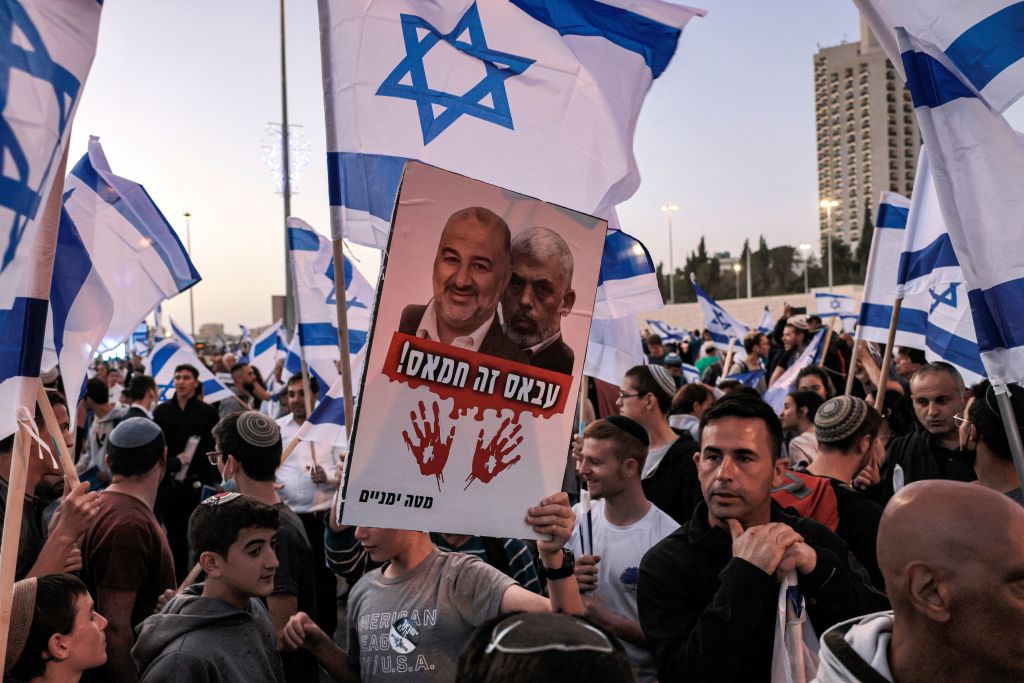
While Arab candidates appear on Jewish-led party lists across the political spectrum, from Left to hard-Right, much of the Jewish political establishment remains reluctant, following October 7, to embrace non-Zionist Arab parties. Yet Segalovitz’s presence ought to help “kosherize” Ra’am for any future coalition. The Joint List, an alliance of Arab Left-wing and pro-Palestinian nationalist parties, has also announced it would support the formation of an anti-Netanyahu government from outside the coalition — despite usually remaining aloof. The last time this happened was in the Nineties, when a pair of Arab parties provided parliamentary support to Yitzhak Rabin’s government, helping sustain the Oslo peace process. Though the Joint List is now offering a similar parliamentary lifeline, its priorities seem to have shifted: alongside political demands for Palestinians, its focus is also on more humdrum civic issues.
And if all this speaks to the growing integration of Arab politics into national life, Israel’s electoral math are equally crucial. Recent polls give Netanyahu’s bloc around 50-55 seats, against roughly the same number for the Jewish-led opposition, leaving neither with the 61 needed for a majority. Meanwhile, Ra’am is polling at five to six seats, and the Joint List at eight to nine — potentially enough to tip the balance.
The obstacle, then, is political rather than mathematical. While Yair Golan, leader of the Left-wing Democrats, supports including Ra’am in a future coalition, other opposition figures, including Bennett and Gadi Eisenkot, have ruled out governing with Arab parties — for now anyway. Once the votes are counted, their tune may soon change, especially if politicians are faced with gridlock in the Knesset, while trying to topple Netanyahu.
With declining personal security, seemingly endless wars, and an increasingly hostile atmosphere for Arab citizens, it is hardly surprising that Arab civil-society organizations have also launched initiatives to get their friends and neighbors out to vote. “Today, there is a consensus: the current government must go,” says Hesham Mahagna, headteacher of a high school near Umm al-Fahm, a major Arab hub north of Tel Aviv. Mahagna himself is particularly concerned about his children and students. “Before the current government, teenagers in my school aspired to study in Israel,” he explains. “But now, most say they don’t want to invest in learning Hebrew because they want to study abroad.”
Lourd Atia, a 19-year-old Muslim activist, offers a more positive case. Raised among Jewish Israelis in the conservative bastion of Jerusalem, she concealed her Arab identity for years. Ironically, it was her best friend, a Jewish settler, who helped her embrace it. “Her family had suffered numerous terrorist attacks and tragedies,” Atia tells me. “I asked her how she could be my friend after everything they had been through. She cried with me and said, ‘Why should I care what you are? You’re a human being. I love all of you, Lourd — the Arab, the Muslim and the Israeli.’”
Atia, who herself lost Israeli friends on October 7 and over the subsequent war, became even more attached to her Israeli identity, which she describes as her “safe ground”. Earlier this year, she publicly challenged Ayman Odeh, the former leader of the Joint List, in a viral interview in the Knesset TV channel, criticizing his focus on Palestine over the everyday concerns of Arab Israelis. Odeh, like other leading figures in his Hadash party, has repeatedly refused to designate Hamas a terrorist organization, despite condemning the October 7 massacre and attacks on civilians. “Do you understand the implications of refusing to condemn Hamas as a terrorist organization?” Atia retorted. “Do you realize how much damage that ultimately causes me?”
Meanwhile, Atia has begun advocating for Israel internationally, both via delegations and online, sharing her unique perspective as both a young Muslim woman — and a proud Arab Israeli. Not that things are perfect. While traveling to Germany on an advocacy mission, she recalls being pulled aside for an intrusive security check at Ben Gurion Airport, apparently because of her Arab background. Atia’s belongings were searched in front of other passengers, while her father looked on helplessly. “I realized,” she says of the experience, “that I would never be 100% Israeli, and that we have many problems. I don’t want to paint a perfect picture — quite the opposite. But I enjoy my life here, and there is nowhere else for me. This is my country. I would rather fight for my home.”
By focusing on the here and now, the wider Palestinian conflict can seem further from Ramla or Umm al-Fahm than it does from the endless protests in Trafalgar Square. Here, the radical pragmatism of Israeli Arabs wins. As the country’s diverse Arab community continues to evolve, meanwhile, we see not only unlikely friendships between young Arab Muslims and Jewish settlers, but even mixed marriages. These friendships and family ties, alongside the broader “Israelization” of the 1948 Arabs that Sinwar so despised, may continue to shape Arab Israelis into an increasingly distinct society, different from Palestinians both in Gaza and the West Bank. Meanwhile, in Ramla’s market, Arabs as Jews will continue filling their baskets, worrying about rising prices and wondering which pomegranate is sweeter.