




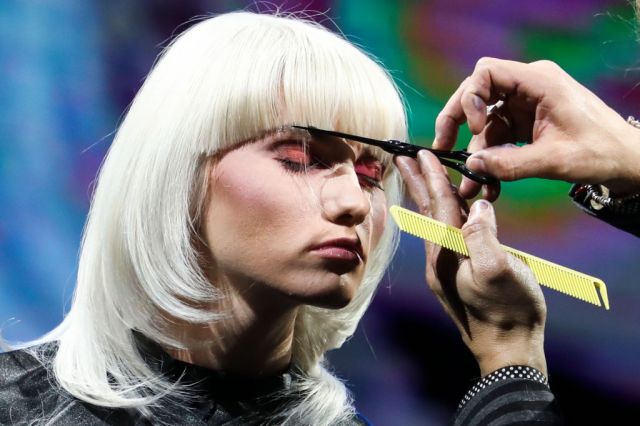
We live in an era of “affordable luxury”. (Rosdiana Ciaravolo/Getty)





Are you on a retinol journey? Do you prefer an illuminating primer or a blurring one? If those questions make any sense to you, then you probably already know it’s British Beauty Week, and aesthetic self-improvement is in the political spotlight. A Treasury source revealed that the Chancellor, John Healey, will be putting beauticians “at the forefront of his mind as the Budget draws nearer”, while Kemi Badenoch agreed that they “deserve some attention”, pointing out that the industry supplies as many jobs as the construction trade. And you don’t even need cumbersome planning permission to carry out major renovations, she might have added.
Badenoch is right to imply that the rise of the local beautician is remarkable. According to a report just out, beauty salons and shops now make up almost a third of leisure sites across the UK, with a particularly strong presence in provincial towns and villages. In the small place from which I now write, for instance — total population 11,251 at the last census — there are 11 beauty salons, 12 women’s hairdressers, three nail bars and two tanning studios.
The town in question is Montrose in Angus, which is situated on the weather-beaten North Sea coast, halfway between Aberdeen and Dundee. I grew up there, and knowing it as I do, the sheer number of aesthetics-related ventures initially seemed a bit baffling. The average Montrosian isn’t particularly high maintenance, and even veers towards the strictly functional; yet on the strength of the current offering, you’d predict Kardashian levels of feminine allure. Thanks to a busy port and a chemical manufacturing plant, the overall economy is relatively buoyant, but there’s significant deprivation here too. The south of the town has much higher economic inactivity than the national average. And yet there is apparently a positive craze for luxurious grooming, and not just for humans. Just as improbably, there are eight dog grooming businesses listed in the area too.
Though suspicion would be understandable, the companies in question don’t appear to be shells for dodgy financial transactions. They all have convincingly enthusiastic web presences, take digital payments, and have local owners, some of whose names I recognize from school. Then there are the shop names: puns are a big thing in Montrose commercial life, in a way that seems incompatible with fraudulent intentions. Take the hairdressers: could a business called “Hairborne”, “Doo or Dye”, “The Mane Place”, or “Eclips” really be a sinister criminal front? And what about a dog groomer called “For Fluff’s Sake”?
The explanation for the glamour explosion is probably much more mundane. Social media has amped up demand, making various before-and-after glow-ups and product placements go viral; and memetic trends ripple even faster through smaller, more tight-knit places. Once you have a customer, she is likely to keep coming back, since most treatments are usefully temporary in their effects. And it’s fun to feel pampered, and catch up on the gossip; the traditional joys of such places haven’t changed.
On the supply side, the lack of regulation makes it easy to provide more exotic cosmetic interventions as the market develops — basically, injecting various rigidifying substances into someone’s precious face, then telling them they look fabulous — though both Scottish and English governments are trying to iron this rather alarming issue out. You don’t need a massive amount of kit to get started, and you can offer appointments rather than walk-ins, making it easier to fit round family life. And the profit margins can be big.
It is also relevant to note what isn’t there anymore. Generally, the dominance of online shopping means that physical objects have melted away from the high street, and the cultivation of ephemeral moments is what we get instead. In Montrose, this has meant the demise of many a nostalgic retail temple, including John Menzies, where we used to buy our Smash Hits magazines and school stationery, and Woolworths, that treasure trove of pick ’n’ mix and cheap plastic tat. These days there are only the dollar shops left for such things, and they too look threatened. God knows where future schoolkids will do their shoplifting if this carries on.
So, as is the case everywhere, several premises on Montrose High Street lie empty; a depressing state of affairs for the widest and grandest commercial street in Scotland, built in the 12th century under King David I. Those businesses still in operation tend to focus on providing things that are not easy for the internet to replicate, which typically means offering the customer a lovely time.
A big commercial theme these days is known as “affordable luxury” or “little treat culture”: people distracting themselves from doom-laden rumination about the future by moderately splurging on high-end consumables in the present. In London, impecunious young people are consoling themselves about the housing market with spectacularly laminated croissants and single estate coffees, and Montrose’s entrepreneurs seem to have noticed the fad. Take a stroll around the town center here, and you’ll pass from ice cream parlor to handmade chocolate studio to vape shop to derelict building, all within a few disorienting strides.
On the upside, the demise of traditional brands seems to have cleared room for riotous self-expression, as independent sellers try their hand at wacky new ideas and silly names. Along with all the cosmetic stuff, there is a coffee shop run by a bona fide pop star, named after one of her own hits; a company that does readymade seafood and fish dishes, called “The Plaice”; an independent bookshop with a Narnia-style wardrobe entrance into the children’s reading area; and a New Age store full of skulls and pentagram paraphernalia. There is also something described by its owners as a takeout vinegar bar, and an indoor operation called “The Snuffle Spot”, offering “A Unique Sensory Experience for Dogs”.
There is probably a heartwarming sitcom to be written about all this mad creativity, complete with imagined fierce and violent rivalries between tanning salons. In the real world, Montrose traders are helped by an admirably vigorous community organization called ProMo, dedicated to keeping them on their feet. But there is no doubt it faces an uphill battle. The Scottish government already offers substantial business rate relief to smaller companies, but it is the rent and utility bills shopkeepers complain about, combined with lessening foot traffic and a lack of decent parking. Down South, Healey say he plans to support beauticians and other sole traders by raising business rate thresholds; but assuming that rents go up after business rates reduce, it probably won’t make a big difference overall.
The sad truth is that the fate of high streets across the British Isles is now ineluctably tied to whatever the internet is teaching us to covet; and if it can do it cheaper and faster than real shops, it will. For the moment, the beauticians and hairdressers are a surging force, and you can’t possibly blame entrepreneurial types for capitalizing on the trend. Indeed, we should be grateful, given the dismal alternative. At least people talk to each other in salons, with no screens involved. But there are still questions to be asked about current beauty obsessions, and the dopamine-chasing culture in which they are embedded, given that so many of us seem to be obsessed with shallow nonsense, forgotten almost as soon as it ends.
Never mind the effects on your bank balance; what about the effects on your mind, compulsively anesthetizing yourself from life’s minor blows by fetishizing a facial massage or a frozen yogurt? It is common practice for such experiences to be described as part of “wellness”, but the whole point of luxury is that it is supposed to be magnificently superfluous to daily living, and something you could easily survive without. The occasional presence of a treat in your life is supposed to make you unreasonably happy. It is not just there to drown out the pain, or nudge you toward some pedestrian baseline of health. Though luxury is now badged by advertisers as an essential act of self-care, in fact it cannot be both: chasing unusual highs is not the same thing as avoiding habitual lows.
There is also a lot of rubbish talked about the value of experiences, whether commercially produced or otherwise: vivid little portions of remembered time, with a beginning, middle and end. You are supposed to always prefer good experiences to bad ones, even if you might have learned something new from the latter. You are supposed to have a certain number of canonical good experiences before you die, and the web is full of off-the-peg bucket lists to help. Sometimes there is even a vague suggestion of moral superiority, as if having experiences were an environmentally friendly alternative to owning possessions. I have misgivings about all of that. Still: if you insist on chasing your next experiential high, may I recommend taking a train to Montrose High Street — not necessarily for what it can sell you, but for all the fun it offers you for free.
