









October 9 2026 - 2:30pm
What started in France as a high-school student movement for better conditions is catching on elsewhere in Europe. There seem to be educational grievances everywhere: shortages of staff and funds to renovate buildings, crowded classrooms, and exorbitant fees. But are the complaints finite, or is this just the beginning of something larger?
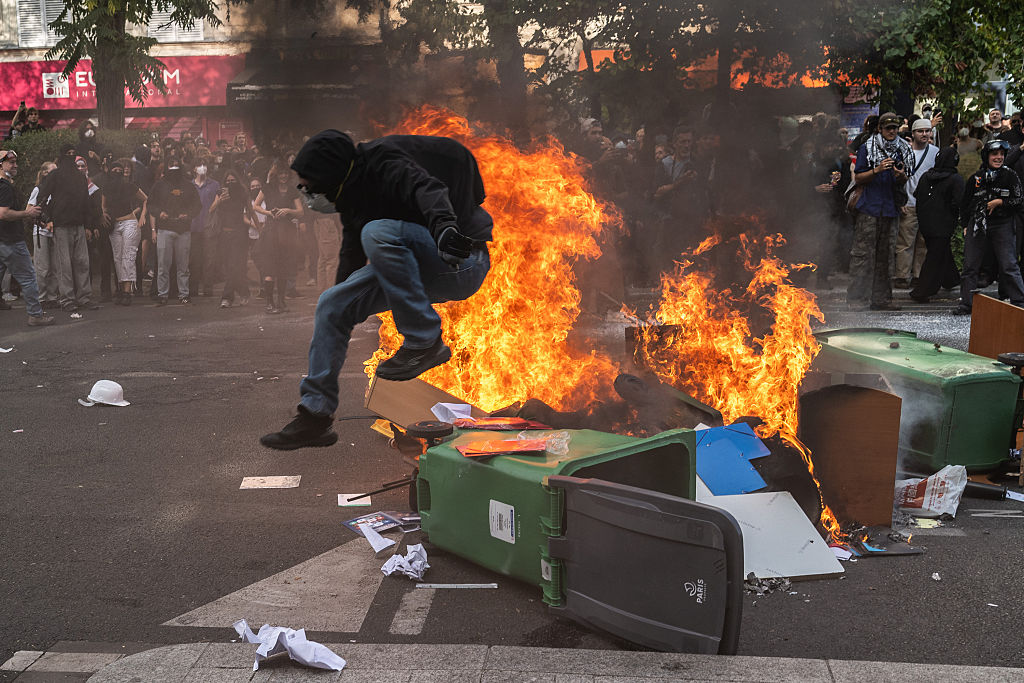
This week, French students pulled off a rally with more than 250,000 protesters, while more than 500 schools shut. Further rounds of protests are set to go ahead. Prime Minister Sébastien Lecornu responded on Wednesday night after a student’s hand was blown off by a police stun grenade, promising to present a set of reform proposals this month.
Presidential candidates have no choice but to address the protests. Left-winger Jean-Luc Mélenchon is turning into a megaphone for student grievances, and knows how to use this to his advantage. Gabriel Attal, Emmanuel Macron’s former prime minister, found himself on the defensive when he debated with high schoolers this week. National Rally candidate Marine Le Pen, the frontrunner in the contest, accused Mélenchon’s party of fomenting the “riots”.
Yet the protests have not been confined to France. Belgium’s students joined in with some violent clashes of their own earlier this week. Greek students organized nationwide school actions yesterday. In Italy, high school occupations have started in Turin and Rome. In Ireland, university students have demanded lower fees, while Austrian students are poised for fresh demonstrations later this month to protest cuts in university funding.
The question remains as to how the students’ demands can be met. Fiscal budgets across Europe are stretched as Covid, a double-dip energy crisis, and rising defense costs have all drained coffers. Now a new crisis in the education sector demands to be heard. But where shall the money come from? And if funds are limited, how are priorities ranked?
Demands from students may also be just the surface of a deeper sense of insecurity and injustice which is ready to explode. Adapting to the age of AI will require deep structural reforms that no one is really sure how to execute: banning mobile phones or social media in schools will not be enough.
Faced with high fees and uncertain job prospects, the students sense injustice. They are moving towards a generational conflict with their elders, who enjoyed decades of peace and prosperity. Europe’s aging population means that concerns about pensions dominate while the young are taken for granted.
The protests could be the beginning of a bigger movement throughout Europe. Parents and teachers will get involved, and so will trade unions. For France, with its high debt and upcoming presidential elections, this could not happen at a more decisive moment.
This is an edited version of an article that first appeared in the Eurointelligence newsletter.