









October 4 2026 - 7:00pm
In recent days, news of the “Cornell Seven” and the alleged “Cornell gang rape” has prompted a flurry of condemnation online, along with criticism of the supposedly “complicit” men and institutions on college campuses and across the internet.
A recent essay in New York by Harvard undergraduate Zoe Yu, declares that “the post–Me Too generation gets its Me Too moment”. Three Cornell graduates and trauma psychologists write in HuffPost that they are “shocked, but not surprised by what’s happening at [their] alma mater”. And more than 1,000 Cornell alumni, in a co-signed letter to the editor in The Cornell Daily Sun, the campus’s principal student paper, speak of “decades of Jane Does” and demand that the university “turn inward to seek out the roots of sexual violence within its halls”. Anyone spending time on Instagram will also see the now-ubiquitous rallying cry, “I am Jane Doe.”
However, the facts of the case, which have been reported extensively in UnHerd, reveal a far more complicated story than what social media posting, many politicians, and the discourse in general would have one believe. An unnamed “Jane Doe” in her suit last month claims she was gang-raped by seven men on the evening of 19 October and the morning of 20 October, 2024 at a campus fraternity house when she was 20. She was voluntarily drinking alcohol, but is still suing her sorority (for allowing her to drink), a bar in downtown Ithaca (also for allowing her to drink), the university (for failing to adequately deal with the “rape”), and the fraternity and the men (for the ketamine-fueled, hours-long orgy in question).
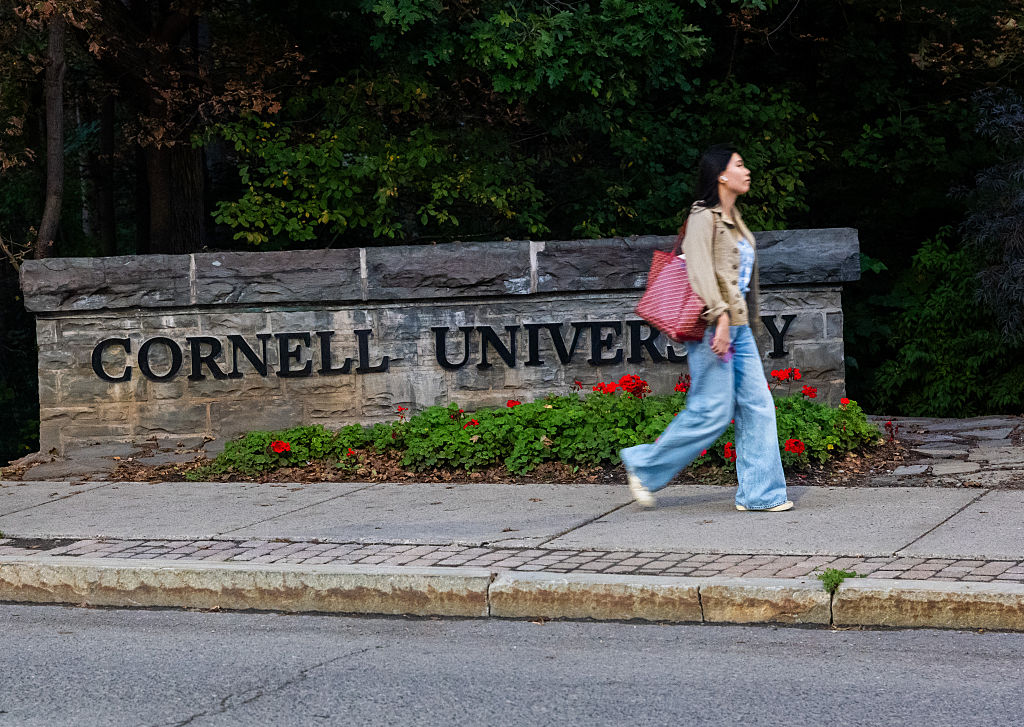
The wave of outrage began, at first slowly and gradually, on 21 September, with the student-run Cornell Daily Sun publishing this editorial: “We refuse for this victim to be reduced to just another story. Cornell has failed to protect its students. Cornell has failed to address the growing issue of sexual assault on campus with its pathetic task force.” It also released the names of the seven men who had allegedly raped the woman, bringing forth the allegations. (Cornell had disciplined the students, expelling two of them, while the Tompkins County District Attorney had declined to press charges.)
A Cornell student who spoke to UnHerd on the condition of anonymity noted that one of his professors had begun class by sharing Cornell’s anti-sexual-assault resources, with the caveat “if you still trust the administration.” Protests and walkouts, he said, are slated to happen on 5 October and 13 October, organized by groups otherwise mostly involved in pro-Palestinian activism.
By last Monday, the case had become widely publicized. I saw students at my own university — Columbia — relentlessly post on Instagram, highlighting stories from various other “rape” victims. One viral Instagram post detailed how, in 2014 and 2015, then-Columbia student Emma Sulkowicz had carried the mattress she was allegedly raped on around Columbia, from class to class, as a form of protest. (Allegedly because no legal or university disciplinary process substantiated her allegation.)
Meanwhile, a pro-Israel, Orthodox Jewish influencer who graduated from Columbia, and has over 85,000 followers on Instagram, posted, “I did not go to Cornell. I went to a different Ivy in New York. Title IX betrayed me there too.” (Title IX is the US law prohibiting sex-based discrimination in federally-funded educational institutions.) That also went viral, and even received likes from pro-Palestine students, and at least one activist. There was another: “Repost if you are against Rape! I can see if u.”
The posting frenzy has continued since, with Columbia fraternities condemning the Cornell case as “sexual violence” that was “deliberately silenced” on Thursday. The next day, an account entitled “Epstein off Columbia,” which frequently meshes together Epstein hystericism and anti-Israel sentiment, announced a rally to “#stopsexualviolence from the frat house to the White House”, scheduled for 8 October outside the university’s main gates on Broadway and 116 Street.
On the prevailing sentiment at the Upstate New York Ivy, the student I spoke with repeatedly emphasized: “If you are not speaking out against the administration, that means that you’re complicit.”
