









September 3 2026 - 6:00pm
People always think they are living in the end times. Christ’s apostles thought it 2,000 years ago. The Fifth Monarchists thought it during the civil wars of the 17th century. The followers of William Miller were convinced that the Book of Daniel contained a secret message that the world would end on Tuesday, 22 October 1844; when Wednesday, 23 rolled around, they called it “the Great Disappointment”.
Eschatological anxieties sometimes spill over into the cultural mainstream, though often with an ironical wink. The Y2K panic seized the imagination at the turn of the millennium. Then, 12 years later, some Mayan calendar was dredged up chiefly to spark excitement and conversation in an otherwise mundane year. A more sincere apocalyptic tenor increased throughout the 2010s, as climate alarmism encouraged the belief that, barring radical change, the world was near its end. Boys have been crying wolf for millennia. But one day the wolf will come, and the doomsday naysayers will be right. We all like to think that the times in which we live are special: we live in them, after all. The world has to end sooner or later. Why not now?
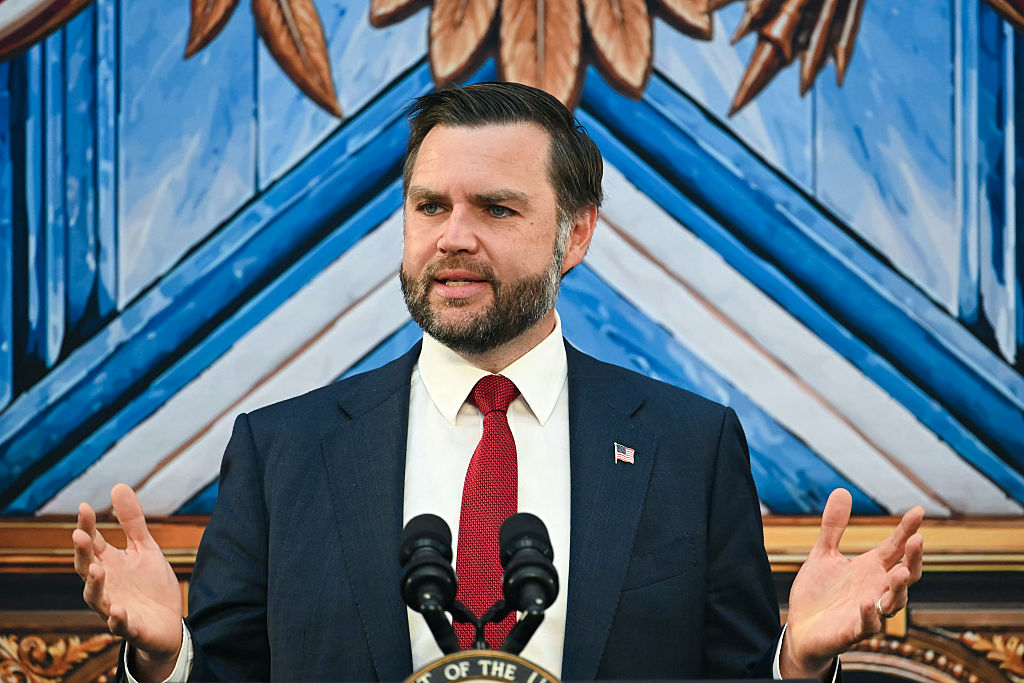
JD Vance knows that the end times are coming, claiming in a new interview that “it’s just a question of whether they’re coming thousands of years down the road, or a few months down the road.” Channeling his sometime mentor, Peter Thiel, the US Vice President suggests that the Antichrist might be “walking among us”. Being a good Catholic, he refrains from speculating about the date: that is for God to know, and for us to find out. He takes comfort in his confidence that he is simply doing “God’s work” — and “if that leads to the end times, okay.”
The comments are from a podcast interview with Bryce Crawford, a young evangelical influencer. Although Vance is now a professed Roman Catholic, his old evangelical habits die hard. In his recent book, Communion, he describes being immersed as a teenager in the church of his father. It was the sort of congregation that hated gay people and evolution, and forwent the satanic paganism of Harry Potter for the Left Behind series.
When Vance was a teenager he was convinced that the world would end by 2007 at the latest. Then it didn’t. He turned against his church, and religion in general. He began flirting with New Atheism precisely because he was irritated by “the complacency and the irrelevant sermons about the Rapture” — a Rapture that seemed never to arrive. When Rome beckoned some years later, it helped that it did not traffic in Armageddon and Gog and Magog, and all the other eschatological claptrap which he had learned to associate with the hickish, lower-status church he had escaped.
But those churches, however much Vance has turned away from them, hold considerable sway in the Republican Party. They inform policy in, for example, the Middle East, which they imagine as the stage for a great cosmic drama that will soon play out between Christ and Antichrist. As a teenager, Mike Huckabee wrote a weekly advice column in the Baptist Trumpet called “RAPture Express”. Now he is the American ambassador to Israel.
Even beyond the Right, and America’s evangelical churches, an apocalyptic mood is in the air. With the Hugging Face incident and growing hostility towards data centers, AI X-risk — long the preserve of San Francisco’s “rationalists” — looks set to be the next big thing. In his podcast interview with Crawford, Vance alludes to the notion — somewhat at odds with Thiel’s tech-enthusiasm — that AI itself might be Antichrist, or at least has something “satanic” about it. He hopes to be president at what is increasingly regarded as a critical moment for the future of humanity — if humanity is to have one. This will not be the last time we hear him speak of the end times. The end times are here to stay.
