









August 17 2026 - 10:00am
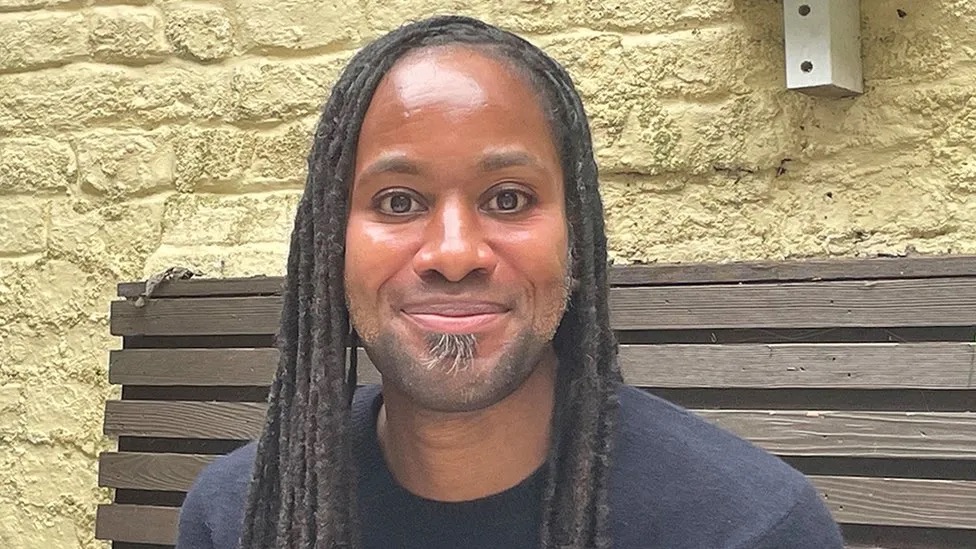
Campaigners are reportedly coordinating a new push for mainstream press censorship, following the death of former Cambridge professor Jason Arday. Simon Woolley, head of Cambridge’s Homerton College, has demanded an inquiry into whether the media contributed to Arday’s death, while Jolyon Maugham’s ultra-progressive lawfare crowdfunder, the Good Law Project, has launched a similar petition.
The circumstances of Arday’s case have been exhaustively discussed. I have no wish to revisit that discussion, and my condolences are with his family. But we should condemn the opportunism with which groups such as the Good Law Project have seized upon his death to amplify an existing censorship agenda. There’s no question that Arday became the epicenter of an intense viral discourse storm. But Woolley’s description of press coverage of Arday as a “vicious media onslaught” implicitly frames press reporting as the driving cause. This is a misunderstanding of such phenomena so gross as to feel, in at least some cases, itself politically motivated.
The main reason Arday’s case was reported with such intensity is that the scandal escaped British media and became a viral topic in the far larger, more vicious and more polarized American culture war. In other words: Arday became, as The Internet Is For Cats author Jessica Maddox characterizes it, an online “main character”. Maddox cites a term employed by scholar Meredith Clarke in 2020 to describe it: “morally motivated network harassment”. Such pile-ons can be intensely dehumanizing, reducing living individuals to symbolic tropes on which others project a host of pre-existing cultural disputes.
It’s not difficult to fathom why this story might have attracted such attention. The circumstances of Arday’s case evoke several of the most sensitive American culture-war touchpoints: most centrally of all, the moral valence of holding individuals to different standards according to racial criteria. Within the larger American discourse, especially since the George Floyd “racial reckoning”, this theme is intensely controversial, and British proxies for debating it tend to be eagerly seized upon. The last British news story to escape containment in this way — the death in custody of Henry Nowak — turned on the same theme.
The pressure on Arday must have been intense. But concluding from this that Britain requires — in the Good Law Project’s phrasing — “a more responsible press” is as absurd as it is nakedly opportunistic. The conclusion that would seem to follow from the petition is that anyone deemed worthy of special protection should be excluded by definition from critical reporting in the mainstream press.
Following the typical expansionary logic and political partiality of such special protections, this would inevitably come to denote any Left-wing client group, while the scope for abusing such strictures ought to be visible from space. It would serve to institutionalize two-tier journalistic standards, based on identity politics, much as comparable measures in the criminal-justice system institutionalized the very two-tier policing which drove the Nowak media storm.
Meanwhile, censoring the British legacy press would do nothing to rein in “morally motivated network harassment”. Firstly, because the legacy press is not where such harassment occurs. And secondly, because the Anglophone internet is functionally the same place across all English-speaking geographies — where British stories go viral, and sometimes prompt outbreaks of network harassment, it’s precisely by virtue of not being discussed only in Britain. The reason there were so many articles about Arday was more an effect of the viral discourse than its cause. Editors didn’t make the former professor into a hot viral topic by commissioning articles about him; they commissioned the articles because he was a hot viral topic.
None of this is to say we shouldn’t debate network harassment as a cultural phenomenon. For example, the neuroscientist Bart van Alphen took his own life in 2021, following the viral exposure and condemnation of his politically controversial social media posts. Such incidents are to be deplored, and there’s a legitimate discussion to be had about how we should understand or handle intense internet-mediated moral swarm phenomena.
But we can be sure that capitalizing on one such unhappy death to advance an existing press censorship campaign and identitarian agenda will do little to aid progress in this area. Meanwhile, it would do much to intensify the kind of perceived “two-tier” grievances likely to drive future iterations of the phenomenon itself.
