









August 2 2026 - 7:00pm
Will Donald Trump’s decision to sell priority access to his social media posts become his Infantino moment?
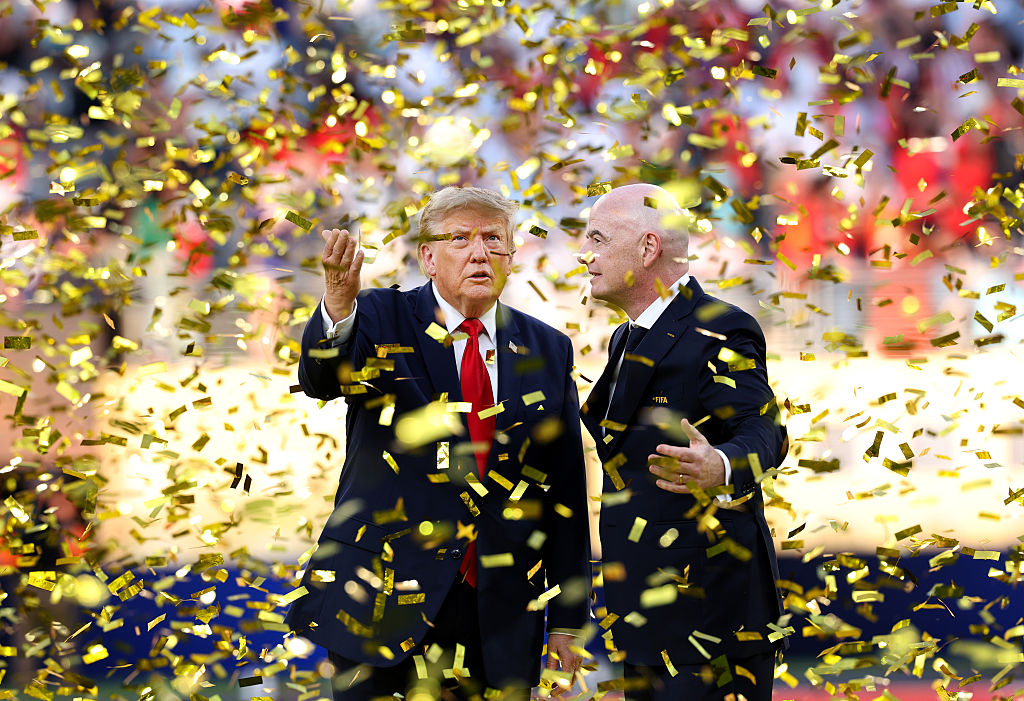
FIFA president Gianni Infantino, fresh off a successful World Cup that swelled the federation’s coffers, no doubt felt he could do no wrong. But it appeared that a month spent swanning around with celebrities and sitting in the presidential box had left him out of touch with his constituency, prompting a rebellion against his abortive attempt to sell an equity stake in the World Cup.
Donald Trump may be similarly tone-deaf. The Trump Media and Technology Group, which owns the Truth Social media platform he created during the time he was cut off from Twitter, announced over the weekend that it would start selling subscriptions to a service called Truth API. People willing to pay a reported $100,000 a month would then be given priority access to social media posts that the company describes as “the platform’s most market-moving Truths.”
Given that presidential policy announcements often do move markets, the impression given is that the service will enable the Trump family, the principal owners of TMT, to monetize insider trading. Although illegal, such trading appears to have become commonplace within this administration, with large trades repeatedly showing up minutes before Trump announcements. Late last month, for instance, one White House employee had to leave his post after being reported to regulators for using his privileged access to Trump speeches to place lucrative bets on the Kalshi predictions platform.
Democratic Senators Adam Schiff and Elizabeth Warren have called for the Securities and Exchange Commission to investigate Truth API for possible law-breaking. Don’t hold your breath. Like other federal agencies, the SEC has been placed in the hands of Trump loyalists who employ a light-touch approach to regulation. They won’t be rushing to probe the inner workings of TMT.
Meanwhile, with a supine Congress, broad pardon powers and a Supreme Court ruling granting him immunity from prosecution for official acts, Trump probably spends few sleepless nights worrying that he could ever be prosecuted for anything. Even if Republicans were to lose both houses of Congress in the November elections, Democrats will come nowhere near accumulating enough votes to remove him from office in an impeachment process. And in the unlikely event the SEC did prosecute him, he could just issue himself a pre-emptive pardon before leaving office. All told, Donald Trump has good reason to think himself untouchable.
But then, Infantino undoubtedly felt the same way prior to the humiliation that could now imperil his presidency. Trump faces risks. A future SEC under a different administration could reopen old cases, while it would be difficult to argue that the creation of Truth API constituted an official presidential act, meaning Trump would not benefit from the Supreme Court’s immunity ruling. As for his pardon power, some states can also pursue insider trading investigations, which his pardons would not affect (although penalties are less severe than in federal cases).
Most importantly, like Infantino, Trump may be misreading the room. Polling reveals that a growing majority of the public feels that Trump is more concerned with his personal interests than with the well-being of the country. If, say, his deeply unpopular war in the Middle East turns much worse or the frothy stock market takes a tumble — neither risk can be discounted — one could envision a scenario in which former allies turn on him, as Infantino’s did.
Pride comes before the fall. If Trump becomes too reckless in his monetization of the presidency, he may yet face his Infantino moment, at which point things can start moving fast.
John Rapley is an author and academic who divides his time between London, Johannesburg and Ottawa. His books include Why Empires Fall: Rome, America and the Future of the West (with Peter Heather, Penguin, 2023) and Twilight of the Money Gods: Economics as a Religion (Simon & Schuster, 2017).
 jarapley